
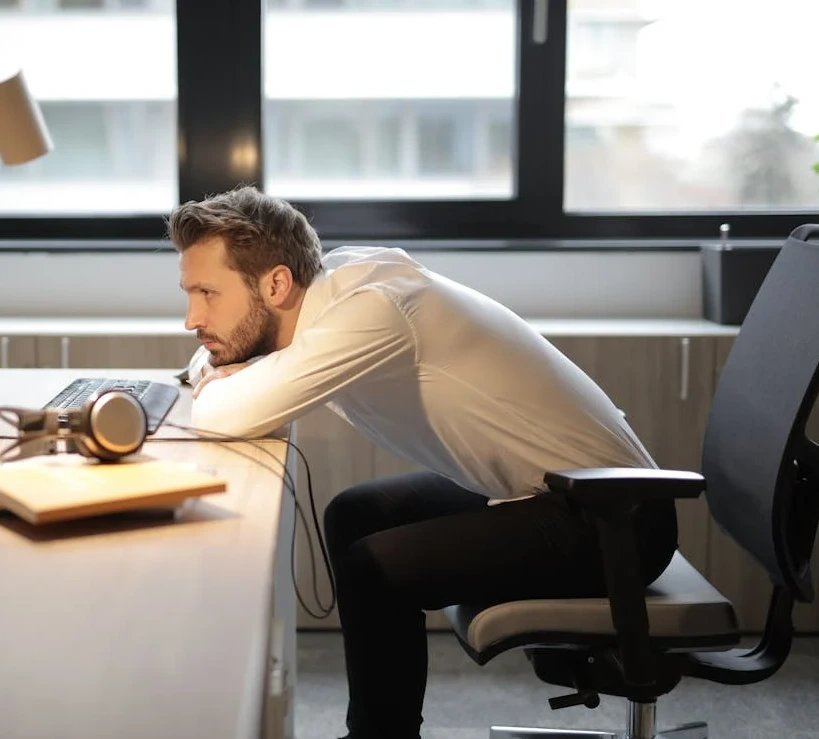
‘Sitting is the new smoking.’ You’ve heard it. It’s a great headline, and like most great headlines, it’s an exaggeration — but it points at something real. Researchers have spent two decades studying prolonged sitting, and the findings are worth taking seriously, even if sitting won’t kill you the way cigarettes do. The question of is sitting all day really as bad as people say it is comes up constantly — here’s what actually works.
Here’s the nuanced truth: sitting all day is genuinely linked to worse health outcomes, but the risk depends heavily on what you do the rest of the day. Let me separate the solid science from the scare tactics.
What the Research Actually Links to Prolonged Sitting
Large studies tracking hundreds of thousands of people find that high daily sitting time is associated with increased risks of heart disease, type 2 diabetes, and early mortality — even after accounting for exercise. The proposed mechanisms make sense: prolonged sitting slows metabolism, reduces the activity of lipoprotein lipase (an enzyme that breaks down fats in the blood), and impairs blood sugar regulation. American Heart Association sedentary behavior resources
But here’s the crucial nuance the headlines skip: the risk is concentrated among people who sit a lot AND exercise little. In studies, people who sat 8+ hours daily but also got 60-75 minutes of moderate activity largely offset the risk. So it’s not sitting alone — it’s sitting plus inactivity. The phrase should really be ‘sitting all day and never moving is bad,’ which doesn’t fit on a poster as nicely.
- Linked to heart disease and diabetes: large studies show real associations with prolonged daily sitting.
- Mechanisms are plausible: slowed fat metabolism and worse blood sugar control during long sits.
- Exercise offsets much of the risk: 60-75 min of daily moderate activity largely neutralizes it.
- It’s not ‘the new smoking’: the comparison is dramatic marketing, not scientific equivalence.
- Total inactivity is the problem: sitting + no exercise is the dangerous combination.
Why Your Body Hates Stillness (Beyond the Big Diseases)
Forget mortality statistics for a moment — your body tells you sitting all day is wrong in real time. The 3 p.m. energy crash, the stiff neck, the achy lower back, the restless legs: that’s your body protesting stillness. Prolonged sitting compresses spinal discs, tightens hip flexors, weakens glutes (the infamous ‘dead butt syndrome’ is a real clinical term — gluteal amnesia), and pools blood in your legs.
Mentally, long uninterrupted sits correlate with worse mood and focus. There’s a reason your best ideas come on walks: movement increases blood flow to the brain and breaks the cognitive stagnation of staring at one spot for hours. The afternoon slump so many desk workers medicate with sugar and caffeine is partly just a movement deficit. CDC physical activity and health resources
- Back and neck pain: spinal compression and poor posture compound over motionless hours.
- Tight hips, weak glutes: ‘gluteal amnesia’ — your butt literally forgets how to fire.
- Afternoon energy crash: often a movement deficit misdiagnosed as a food or sleep problem.
- Worse focus and mood: uninterrupted sitting correlates with mental stagnation.
- Leg circulation issues: blood pools in legs; regular movement keeps it flowing.
The Fix Is Embarrassingly Simple
You don’t need a treadmill desk or a standing-desk religion. The research-supported fix is breaking up sitting with short movement breaks: stand and move for 2-3 minutes every 30-60 minutes. Studies show these micro-breaks meaningfully improve blood sugar and blood pressure responses compared to one unbroken sit — even if total sitting time is similar. Frequency of breaks matters as much as total time.
Layer in the obvious: a daily walk (the single best habit for desk workers), stairs instead of elevators, walking meetings for phone calls, parking farther away. And if you can get a sit-stand desk, alternate hourly — but don’t just stand all day either; prolonged standing has its own problems. The goal is variety and regular movement, not a new static position.
- Move 2-3 minutes every 30-60 min: frequent breaks beat one long sit, per the research.
- Daily walk: 30 minutes of walking largely offsets a desk job’s sitting risk.
- Walking phone calls: the easiest way to add movement to a desk day.
- Sit-stand desks: alternate hourly: variety beats any single position, including standing.
- Set a timer: you won’t remember on your own — a phone reminder every 45 minutes works.
Common Mistakes to Avoid
A quick word on what not to do — because the fastest way to succeed at anything is to stop doing the things that guarantee failure. These five mistakes are more common than the right moves.
- Buying a treadmill desk before trying breaks: 2-3 minute movement breaks every 30-60 minutes deliver most of the benefit for free.
- Replacing sitting with all-day standing: prolonged standing brings its own problems (leg pain, varicose veins). Variety beats any single position.
- One weekly workout as penance: weekend-warrior exercise doesn’t fully offset 50+ sedentary hours. Daily movement matters more than weekly intensity.
- Ignoring NEAT: non-exercise activity (walking, stairs, fidgeting) often burns more than workouts. It’s the invisible calorie lever.
- Waiting for motivation to move: set a timer. You won’t remember on your own — reminders beat intentions every time.
Frequently Asked Questions
Is sitting really as bad as smoking?
No — it’s a catchy exaggeration. Sitting is linked to real health risks, but the effect sizes are far smaller than smoking’s. The phrase points at something true (prolonged stillness + inactivity is harmful) with false equivalence.
How often should I get up from my desk?
Every 30-60 minutes for 2-3 minutes of movement. Research shows frequent breaks improve blood sugar and blood pressure responses even when total sitting time is similar — break frequency matters independently.
Does exercise cancel out sitting all day?
Largely, yes — 60-75 minutes of daily moderate activity offsets most of the mortality risk from high sitting time in studies. But breaks during the day still help with pain, energy, and focus beyond what one workout provides.
Are standing desks worth it?
For variety, yes — alternating sitting and standing hourly is the ideal use. As an all-day standing solution, no — static standing has its own issues. The desk is a tool for position variety, not a posture cure.
Pro tip: Track the one metric that matters most for your goal (not five metrics — one) for 30 days. What gets measured gets managed, and a single number keeps you honest without overwhelming you.
Is sitting all day really as bad as people say it is: The Bottom Line
Sitting all day isn’t ‘the new smoking,’ but it’s not harmless either — prolonged stillness is linked to heart disease, diabetes, back pain, and energy crashes, especially combined with no exercise. The fix is refreshingly simple: break up sitting every 30-60 minutes with a couple of minutes of movement, walk daily, and vary your positions. You don’t need fancy equipment. You need to stop being a statue for eight hours straight.






One Comment