
How is AI used in everyday life without most people noticing? Here’s a fun test: count how many times you interacted with artificial intelligence today. Most people guess two or three. The real number is usually in the dozens — AI has woven itself so deeply into ordinary routines that it’s become invisible, like electricity.
I started paying attention to this for a week, and honestly it was a little startling. Let me walk you through a normal day and point out the AI you probably never noticed.
How Is AI Used in Everyday Life Without Most People Noticing?
Your alarm goes off — possibly adjusted by a sleep-tracking app that used machine learning to wake you at the lightest sleep phase. You check your phone: the news feed is ranked by algorithms predicting what you’ll engage with, your email’s spam filter (a classic machine learning application) has silently killed a dozen junk messages, and your photos app has auto-organized last night’s pictures by face and location.
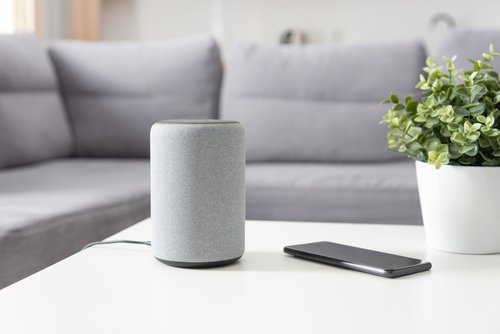
Ask your voice assistant for the weather and you’re talking to a sophisticated speech-recognition model. The weather forecast itself increasingly comes from AI models that outperform traditional physics-based forecasting — AI in weather forecasting and storm tracking is one of the technology’s quietest triumphs.
How Is AI Used in Everyday Life? Follow the Commute
Your maps app reroutes you around traffic using real-time predictions from millions of phones’ location data. Rideshare pricing adjusts by the minute based on predicted demand. If you take public transit, scheduling systems optimize routes and frequency behind the scenes. Even traffic lights in many cities now adapt to actual traffic flow using AI rather than fixed timers.
Your car’s safety features — lane-keeping assist, automatic emergency braking, adaptive cruise control — are AI systems making decisions in milliseconds. You don’t think of them as “artificial intelligence,” but that’s exactly what they are.
The Invisible AI in Your Workday
At work, AI is everywhere and almost nowhere labeled as such. Your email’s smart replies and priority inbox, the autocomplete finishing your sentences, video call noise cancellation that erases your neighbor’s dog, the search that finds a document from three words you half-remember — all machine learning, all invisible.
Customer service chats you use as a customer are increasingly AI chatbots you might not even recognize as bots. Fraud detection watches your bank account silently — AI fraud detection for bank accounts blocks suspicious transactions before you notice. Your credit card company scores every purchase for risk in real time.
Evening: Entertainment, Shopping, and Home
Your streaming recommendations, your social media feed order, the autocorrect that (mostly) fixes your texts, your thermostat learning your schedule, your doorbell camera distinguishing a person from a package — the evening is just as AI-saturated as the morning. Online stores adjust prices dynamically, show you “customers also bought” suggestions from recommendation engines, and NIST’s AI research pages document how these everyday systems keep getting more capable.
Dating apps rank your potential matches. Food delivery apps predict prep times and batch your order with a neighbor’s for efficiency. Your fitness tracker nudges you based on learned patterns. None of it announces itself as AI — it just feels like your phone being “smart.”
Why the Invisibility Matters
The fact that AI disappeared into the background is actually the sign of a mature technology — nobody marvels at the “database technology” in their banking app either. But invisibility has a downside: we stop asking questions about systems that shape our choices, from what news we see to what we pay. The healthiest relationship with everyday AI is appreciative but aware: enjoy the convenience, and occasionally ask what’s deciding things for you.
The AI Living in Your Pocket
Your smartphone alone is an AI showcase. Face ID maps your features with a neural network. The camera’s “night mode” merges multiple exposures using machine learning to produce a photo no single shot could capture. Voice dictation transcribes your speech in real time. Predictive text learns your writing style — mine now suggests my own catchphrases back at me, which is both convenient and slightly unnerving.
Even your battery life is AI-managed: modern phones learn your charging habits and usage patterns to optimize power, slowing the overnight charge to reduce battery wear. App suggestions, notification prioritization, and “screen time” insights all run on models trained on aggregate behavior. The phone isn’t just a tool with AI features — it’s practically an AI device that happens to make calls.
The Part Worth Thinking About: Data and Privacy
All this invisible AI runs on data — largely yours. The convenience-for-data trade is the defining bargain of modern tech: you get magical predictions, and companies get behavioral insights. Most of it is benign and heavily regulated in some regions, but it’s worth knowing the trade exists.
Practical steps that don’t require going off-grid: review app permissions yearly (does that flashlight app need your location?), use the privacy dashboards Apple and Google provide, and be thoughtful about what you tell voice assistants and chatbots — sharing personal information with AI chatbots deserves more caution than most people give it. You don’t need to fear everyday AI, but you should understand the exchange you’re making.
A Week-Long Experiment Worth Trying
Try noticing AI for one week — every time an app predicts, recommends, filters, or transcribes something, pause and name the AI at work. Most people hit fifty instances before Wednesday. It’s a genuinely eye-opening exercise, and it builds the kind of intuitive AI literacy that matters far more than knowing technical definitions. You’ll never look at “just an app” the same way again.
The Practical Takeaway
AI is used in everyday life far more than most people notice — in your morning routine, commute, work tools, finances, entertainment, and home. It’s not coming someday; it’s the water we’re already swimming in. Understanding where it operates helps you use it deliberately instead of just being used by it. Curious about the bigger picture? Start with generative AI explained in plain English and AI versus machine learning in simple terms.






One Comment