
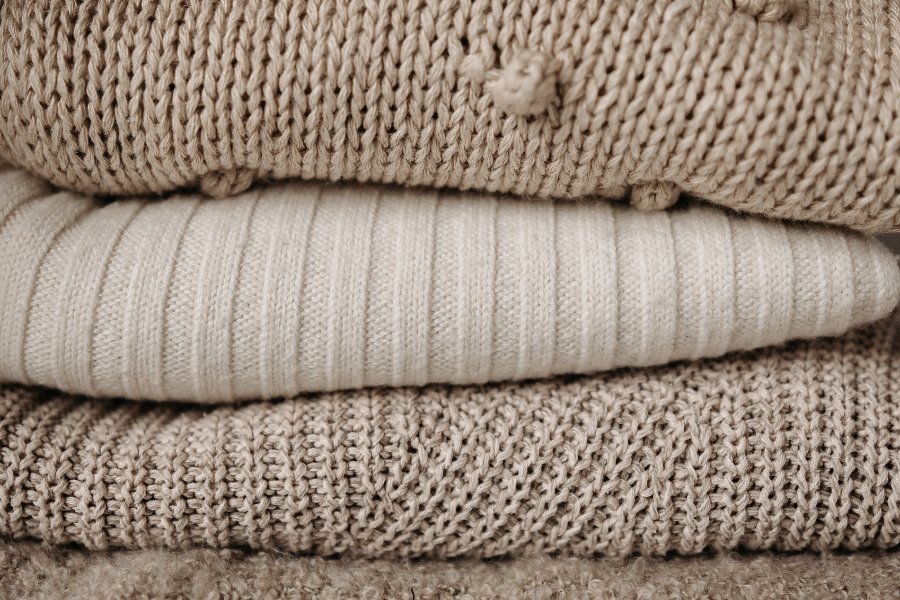
You buy a beautiful sweater, wear it three times, and it’s covered in those annoying little balls of fuzz. Pilling makes even expensive knits look old fast — and it’s one of the most preventable clothing problems there is. That’s why so many people ask how do I prevent pilling on my favorite sweaters — and why you deserve a real answer, not clichés.
Pilling happens when loose fibers tangle into balls through friction. The fixes are straightforward: buy smarter, wash gentler, and remove what forms. Here’s the complete guide.
Buy Smart: Fabrics That Resist Pilling
Pilling starts at purchase. The worst offenders: loosely-knit fabrics, short-staple fibers, and acrylic-heavy blends — they shed loose fibers that ball up immediately. The best resistors: tightly-knit fabrics, long-staple fibers (look for ‘long-staple cotton’ or quality merino), and cashmere (which pills initially then stops — the initial pills are the short fibers leaving, after which it stabilizes).
Check the knit in the store: hold it up to light — a dense, tight knit pills less than a loose, airy one. Rub the fabric gently with your palm; if fibers immediately start balling, walk away. Higher twist yarns (tighter spun) resist pilling better. This 30-second test saves you from sweaters that look old by week two. The Laundress sweater care guides
- Tight knits > loose knits: density is the #1 predictor of pilling resistance.
- Long-staple fibers: quality merino and long-staple cotton shed fewer loose fibers.
- Cashmere pills then stops: initial pilling is normal; it stabilizes after de-pilling.
- Avoid acrylic-heavy blends: the fastest pillers in the sweater world.
- The in-store rub test: rub gently; immediate balling means walk away.
Wash and Wear to Minimize Pilling
Friction causes pilling, so reduce friction everywhere. Wash sweaters inside out in a mesh laundry bag on gentle/delicate with cold water — the bag alone cuts pilling dramatically by preventing the sweater from rubbing against other clothes and the drum. Use a gentle detergent; harsh detergents break fibers down faster.
Never wring sweaters — press water out gently and dry flat (hanging stretches knits and increases friction points). Wear-wise: the underarm and side areas pill most from bag straps and seatbelts — a crossbody bag worn over a sweater is a pilling machine. Rotate sweaters (don’t wear the same one days in a row; fibers need rest to recover), and consider an undershirt to reduce skin-fabric friction. Good Housekeeping fabric care guides
- Mesh bag + inside out: the single biggest washing change — cuts friction dramatically.
- Cold, gentle, mild detergent: heat and harsh chemicals break fibers faster.
- Dry flat, never wring: pressing out water preserves fiber integrity.
- Rotate your sweaters: fibers recover with rest; daily wear accelerates pilling.
- Watch the straps: bags and seatbelts are pilling machines — minimize contact.
Remove Pills: The Tools That Work
Some pilling is inevitable — the key is removing it regularly before it compounds. An electric fabric shaver ($10-15) is the gold standard: quick, safe on most knits, and weirdly satisfying. Use it on a flat surface with light pressure; don’t press hard or go over the same spot repeatedly. A sweater comb (manual, $8) works well for delicates like cashmere where you want more control.
In a pinch: a disposable razor (very light touch, flat surface — risky on loose knits), or a pumice sweater stone for heavier pills. What to avoid: pulling pills off by hand (it pulls more fibers out, creating future pills) and sticky lint rollers (they don’t remove pills, just lint). De-pill every few wears and the sweater stays perpetually fresh.
- Electric fabric shaver: $10-15, the gold standard — quick and safe.
- Sweater comb for delicates: more control for cashmere and fine knits.
- Light pressure, flat surface: technique matters — don’t press or overwork spots.
- Never pull pills by hand: yanks fibers out and creates more future pilling.
- De-pill regularly: every few wears keeps sweaters perpetually fresh.
Common Mistakes to Avoid
Let me save you some trial and error. These five mistakes are the reason most people’s efforts in this area stall out — and each one is completely avoidable with a minute of awareness.
- Pulling pills by hand: the most common mistake — yanks fibers and guarantees more pilling. Shaver or comb, never fingers.
- Washing sweaters with jeans: rough fabrics and zippers abrade knits mercilessly. Wash knits with knits, in mesh bags.
- Skipping the mesh bag: the single biggest wash-day change. It cuts friction dramatically — the root cause of pilling.
- Wearing the same sweater daily: fibers need rest to recover. Rotation isn’t fussiness; it’s fiber physics.
- Buying loose acrylic knits: the fastest pillers in existence. Check the knit density and fiber before buying, not after.
Frequently Asked Questions
Why do expensive sweaters pill too?
Pilling is about fiber length and knit looseness, not price — though quality makers use longer fibers that pill less. Even cashmere pills initially (short fibers working out), then stabilizes. De-pill once and it often stops.
Can I prevent pilling completely?
Not entirely — some fiber shedding is natural, especially with soft natural fibers. But tight knits, proper washing (mesh bag, cold, gentle), rotation, and prompt de-pilling keep it essentially invisible.
Is a fabric shaver safe for all sweaters?
For most knits, yes, with light pressure on a flat surface. Use extra care on very fine cashmere and loose open knits — a manual sweater comb gives more control there. Never press hard or dwell on one spot.
Does fabric softener prevent pilling?
No — and it can worsen things by coating fibers and reducing their natural resilience. Skip softener on knits; white vinegar in the rinse is the better additive for softness without the coating.
Pro tip: Revisit this guide in 30 days. You’ll catch details you missed the first time, and the second read tends to stick because you’ve got real experience to attach it to.
How do I prevent pilling on my favorite sweaters: The Bottom Line
Prevent sweater pilling by buying tight knits in long-staple fibers (rub-test in store), washing inside-out in mesh bags on cold gentle, drying flat, rotating wears, and minimizing strap friction. Remove inevitable pills with a $10-15 electric fabric shaver (never pull by hand). Pilling isn’t a sign of cheap clothes or bad luck — it’s friction physics, and it’s entirely manageable. Your favorite sweaters can look new for years.






One Comment