Can AI help small farmers monitor their crops? When people picture AI in agriculture, they imagine massive corporate farms with million-dollar equipment. But some of the most impactful applications are happening on small farms — often with just a smartphone. AI is democratizing the kind of crop intelligence that used to require agronomists on staff, and for small farmers operating on thin margins, that intelligence can be the difference between profit and loss.
The Smartphone Revolution: AI in Your Pocket
The most accessible entry point is plant disease identification apps like Plantix (free, used by millions of small farmers worldwide). Snap a photo of a sick leaf; AI identifies the disease, suggests treatment, and connects you with agricultural advice. For a small farmer without easy access to extension services, this is transformative — early, accurate diagnosis instead of guessing or waiting.
Similar apps identify pests, nutrient deficiencies (that yellowing pattern means nitrogen deficiency, this one means iron), and weeds. The accuracy keeps improving as training datasets grow, and for common crops and common problems, they’re remarkably reliable. It’s like carrying an agronomist in your pocket — one that works at midnight and never charges a consultation fee.
Can AI Help Small Farmers Monitor Their Crops? Beyond the Phone
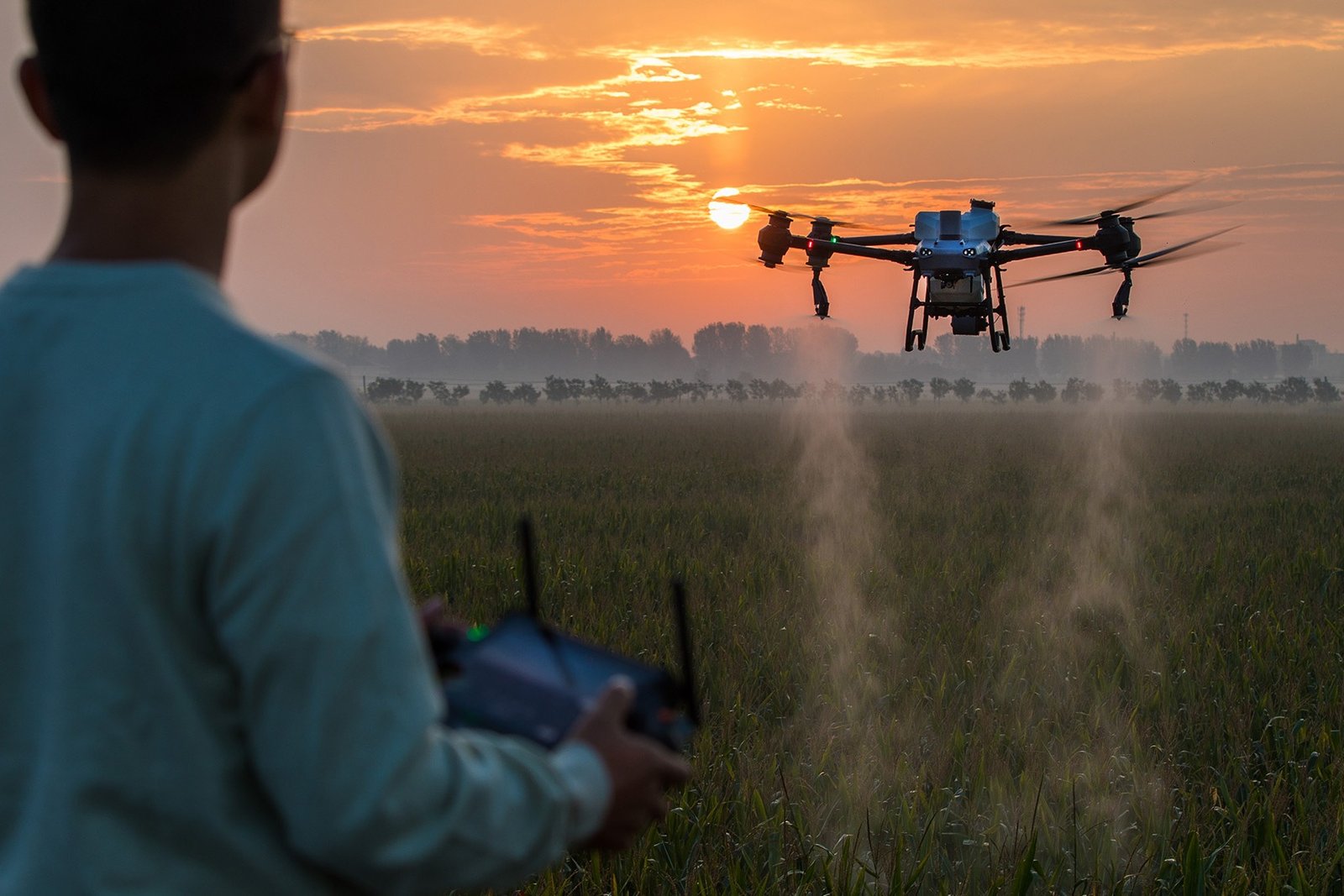
- Drone imagery (increasingly affordable): Consumer drones ($300-1,500) with AI analysis software create field health maps from aerial photos. Multispectral imaging reveals crop stress invisible to the naked eye — water stress, pest damage, nutrient issues — days or weeks before you’d spot it walking the field. For small farms, even a basic drone flown weekly provides intelligence that was impossible a decade ago.
- Soil and weather sensors: Affordable IoT sensors ($50-200) monitor soil moisture, temperature, and conditions continuously. AI interprets the data: “Field 3 needs irrigation tomorrow morning” instead of raw numbers you’d have to analyze yourself. Precision irrigation alone can cut water use 20-30% while improving yields.
- Satellite data (often free): Programs like NASA’s and ESA’s provide free satellite imagery; AI-powered platforms translate it into field-level insights — vegetation indices, growth tracking, yield prediction. Small farmers access the same orbital intelligence as agribusiness giants.
- Predictive analytics: AI models forecast pest outbreaks based on weather patterns, predict optimal harvest timing, and estimate yields — turning reactive farming into proactive farming.
The Economics for Small Farms (The Real Question)
Let’s be practical about costs. The smartphone apps are free — start there, today, zero risk. A basic drone setup runs $500-2,000 all-in; for a farm where early disease detection saves even one significant crop loss, it pays for itself in a season. Sensor networks scale from a $100 starter kit to comprehensive coverage. The key principle: start with the free phone apps, add hardware only when you’ve validated the value.
The ROI math favors small farms more than you’d think: large farms gain efficiency at scale, but small farms gain capabilities they never had — professional-grade diagnosis, monitoring, and prediction without professional-grade staff. That’s a bigger relative leap. Government programs and agricultural extensions in many regions now offer precision-ag training and sometimes equipment subsidies; check your local extension office.
Challenges Worth Knowing
Honest limitations: connectivity — many rural areas still lack reliable internet, though offline-capable apps are improving. Training data bias — AI models trained on major commodity crops in specific regions may underperform on specialty crops or different climates; verify recommendations against local knowledge. Over-reliance risk — AI suggests, but the farmer’s experience with their specific land remains irreplaceable. The best results come from AI insights combined with farmer judgment, not replacing it.
There’s also a data ownership question: who owns the farm data collected by these platforms? Read terms of service, prefer platforms with clear farmer-data ownership policies, and be cautious about free platforms with vague data practices — the privacy considerations for free AI apps apply to farm data too.
The Cooperative Advantage: Sharing Costs, Multiplying Value
Here’s a model more small farmers should consider: precision-ag cooperatives. A $2,000 drone shared among ten farms costs $200 each. A sensor network’s insights improve with more data — ten farms’ worth of local conditions beats one. Training sessions split ten ways. Some farming cooperatives now jointly employ a “precision ag coordinator” who flies the drone, interprets the data, and advises all members — professional-grade intelligence at a fraction of individual cost.
This cooperative model also solves the data problem: pooled, anonymized data from many small farms in a region creates training datasets that actually reflect local conditions — addressing the bias problem of models trained elsewhere. If your area has a farming cooperative, ask about precision ag initiatives. If it doesn’t, consider starting the conversation: the first farmer with a drone often becomes the neighborhood’s accidental consultant, and formalizing that into cost-sharing benefits everyone.
What to Try This Season (The Action Plan)
Don’t overhaul everything at once. This season: download one crop health app (Plantix or similar) and use it on every suspicious leaf — build the habit. Photograph your fields weekly from the same spots; even without AI analysis, the visual record is invaluable, and you’ll have training data if you add AI later. Talk to your extension office about precision ag programs and subsidies. Next season, evaluate whether a drone or sensor kit earned its place in your budget based on what you learned. Incremental adoption beats grand overhauls — in farming as in everything.
The Practical Takeaway
Can AI help small farmers monitor their crops? Yes — and the entry point is free: smartphone apps for disease and pest identification that work today. From there, affordable drones, soil sensors, and free satellite data add aerial intelligence, precision irrigation, and predictive analytics at costs that pay back quickly. Start with the phone, validate the value, then invest incrementally. The family farm with AI-assisted monitoring isn’t a futuristic fantasy — it’s this season’s competitive advantage, available to anyone with a smartphone and the curiosity to try — which, this season, might just be you — and your crops will thank you for it. What farmers call precision agriculture has been building for decades — AI vision just made it affordable at small scale. Crop monitoring pairs naturally with AI weather forecasting for planting decisions — and if the terminology confuses you, the difference between AI and machine learning clears it up.