
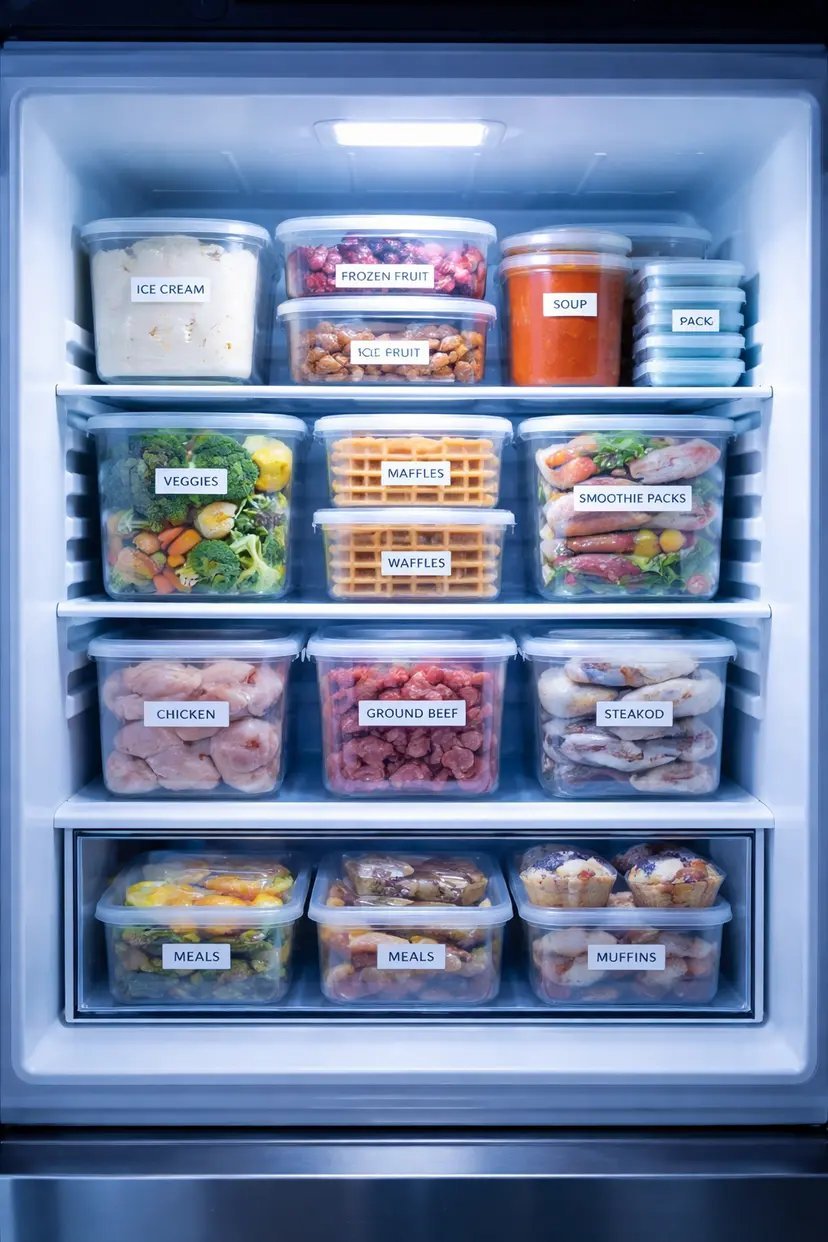
Your freezer is either a goldmine of future easy dinners or a graveyard of frostbitten mysteries — there’s no in-between. Learning the best way to freeze leftovers for later use turns your freezer into the former: a stash of homemade meals ready on nights you can’t cook. I’ve been batch-freezing for years, and the difference between freezer success and freezer sadness comes down to a handful of techniques.
Why Freezing Goes Wrong (Freezer Burn Explained)
Freezer burn isn’t dangerous — it’s dehydration. Air reaches the food’s surface, moisture escapes, and you get those dry, grayish patches. It won’t make you sick, but it ruins texture and flavor. Every technique below is fundamentally about one thing: keeping air away from food. Master that and your frozen leftovers will taste remarkably close to fresh.
The Best Way to Freeze Leftovers: Step by Step
1. Cool food before freezing (but not for hours)
Hot food in the freezer raises the temperature around it and creates condensation (hello, ice crystals). But don’t leave food on the counter for hours either — the 2-hour rule applies. Divide large pots into shallow containers so they cool faster, then refrigerate or freeze within 2 hours of cooking.
2. Portion before you freeze
Freeze in the portions you’ll actually eat — single servings, family-size, whatever matches your life. Thawing a giant block to eat half of it defeats the purpose, and refreezing thawed food degrades quality fast. Muffin tins and ice cube trays are brilliant for sauces, stocks, and small portions.
3. Remove as much air as possible
This is the golden rule. For zip-top freezer bags: fill, seal almost completely, then press out air before sealing fully (or use a straw to suck out the last bit). For containers: choose the right size so there’s minimal headspace, or press plastic wrap directly on the food’s surface before lidding. Vacuum sealers are the gold standard if you freeze a lot — they pay for themselves in prevented waste.
4. Label everything
You will not remember what that container is in three weeks. Trust me. Label with the contents AND the date — masking tape and a marker work perfectly. “Mystery container, January” is how food gets thrown away uneaten. Dated, labeled food gets eaten.
5. Freeze flat for soups and stews
Pour soups, chilis, and sauces into freezer bags, squeeze out air, and freeze them flat on a sheet pan. Once solid, they stack like files — incredibly space-efficient, and they thaw much faster than a solid block. This single trick doubles most people’s usable freezer space.
What Freezes Well (And What Doesn’t)
Freezes beautifully: soups, stews, chilis, curries, braised meats, cooked beans, rice, pasta sauces, meatballs, pulled pork, casseroles, creamy blended soups, muffins, bread dough (see freezing pizza dough).
Freezes okay with caveats: cooked pasta (slightly softer on reheating — undercook it a touch), rice (sprinkle water when reheating), mashed potatoes (add extra butter/cream; texture changes slightly), fried foods (lose crispness — reheat in oven, not microwave).
Don’t bother freezing: raw salad greens, cucumbers, and watermelon (turn to mush), cream-based sauces (they separate — though they can be whisked back), hard-boiled eggs (rubbery), and anything mayonnaise-based.
How Long Do Frozen Leftovers Last?
- Soups and stews: 2-3 months at peak quality
- Cooked meat and poultry: 2-3 months
- Casseroles: 2-3 months
- Bread and baked goods: 3 months
- Vegetables (blanched): 8-12 months
These are quality guidelines, not safety dates — frozen food stays safe indefinitely at 0°F, but taste and texture decline over time. The FoodSafety.gov cold storage charts are the authoritative reference if you want specifics.
Thawing and Reheating Right
Thaw overnight in the fridge for best results — it’s the safest method and preserves texture. In a hurry? The cold-water method (sealed bag, cold water, changed every 30 minutes) works for smaller portions. Reheat soups and stews gently on the stove, stirring occasionally; casseroles and solid dishes do best in the oven (covered with foil to prevent drying). Add a splash of broth or water when reheating anything that looks dry — freezing dulls moisture, and a little liquid brings it back.
Freezing FAQ
Can you refreeze thawed leftovers? If thawed in the fridge and handled safely, you can refreeze — but each freeze-thaw cycle degrades texture. Better to cook the thawed food into something new, then freeze that.
Do I need special freezer bags? Regular zip-top bags work for short-term (a few weeks). For longer storage, actual freezer bags (thicker) or vacuum sealing make a real difference in preventing freezer burn.
Why did my food get ice crystals? Air exposure or slow freezing. Remove air thoroughly, and don’t overload the freezer — it needs to freeze food quickly for the best texture.
Can I freeze in glass containers? Yes, if they’re freezer-safe and you leave headspace for expansion (liquids expand about 9%). Let glass cool completely before freezing, and don’t go straight from freezer to oven unless it’s rated for thermal shock.
The Takeaway
The best way to freeze leftovers: cool quickly, portion smartly, remove all the air, label with dates, and freeze flat. Do that consistently and your freezer becomes a personal meal-delivery service — future-you, exhausted on a Wednesday night, will be incredibly grateful to past-you. Start tonight: double whatever you’re cooking and freeze half.
Building a Freezer Inventory System
Here’s what separates freezer pros from everyone else: an inventory. Keep a simple list on the freezer door (whiteboard, or just paper and a magnet) of what’s inside and when it went in. When you add something, write it down; when you take something out, cross it off. Once a month, plan a “eat from the freezer” week to rotate stock before quality declines. Without a system, food goes in and gets forgotten until it’s a frostbitten relic. With a system, your freezer is a curated collection of future meals. It takes 30 seconds per item and saves real money — the average American family throws away hundreds of dollars of food a year, and a lot of it dies in the freezer, unlabeled and forgotten.
Freezer-Friendly Meal Prep Recipes to Start With
If you’re new to freezer cooking, start with these foolproof options: a big pot of chili, chicken tortilla soup, bolognese sauce, pulled pork, and breakfast burritos (wrap individually in foil, then bag). All freeze and reheat beautifully, all are cheap to make in bulk, and they cover lunches and dinners for weeks. Cook one big batch each weekend for a month and you’ll build a serious stockpile without a marathon cooking session. Pair this habit with one-pot weeknight meals — double the recipe, eat half tonight, freeze half for later. It’s the easiest meal-prep system there is.





2 Comments