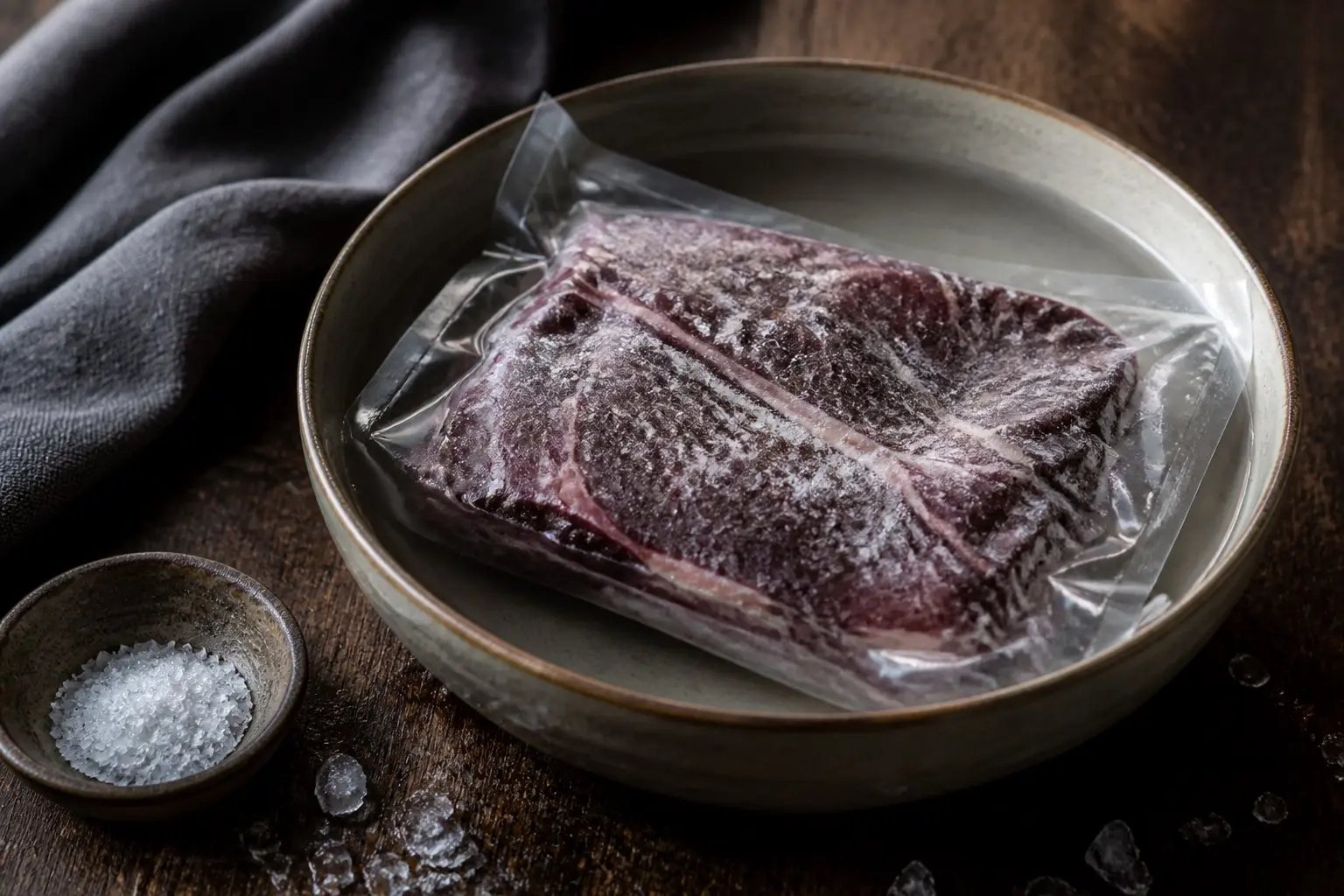
We’ve all been there. It’s 5 PM, dinner was supposed to be chicken, and the chicken is a solid brick in the freezer. You need to defrost meat quickly — but you also don’t want to give anyone food poisoning. The good news: there’s a method that’s both fast and safe, and it doesn’t involve any sketchy shortcuts.
The Best Way to Defrost Meat Quickly and Safely: Cold Water
The USDA’s recommended fast method is the cold water thaw, and it works better than most people expect. Here’s exactly how to do it:
- Put the frozen meat in a leak-proof plastic bag (a zip-top freezer bag is perfect). Squeeze out the air and seal it tight. You do not want water touching the meat directly.
- Submerge the bag in a bowl of cold tap water. Not warm, not hot — cold. This feels wrong, but warm water is dangerous (more on that below).
- Change the water every 20 to 30 minutes so it stays cold.
- Cook the meat immediately once thawed.
Timing? A pound of ground meat or a couple of chicken breasts thaws in about an hour. A 3-to-4-pound whole chicken takes 2 to 3 hours. A thick steak, roughly 60 to 90 minutes. Cold water conducts heat about 25 times better than air, which is why this beats the fridge so dramatically.
The USDA Food Safety and Inspection Service confirms the cold water method as one of only three safe thawing methods. It’s the one I use every single week.
The Safest Method (If You’re Not in a Hurry): The Fridge
Fridge thawing is the gold standard for safety. Put the frozen meat on a plate or in a container (to catch drips) on the bottom shelf and wait. Ground meat takes about a day, a whole turkey can take 3 to 4 days. The beauty of it: once thawed, the meat stays good in the fridge for another 1 to 2 days before cooking, so there’s no rush.
My system: every night, I move tomorrow’s protein from the freezer to the fridge. It’s a habit that takes five seconds and eliminates the 5 PM panic entirely. Pair this with planning a weekly dinner menu and weeknight cooking gets almost stress-free.
The Microwave: Fast But Tricky
Yes, the microwave defrost setting works — it’s the third USDA-approved method. But it thaws unevenly, and the edges often start cooking while the center stays frozen. If you go this route:
- Use the defrost setting or 30% power, not full power.
- Flip and rotate the meat every couple of minutes.
- Cook it immediately after — microwaved meat has warm spots where bacteria can grow, so it can’t wait.
Honestly? I only use the microwave for small things like a single chicken breast or a pound of ground beef. For anything bigger, cold water wins.
What NOT to Do
Let’s clear up the dangerous stuff, because bad advice about defrosting is everywhere:
- Don’t thaw on the counter. The outside of the meat hits the bacterial danger zone (40°F to 140°F) while the inside is still frozen. Two hours at room temperature is the absolute max for any perishable food, per FoodSafety.gov.
- Don’t use hot water. It warms the surface into the danger zone fast while the inside stays icy. Same problem, accelerated.
- Don’t refreeze raw meat that was thawed in cold water or the microwave unless you cook it first. Fridge-thawed meat can be refrozen, though quality takes a hit.
- Don’t thaw meat in its store packaging if it’s not waterproof — those foam trays leak.
Can You Cook Meat From Frozen?
Actually, yes — and this surprises people. The USDA says it’s safe to cook meat from frozen; it just takes about 50% longer. Frozen chicken breasts in the oven, frozen ground beef browned in a skillet (break it apart as it thaws), frozen steaks seared straight from the freezer — all fine. The one exception: don’t cook a whole frozen turkey in the microwave, and slow cookers are a no-go for frozen meat since they heat too slowly through the danger zone. If you’re into slow cooking, start with thawed meat for tender slow cooker meals.
The Takeaway
Forgot to thaw? Cold water, sealed bag, change the water every half hour, cook right away — that’s the best way to defrost meat quickly and safely. Planning ahead? The fridge does it with zero effort. Just never leave meat on the counter all day, no matter what your grandmother did. Food safety science has moved on, and so should we.
How Long Does Thawed Meat Last?
This trips people up, so here’s the quick reference:
- Fridge-thawed meat: 1 to 2 days for ground meat and poultry; 3 to 4 days for steaks, chops, and roasts. The clock starts when it’s fully thawed, not when you moved it to the fridge.
- Cold-water or microwave-thawed meat: cook it immediately. No waiting, no “I’ll cook it tomorrow.” The outer layers have been in warmer territory, so the safety margin is gone.
- Cooked thawed meat: 3 to 4 days in the fridge, like any leftovers.
When in doubt, the sniff test helps but isn’t foolproof — some spoilage bacteria don’t smell. If meat feels slimy, looks gray-green, or smells off, toss it. A few dollars of meat isn’t worth a night of food poisoning.
Defrosting FAQ
Is it safe to defrost meat in hot water if I’m in a real hurry? No — this is the one shortcut food safety experts consistently warn against. Hot water brings the surface into the bacterial danger zone while the center stays frozen. Cold water is already fast; don’t gamble.
Can I refreeze thawed meat? If it thawed in the fridge and never left it, yes — though texture suffers. If it thawed in cold water or the microwave, cook it first, then you can freeze the cooked meat.
How can I tell if meat thawed safely? If it stayed cold to the touch throughout (fridge or cold water method with water changes), you’re fine. If it sat on the counter for hours and feels room-temperature, don’t risk it.
Does thawing in the fridge dry out meat? Not if it’s wrapped well. In fact, uncovered fridge thawing can dry the surface slightly, so keep it sealed or covered. A day or two won’t hurt quality at all.