The average American family throws away roughly $1,500 worth of food every year. Not because they’re wasteful people — because produce goes limp, leftovers get forgotten, and good intentions rot in the crisper drawer. I used to be terrible at this; now I waste almost nothing, and it wasn’t willpower that changed — it was systems. Here’s how to reduce food waste in your kitchen each week with practical habits that take minutes, not moralizing.
Start With the “Eat Me First” System
The #1 cause of food waste is invisibility — food you can’t see doesn’t get eaten. Fix it with one designated spot:
- An “Eat Me First” box or shelf in the fridge for anything that needs using in 1–2 days: the half onion, the wilting herbs, the leftovers from Tuesday, the yogurt expiring Friday.
- Front-of-fridge rule: New groceries go behind; older items move forward. It takes 10 seconds during unpacking.
- The weekly “use it up” meal: One dinner a week (Friday works well) built entirely from what’s left — stir-fry, soup, frittata, fried rice. These “clean out” meals are often the week’s best because constraints breed creativity.
This single system eliminates the majority of household waste. Everything else is optimization.
Shop Like You Mean It
Waste starts at the store, not the fridge:
- Make a list from a loose meal plan. Not a rigid 7-day menu — just 4–5 dinners and the ingredients they share. Shopping without a plan is how you buy your third bunch of cilantro.
- Check what you have first. The 60-second fridge/freezer/pantry scan before shopping prevents the most common duplicate purchases.
- Buy perishables twice, not once. One big shop for staples + one small midweek top-up for fresh produce beats one giant haul where half the greens die by Thursday.
- Don’t fear the “ugly” produce or the marked-down rack — a brown banana is a perfect banana for baking, and discount vegetables are tonight’s soup.
- Understand date labels: “Best by” and “sell by” are quality suggestions, not safety deadlines (except infant formula). Your nose and eyes are better judges. The USDA food safety basics explain what’s actually risky versus what’s just less fresh.
Store It Right (Half the Battle)
Most waste is a storage failure, not an overbuying failure:
- Prep produce on grocery day: Wash, dry thoroughly, and store properly — 20 minutes that doubles vegetable life. Our guide to keeping vegetables fresh has the specifics.
- Freeze proactively, not desperately. Freeze bread, meat, and produce before they turn — freezing is preservation, not a last rite. Almost-fresh frozen beats fresh-but-rotting.
- Learn the rescue techniques: Wilted greens revive in ice water. Stale bread becomes croutons, breadcrumbs, or French toast. Soft vegetables become soup, sauce, or stir-fry. Sour milk becomes pancakes. “Too far gone” is much farther than most people think.
- Label and date leftovers. Masking tape + marker: contents + date. Mystery containers get thrown away; labeled ones get eaten.
Cook to Use, Not to Impress
- Embrace flexible-format meals: Soups, stir-fries, curries, frittatas, grain bowls, and smoothies absorb whatever needs using. These six formats can rescue virtually any ingredient.
- Cook components, not just meals: A batch of grains, a roasted tray of vegetables, a protein — mix and match all week. See our meal prep guide for the system.
- Right-size your cooking: If you consistently have too many leftovers, cook less. If leftovers never get eaten, plan them as meals (“planned-overs”) rather than hoping.
- First in, first out — for the pantry too. New cans go behind old ones.
Track It for Two Weeks (The Eye-Opener)
Keep a simple list on the fridge of everything you throw away for two weeks. Most people are stunned — it’s never what they expected. The pattern reveals your personal waste profile: always the herbs? Buy smaller quantities or grow a pot. Always the leftovers? Cook less or plan leftover meals. The list diagnoses; the systems above cure.
Composting: The Last Resort That’s Actually Great
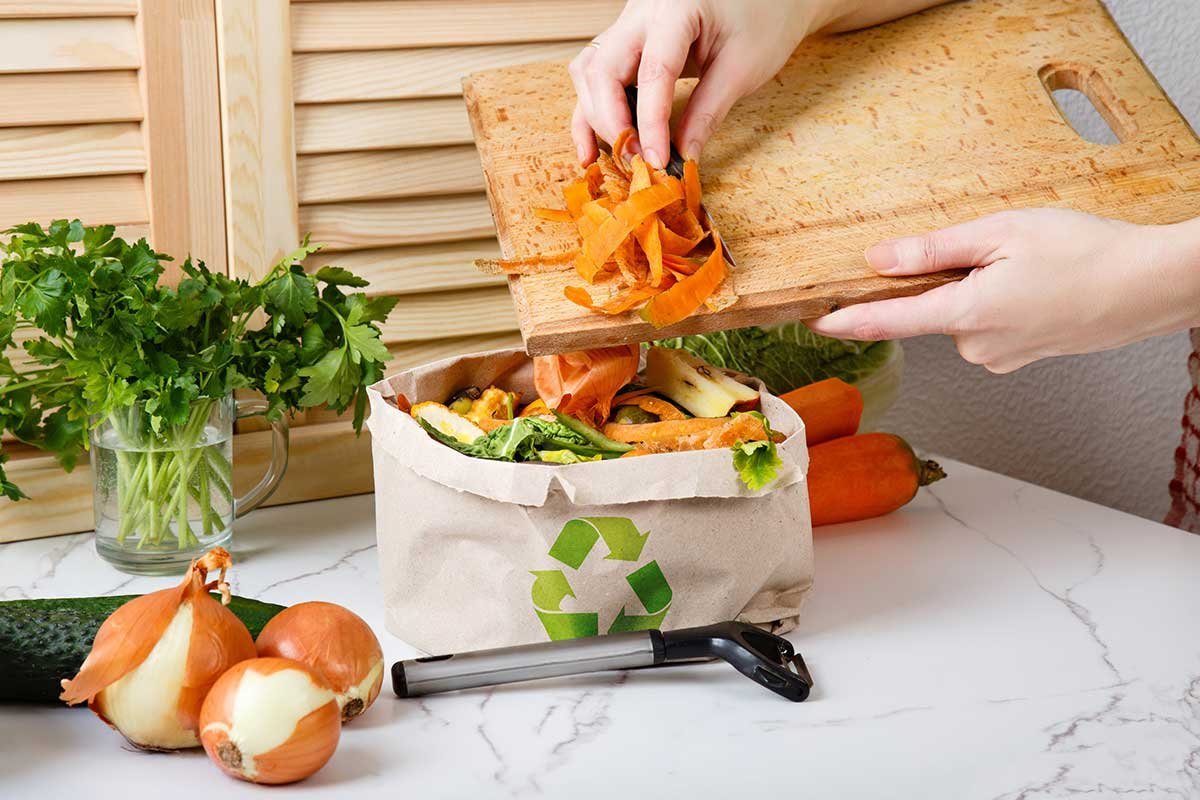
Some waste is unavoidable — peels, cores, coffee grounds, the forgotten lettuce. Composting converts it from garbage into garden gold instead of landfill methane (food waste in landfills generates methane, a potent greenhouse gas — the environmental case is as strong as the economic one). Countertop compost pails ($25–$40, with charcoal filters for odor) collect scraps conveniently; empty into an outdoor bin, tumbler, or municipal green bin weekly.
What composts: fruit/vegetable scraps, coffee grounds and filters, eggshells, yard trimmings, shredded newspaper. What doesn’t (in home systems): meat, dairy, oils (attract pests), diseased plants, pet waste. Vermicomposting (worm bins) works indoors year-round and produces the best compost of any method — red wigglers eat your scraps and the “ick” factor is far lower than expected.
Many cities now offer curbside organics collection — check yours before buying equipment. If the city takes it, composting is literally as easy as a second trash can. The goal hierarchy: prevent waste first, rescue and eat second, compost what’s left. All three together get a household near zero food waste.
The “Eat Me First” System
The simplest waste-prevention system costs nothing: designate one shelf or bin as “eat me first” — anything approaching its prime goes there, front and center. Move it to eye level: most food waste happens because items hide behind newer groceries until they rot. When you unpack shopping, new items go to the back, older ones move forward — the grocery-store rotation trick, applied at home.
Pair it with a weekly “use it up” meal — stir-fry, soup, frittata, or fried rice — that exists specifically to clear the eat-me-first shelf. Families who adopt this two-part system (visible shelf + weekly clearing meal) consistently report cutting their food waste in half within a month. It works because it fights the actual cause of waste: forgetting what you have.
The Bottom Line
To reduce food waste in your kitchen each week: run an “eat me first” system, shop from a loose plan, prep and store produce properly on grocery day, freeze proactively, master the six rescue meals (soup, stir-fry, frittata, curry, grain bowl, smoothie), and track waste for two weeks to find your patterns. You’ll save $100+ monthly, eat better, and stop feeling guilty every trash day. It also makes every other food habit cheaper — from meal prep to budget family dinners.