
You found the perfect spot for floating shelves — right there on that big empty wall. Then the stud finder sweeps across it in silence. No studs. Most people either give up or drill anyway and watch their beautiful shelves (and everything on them) crash down at 2 a.m. But here’s the good news: knowing how to hang shelves on drywall without studs is absolutely possible. You just need the right anchors for the weight, installed correctly. Here’s the full playbook.
Why Regular Screws Fail in Drywall (The 30-Second Physics)
Drywall is basically compressed gypsum dust between paper — strong in compression, pathetic in tension. A plain screw driven into drywall with no stud behind it will hold for a while… then slowly work loose as weight and vibration do their thing. Anchors solve this by spreading the load across a larger area of drywall or gripping the back of the panel. The right anchor, properly installed, can hold 50–100+ pounds in half-inch drywall. The wrong one holds your hopes and dreams until gravity wins.
Choose the Right Anchor for the Job
Match the anchor to the weight. When in doubt, over-spec — anchors are cheap, drywall repair is annoying (though our guide to patching drywall holes has you covered if things go sideways).
- Self-drilling threaded anchors (25–50 lbs each): The easiest option. They screw directly into drywall with just a screwdriver — no pre-drilling. Perfect for light floating shelves with books or décor. My go-to for most shelf projects.
- Toggle bolts (50–100+ lbs each): The heavy-duty champion. The wings open behind the drywall, spreading load across a wide area. Required for deep shelves, heavy books, or anything you value. Slightly fiddlier to install (you need a biggish hole), but nothing holds like a toggle.
- Molly bolts (25–50 lbs each): The metal sleeve expands behind the drywall as you tighten. Very secure and removable-friendly — good middle ground.
- Adhesive strips/hooks (up to ~15 lbs): For tiny ledge shelves only. Fine for a small picture ledge; delusional for bookshelves.
Rule of thumb: use at least two anchors per shelf bracket, rated for double your estimated load. A shelf of hardcover books gets heavy fast — a 3-foot shelf of books can weigh 40–60 pounds.
How to Hang Shelves on Drywall Without Studs: Step by Step
Step 1: Confirm there really are no studs
Sweep the whole area with a stud finder, then knock-test — studs sound solid, hollow bays sound… hollow. Also check with a strong magnet dragged slowly across the wall; it’ll catch on the screws holding drywall to studs. Mark any you find; even one stud changes the plan (anchor one side to the stud, anchor the other).
Step 2: Mark level lines
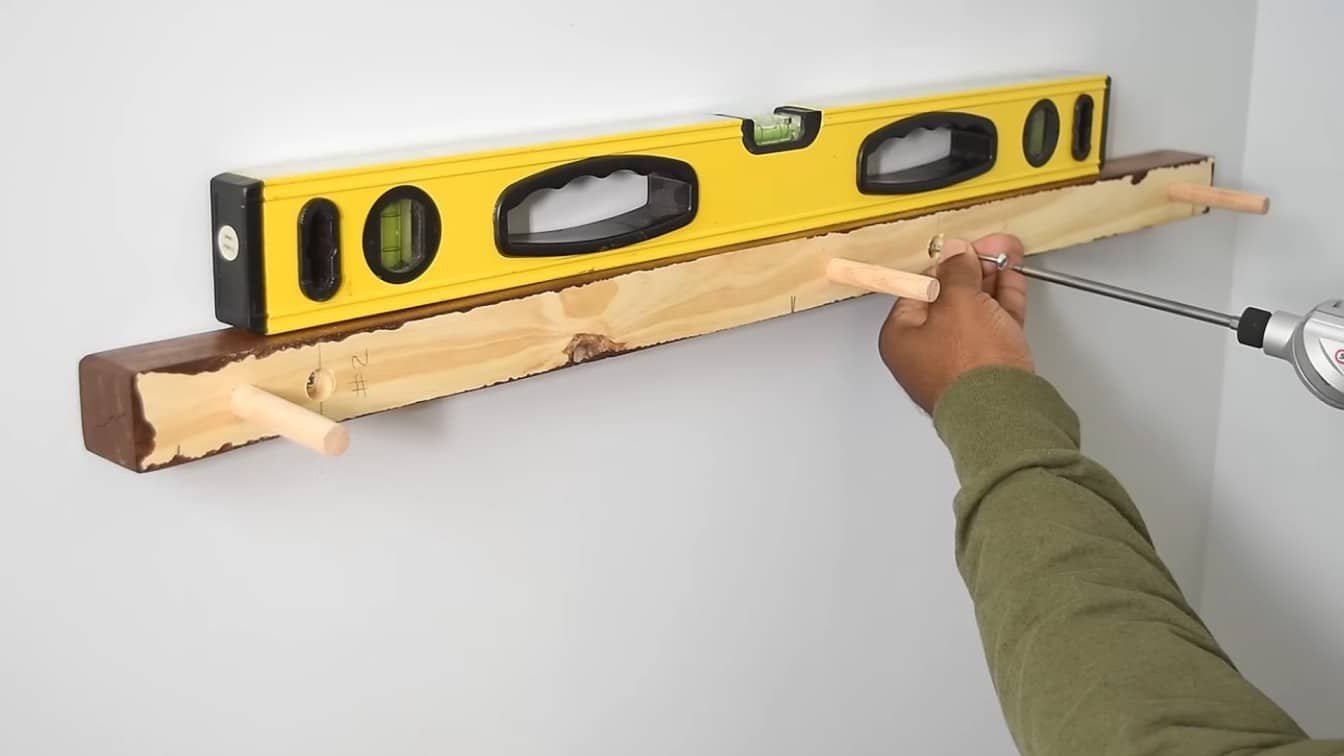
Hold the shelf/bracket in position and mark mounting holes with a pencil. Use a real level — phone apps lie. For multiple shelves, measure spacing carefully; eyeballing vertical alignment is how you get the Leaning Tower of Shelves.
Step 3: Install the anchors
For self-drilling anchors: drive them straight in with a screwdriver until flush — don’t overtighten or you’ll strip the drywall. For toggles: drill the required hole, fold the wings, push through, and pull back gently while tightening so the wings seat flat against the drywall’s back. For mollies: tap into a pilot hole, then tighten the screw to expand the sleeve before attaching the bracket.
Step 4: Mount and load gradually
Attach brackets to the anchors (not the drywall directly), set the shelf, check level again, then load weight gradually from the center outward. Give it a day before trusting it fully — then load with confidence.
Family Handyman’s wall-hanging guide has anchor weight charts worth bookmarking.
Floating Shelves vs. Bracketed Shelves
True floating shelves (with hidden internal brackets) concentrate enormous force on a few mounting points — they’re the hardest to do safely without studs. If you must float without studs, use toggle bolts and keep the shelf shallow (8–10 inches max) and lightly loaded. Bracketed shelves distribute weight better and are far more forgiving. Honestly? Attractive brackets with proper anchors look great and hold twice as much. Don’t let floating-shelf aesthetics override physics.
Common Mistakes That End in Disaster
- Using plastic expansion anchors for shelves. They’re for picture frames, not shelves. Just don’t.
- Overtightening and stripping the drywall. Snug is enough — the anchor does the work, not the torque.
- Ignoring the weight of the shelf itself. Solid wood shelves are heavy before you put anything on them.
- Mounting into drywall seams or near edges. Anchors need solid panel, at least a few inches from any edge or seam.
- Loading immediately to max. Let everything settle, then load up.
Styling Your Shelves So They Look Intentional
Hung shelves are only half the project — what you put on them determines whether they look designed or cluttered. The stylist’s formula: vary heights and textures (tall vase, stack of books, small plant), leave breathing room (a shelf packed edge-to-edge reads as storage; 30% empty space reads as decor), and repeat colors across shelves for cohesion.
Practical rules: put heavy items (books) on lower shelves and lighter decor up high — it’s safer and looks balanced. Group in odd numbers (3s and 5s look natural; 2s and 4s look staged). Mix horizontal stacks (books lying flat) with vertical elements for visual rhythm. And leave one shelf slightly minimal — the eye needs a resting place.
For kitchens, open shelves work best for everyday items you actually use — dishes, glasses, oils. If it’s decorative-only, it’ll collect grease and dust; if it’s in daily rotation, it stays clean. That’s the real test of open shelving: beautiful and functional beats beautiful alone.
The Bottom Line
Hanging shelves on drywall without studs comes down to one decision: the right anchor for the weight. Self-drilling anchors for light loads, toggle bolts for anything serious, installed level and loaded sensibly. Do that and your shelves will outlast your interest in what’s on them. Once they’re up, you might want to style the room around them — our tips on brightening a dark living room and choosing the right rug size will help the whole space come together.






One Comment