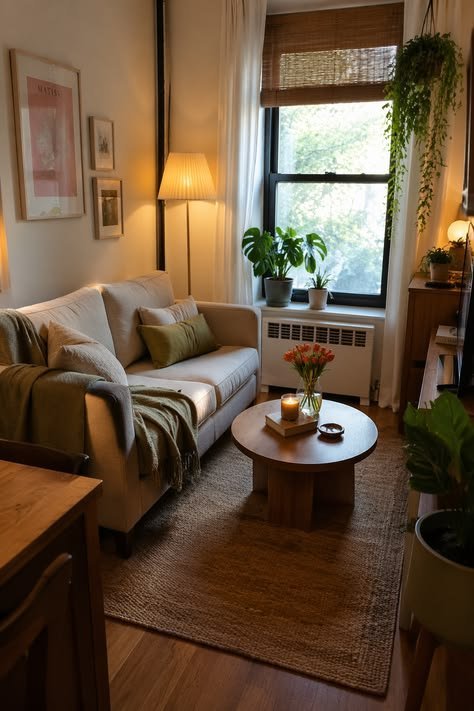
Rental apartments have a way of feeling temporary — beige walls, bland fixtures, and the constant awareness that it’s not really yours. But “temporary” doesn’t have to mean “soulless.” Learning how to make a rental apartment feel more like home is about working with the constraints (no paint, no drilling, deposit on the line) instead of fighting them. I’ve rented for over a decade across five apartments, and every single one ended up feeling like home — usually for less than $200 in total changes.
Start With What You Can Change for Free
Before spending a dime:
- Rearrange the furniture. Most renters keep the previous tenant’s layout. Try three arrangements before settling — the right layout can make the same furniture feel like a different apartment. Float furniture away from walls; define zones with rugs.
- Declutter ruthlessly. Rentals feel temporary partly because they’re full of “I’ll deal with this when I move” clutter. A clean, intentional space feels like home regardless of ownership. The method in decluttering without overwhelm works perfectly here.
- Deep clean everything. Previous-tenant grime is invisible but psychologically real. A top-to-bottom clean (especially kitchen and bathroom) resets the space as yours.
- Maximize natural light. Take down heavy landlord blinds if allowed (store them carefully), clean the windows, use sheer curtains. Light transforms rentals more than any purchase.
How Can I Make My Rental Apartment Feel More Like Home? The Renter-Friendly Upgrades
Walls (without losing your deposit)
- Removable wallpaper / peel-and-stick: One accent wall transforms a room. Modern versions remove cleanly — test a corner first, and avoid the cheapest brands (they’re the ones that damage paint).
- Command strips and hooks: Hang art, mirrors, shelves, curtains — the whole gallery wall, zero holes. Follow weight limits religiously and remove with the pull-tab technique.
- Large-scale art: One big piece (thrifted frame + printed art, or a woven wall hanging) has more impact than ten small frames. Lean oversized art on the mantel or dresser — no hanging required.
- Mirrors: The renter’s secret weapon — they double light, fake spaciousness, and fill wall space. Thrift stores are full of them.
Floors and lighting (the two biggest impact zones)
- Rugs: Cover ugly rental carpet or cold floors. A large rug anchors a room and adds more warmth-per-dollar than almost anything. Layer smaller rugs over big neutrals for texture.
- Lighting: Swap harsh overheads for warm lamps — floor lamps, table lamps, string lights. Overhead “big light” is the enemy of coziness in every rental on earth. Smart bulbs ($10–15) let you tune warmth without changing fixtures.
- Peel-and-stick floor tiles: For truly hideous kitchen/bathroom floors. More commitment than wallpaper, but transformative — and removable.
Kitchen and bathroom (where rentals feel cheapest)
- New shower head: $25, ten minutes with a wrench, keep the old one to reinstall at move-out. The daily luxury-per-dollar champion.
- Cabinet hardware: Swap knobs and pulls (keep originals in a labeled bag). Instant kitchen facelift for $20–40.
- Peel-and-stick backsplash: Covers dated tile convincingly from normal viewing distance.
- Shower curtain + bath mat + matching towels: A coordinated set makes a rental bathroom feel deliberate instead of default.
- Under-cabinet lighting: Battery-powered LED strips, no wiring, huge ambiance upgrade.
Make It Yours: The Personal Layer
Here’s what actually makes a place feel like home versus a nice Airbnb: evidence of your life. Photos of your people (printed, not just on your phone). Books on shelves. The weird souvenir from the road trip. Art you chose. A cozy reading nook in the corner that reflects your taste. Plants — even beginner-friendly ones — signal “someone lives here and cares.”
My rule: every room needs three personal items minimum. Not decor — yours. That’s the difference between decorated and home.
Scent and sound
The overlooked senses: a signature scent (candle, simmer pot — see making your home smell amazing on a budget) and background sound you choose. Homes have sensory signatures; rentals default to silence and cleaning-product smell. Claim both.
Know Your Lease (The Boring-But-Critical Part)
Before any change: read the lease’s alteration clause. Most allow non-permanent changes; some require written approval for anything. Document the apartment’s condition with photos at move-in (and after your changes). Keep all original fixtures and hardware labeled in a box. When in doubt, ask the landlord in writing — many say yes to reasonable requests (painting an accent wall, mounting a TV) because a happy tenant who improves the unit is good for them too. For tenant rights specifics, HUD’s tenant resources are the official reference.
The $200 Rental Makeover Shopping List
Maximum impact, minimum spend, everything removable. Here’s where $200 goes:
- Lighting ($50): One warm floor lamp ($30, thrift or IKEA) + smart bulbs for existing fixtures ($20 for 2). Kill the big light forever.
- Textiles ($60): A large area rug ($40, secondhand or discount store) + throw blanket ($12) + cushion covers ($8 for 2). Texture transforms rooms.
- Walls ($40): Peel-and-stick wallpaper accent ($25 for one wall) OR a big thrifted mirror ($20) + command strips for gallery wall ($15). Pick one statement.
- Kitchen/bath ($30): New shower head ($20) + matching hand towel set ($10). Daily luxury, tiny price.
- Life ($20): Two beginner plants in decent pots ($14) + a candle in your signature scent ($6).
Shop secondhand first — thrift stores, Facebook Marketplace, Buy Nothing groups. Half this list is routinely free or nearly so. The $200 is a ceiling, not a target. And everything on it moves with you to the next place, which makes it an investment, not an expense — even in a rental.
When You Move Out: Getting the Deposit Back
All those renter-friendly upgrades pay off twice if you reverse them properly. Keep every original fixture, knob, and blind in a labeled box from day one. When moving out: remove peel-and-stick products slowly with heat (a hair dryer softens adhesive), fill any small holes with spackle, touch up with the landlord’s paint if you have it, and deep-clean everything — especially the oven, fridge, and bathroom grout. Photograph the empty, clean apartment. Most deposit disputes come down to cleaning, not damage; a thorough clean-out beats arguing later. Landlords remember good tenants — leave the place better than you found it and your reference (and deposit) follow.
The Takeaway
Making a rental apartment feel more like home means working the renter-friendly angles: rearrange and declutter first, then layer in removable upgrades (rugs, lighting, peel-and-stick everything, new shower head), and finish with the personal layer — your photos, your books, your scent. None of it requires permission to love where you live. A rental is temporary; feeling at home doesn’t have to be.