
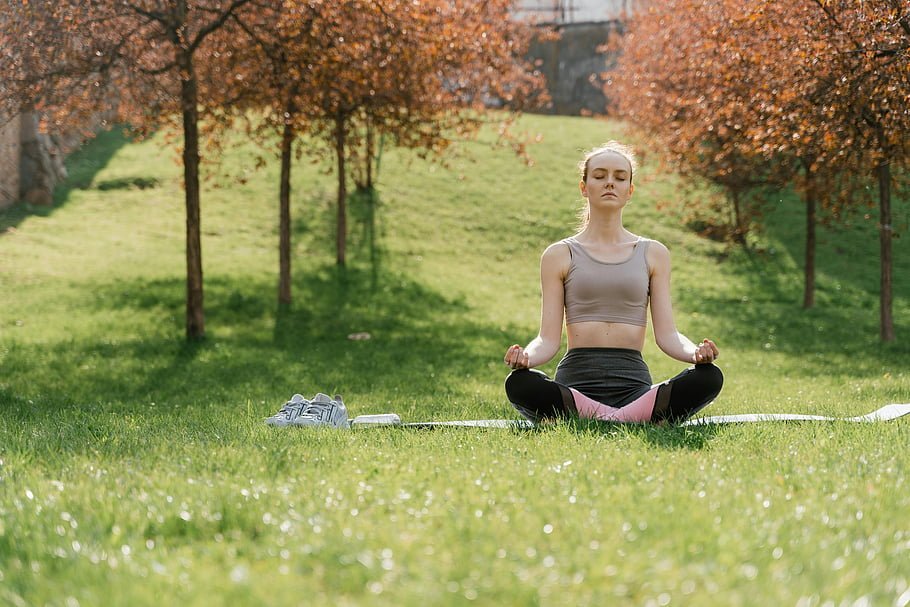
Anxiety is the most common mental health condition in America, affecting tens of millions of people — and while medication helps many, it’s not the only path. Plenty of people manage anxiety effectively with lifestyle changes and learned techniques, either instead of or alongside medication. There’s no moral superiority in going med-free; it’s simply about having more tools. If you’re wondering how can I manage anxiety without medication, this guide gives you the straight, no-fluff answer.
I want to be upfront: these techniques work best for mild to moderate anxiety. Severe anxiety, panic disorder, or anxiety that’s wrecking your daily life deserves professional help — and that’s not failure, it’s smart. With that said, here are the non-medication strategies with the best evidence behind them.
Calm Your Body First: The Fast-Acting Tools
Anxiety lives in the body as much as the mind — racing heart, tight chest, shallow breathing. That’s why the fastest relief comes from physical techniques. Slow breathing with a longer exhale (breathe in 4 counts, out 6-8) directly activates your parasympathetic nervous system — it’s not woo, it’s vagus nerve physiology. Two minutes of this can measurably drop your heart rate. National Institute of Mental Health anxiety resources
Exercise is the heavyweight champion here. Aerobic exercise rivals medication for mild-to-moderate anxiety in some studies, and the effect is both immediate (post-workout calm) and cumulative. You don’t need marathons — a brisk 20-minute walk works. The cruel irony is that anxiety makes you want to stay still, when movement is exactly what helps.
- Extended-exhale breathing: in for 4, out for 6-8. Two minutes lowers heart rate noticeably.
- Brisk walking or jogging: 20-30 minutes of aerobic exercise is powerfully anti-anxiety.
- Progressive muscle relaxation: tense each muscle group for 5 seconds, release — teaches your body what ‘relaxed’ feels like.
- Cold water on face: triggers the dive reflex, slowing heart rate fast during acute anxiety.
- Limit caffeine and alcohol: caffeine mimics anxiety symptoms; alcohol rebounds into worse anxiety.
Retrain Your Thoughts: CBT Skills That Work
Cognitive Behavioral Therapy has the strongest evidence of any non-drug anxiety treatment, and its core skills can be self-taught. The foundation is catching catastrophic thoughts and testing them: ‘I’ll fail this presentation and get fired’ becomes ‘I’ve prepared, most presentations go fine, and one bad talk doesn’t end careers.’ It feels artificial at first. It works anyway — the research is remarkably consistent.
Exposure is the other big CBT principle: gradually facing feared situations instead of avoiding them. Avoidance feels like relief but teaches your brain the fear was justified. Start ridiculously small — if social anxiety keeps you home, step one might be a 5-minute store trip. Each success rewires the alarm. Apps and workbooks can guide this, but a therapist accelerates it enormously. Anxiety and Depression Association of America resources
- Challenge catastrophic thoughts: ask ‘what’s the realistic outcome?’ and ‘how would I advise a friend?’
- Schedule ‘worry time’: 15 minutes daily to worry deliberately; postpone worries outside it.
- Gradual exposure: face feared situations in tiny steps — avoidance strengthens anxiety.
- Journal the spiral: writing anxious thoughts down externalizes them and reveals their absurdity.
- Consider CBT workbooks or apps: structured programs teach these skills step by step.
Build an Anti-Anxiety Lifestyle Foundation
The unsexy truth: sleep, exercise, and social connection do more for anxiety than any single technique. Sleep deprivation alone can increase anxiety by 30% — one bad night measurably amplifies the brain’s fear response. If you’re anxious and sleeping 5 hours, fixing sleep isn’t optional self-care; it’s treatment.
Connection matters too. Anxiety isolates — you cancel plans, then feel worse, then cancel more. Breaking that cycle deliberately, even with low-key contact like a walk with a friend, counteracts it. And regular routines reduce the uncertainty that feeds anxiety. Boring, predictable days are genuinely calming to an anxious brain.
- Prioritize 7-9 hours of sleep: sleep loss directly amplifies anxiety — treat bedtime as medicine.
- Maintain social contact: isolation feeds anxiety; regular low-pressure contact starves it.
- Keep a steady routine: predictable days reduce the uncertainty anxiety feeds on.
- Limit news and doomscrolling: constant threat-input keeps your alarm system activated.
- Eat regularly: blood sugar crashes mimic and worsen anxiety symptoms.
Common Mistakes to Avoid
Knowing what to do is only half the battle — knowing what not to do saves you from the traps that catch most people. These are the mistakes I see over and over, and every one of them is avoidable once you know to watch for it.
- Waiting until crisis to learn techniques: breathing exercises learned mid-panic-attack work poorly. Practice daily when calm so the skills are automatic when needed.
- Using alcohol to unwind: it sedates then rebounds — alcohol disrupts sleep architecture and increases next-day anxiety. Net negative, always.
- Avoiding everything that triggers anxiety: avoidance feels like relief but teaches your brain the fear was justified. Gradual exposure is the way out.
- Caffeine denial: if you’re anxious and drinking 4 coffees, the coffee is a suspect. Cut back before concluding nothing works.
- Treating therapy as a last resort: CBT is the most effective anxiety treatment, drug or not. Earlier is better — not after years of suffering.
Frequently Asked Questions
Can anxiety go away on its own?
Mild situational anxiety often resolves when the stressor passes. But chronic anxiety patterns rarely vanish without intervention — the avoidance cycle tends to strengthen them. Learning management techniques (or therapy) is what actually breaks the cycle.
How quickly do breathing exercises work?
Physiologically, extended-exhale breathing can lower heart rate within 1-2 minutes — it’s a direct nervous-system lever, not placebo. But as a lasting anxiety-management tool, it takes weeks of regular practice to become an automatic response.
Is anxiety a chemical imbalance?
It’s more complex than the old ‘chemical imbalance’ slogan — anxiety involves brain circuits, genetics, stress, sleep, and learned patterns. This is actually good news: it means multiple levers (therapy, exercise, sleep, and yes, medication when needed) can all help.
When should I consider medication for anxiety?
Consider it when anxiety significantly impairs daily life — work, relationships, sleep — despite genuine effort with other strategies, or when a professional recommends it. Medication and therapy together outperform either alone for moderate-severe anxiety. It’s a tool, not a failure.
Pro tip: Pick one change from this guide and do it today — not tomorrow, today. Momentum beats planning: a single action taken now outperforms a perfect plan started next week.
How can I manage anxiety without medication: The Bottom Line
Managing anxiety without medication rests on three pillars: fast body-calming tools (breathing, exercise, muscle relaxation), CBT skills that retrain anxious thinking (challenging catastrophic thoughts, gradual exposure), and a foundation of sleep, connection, and routine. Start with one technique, practice it daily for two weeks, then add another. And remember the honest caveat: if anxiety is severe or persistent, a professional isn’t a last resort — they’re the fastest route to feeling better. Using every tool available, including therapy, is the strong move, not the weak one.






One Comment