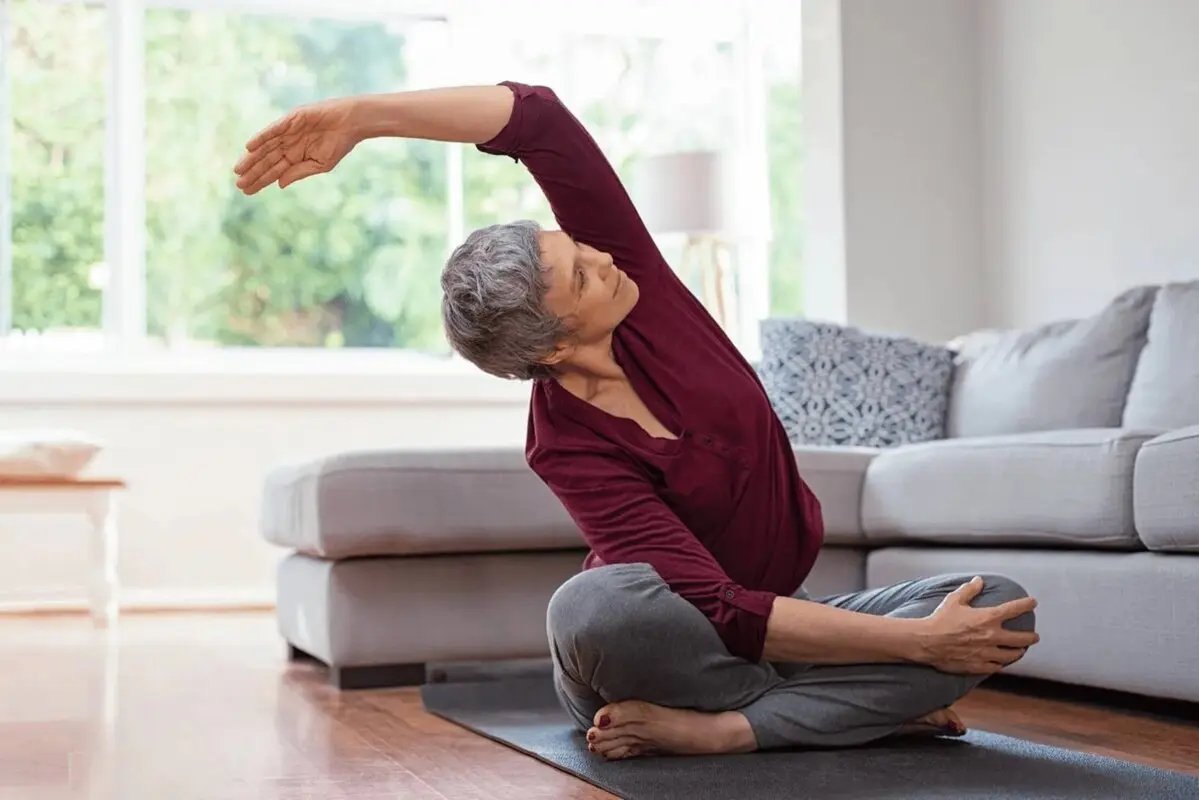
Ten minutes sounds too short to matter. We assume real fitness requires an hour, real flexibility requires a yoga studio, and anything less is a token gesture. But stretching is one of those rare activities where a small daily dose genuinely delivers — because the benefits come from consistency, not duration. The question of what are the benefits of stretching for just ten minutes a day comes up constantly — here’s what actually works.
I’ve done the 10-minute routine most mornings for over a year, and the changes were not subtle: my lower back stopped aching by afternoon, my shoulders dropped about an inch (they’d been living near my ears), and I sleep better. Here’s what the science says those 10 minutes are actually doing.
Flexibility, Mobility, and Pain Relief
The obvious benefit is real: regular stretching increases your range of motion, and that matters more with every passing year. Tight hip flexors from sitting tilt your pelvis and strain your lower back; tight hamstrings pull on everything downstream. Ten minutes targeting the big problem areas — hips, hamstrings, chest, shoulders — undoes the damage of a desk day. American College of Sports Medicine flexibility resources
For back pain specifically, the evidence is encouraging. Gentle, regular stretching reduces chronic lower back pain for many people, often as effectively as more intensive interventions. It’s not magic — you’re simply restoring the mobility your body loses from stillness. The key word is regular: one long weekend session doesn’t do what ten daily minutes do.
- Better range of motion: daily stretching measurably improves flexibility within 2-4 weeks.
- Less back and neck pain: loosening tight hips, hamstrings, and chest relieves common desk-worker pain.
- Improved posture: opening the chest and strengthening postural awareness counteracts hunching.
- Fewer injuries: mobile joints and supple muscles handle awkward movements without strain.
- Better balance: flexibility plus body awareness reduces fall risk, especially as you age.
Circulation, Stress, and Sleep Benefits
Stretching isn’t just mechanical — it’s circulatory. Moving muscles through their range pumps blood through tissues that spend all day compressed in a chair. That improved circulation is part of why you feel energized, not just looser, after a stretching session. It’s also why a short evening stretch helps so many people unwind.
And there’s a genuine stress effect. Slow, deliberate stretching with deep breathing activates the parasympathetic nervous system — the same calming pathway as meditation. Studies on stretching and stress show real reductions in cortisol and self-reported tension. Ten minutes of stretching before bed is one of the simplest sleep aids I know: it tells your nervous system the day is over. National Institutes of Health exercise resources
- Stress reduction: slow stretching with deep breathing lowers cortisol and muscle tension.
- Better sleep: an evening stretch routine signals your nervous system to wind down.
- Improved circulation: moving through ranges pumps blood to tissues starved by sitting.
- Mood lift: gentle movement releases endorphins — a legitimate, if mild, mood boost.
- Mind-body connection: focused stretching builds the body awareness that prevents injuries.
How to Build a 10-Minute Routine That Sticks
Don’t overcomplicate it. Pick 5-6 stretches covering the major areas: neck rolls, doorway chest stretch, cat-cow, hip flexor stretch, hamstring stretch, and a lying spinal twist. Hold each for 30-45 seconds per side, breathe deeply, and you’re done in ten minutes. Do it at the same time daily — after waking or before bed work best — so it becomes automatic.
A few form notes that matter: never bounce (ballistic stretching risks micro-tears), stretch warm muscles when possible (after a walk or shower is ideal), and aim for gentle tension, never pain. Sharp pain means stop. Mild discomfort that eases as you hold is the sweet spot. Within a month, stretches that felt impossible will feel routine.
- Pick 5-6 full-body stretches: cover neck, chest, spine, hips, and hamstrings.
- Hold 30-45 seconds each: that’s the minimum for muscles to actually release.
- Same time daily: attach it to waking up or bedtime for automatic consistency.
- Never bounce: slow, static holds only. Bouncing risks injury.
- Gentle tension, not pain: discomfort that eases is fine; sharp pain means stop.
Common Mistakes to Avoid
Most people don’t fail for lack of effort — they fail because of a handful of predictable mistakes. Sidestep these five and you’re already ahead of the vast majority of people tackling this.
- Bouncing into stretches: ballistic bouncing risks micro-tears. Slow, static holds are safer and more effective — always.
- Stretching cold muscles aggressively: ease in gently; deep stretching is best when muscles are warm (after a walk or shower).
- Holding your breath: breath-holding tenses muscles — the opposite of the goal. Breathe deeply and slowly through every stretch.
- Only stretching what feels tight: tightness is often compensation — tight hamstrings may stem from weak glutes. Stretch the full chain.
- Expecting instant flexibility: range of motion builds over weeks. Forcing it causes injury; consistency causes progress.
Frequently Asked Questions
Should I stretch before or after a workout?
After (or as a separate session) for static stretching — pre-workout static stretching can temporarily reduce power. Before workouts, do dynamic warm-ups (leg swings, arm circles); save the long holds for after.
How long should I hold each stretch?
30-45 seconds per stretch is the evidence-backed minimum for actually increasing flexibility. Shorter holds feel nice but don’t create lasting change. Two rounds per muscle group is plenty.
Is yoga better than plain stretching?
Yoga adds strength, balance, and mindfulness to flexibility — it’s a fuller package. But for pure flexibility and pain relief, a targeted 10-minute stretch routine is equally effective and much easier to stick with. Do what you’ll actually do.
Can stretching replace a workout?
No — stretching improves flexibility and aids recovery, but it doesn’t build meaningful strength or cardiovascular fitness. Think of it as essential maintenance alongside exercise, not a substitute.
Pro tip: Put a recurring monthly reminder on your phone to revisit the key habits in this guide. Most good practices fade not from failure but from forgetting — a simple nudge keeps them alive.
What are the benefits of stretching for just ten minutes a day: The Bottom Line
Ten minutes of daily stretching delivers outsized returns: better flexibility and less pain within weeks, plus real stress reduction, better circulation, and improved sleep. The formula is simple — 5-6 stretches, 30-45 second holds, same time every day, no bouncing. It’s the highest return-on-time investment in fitness I know, and your 50-year-old self will thank you for starting now.