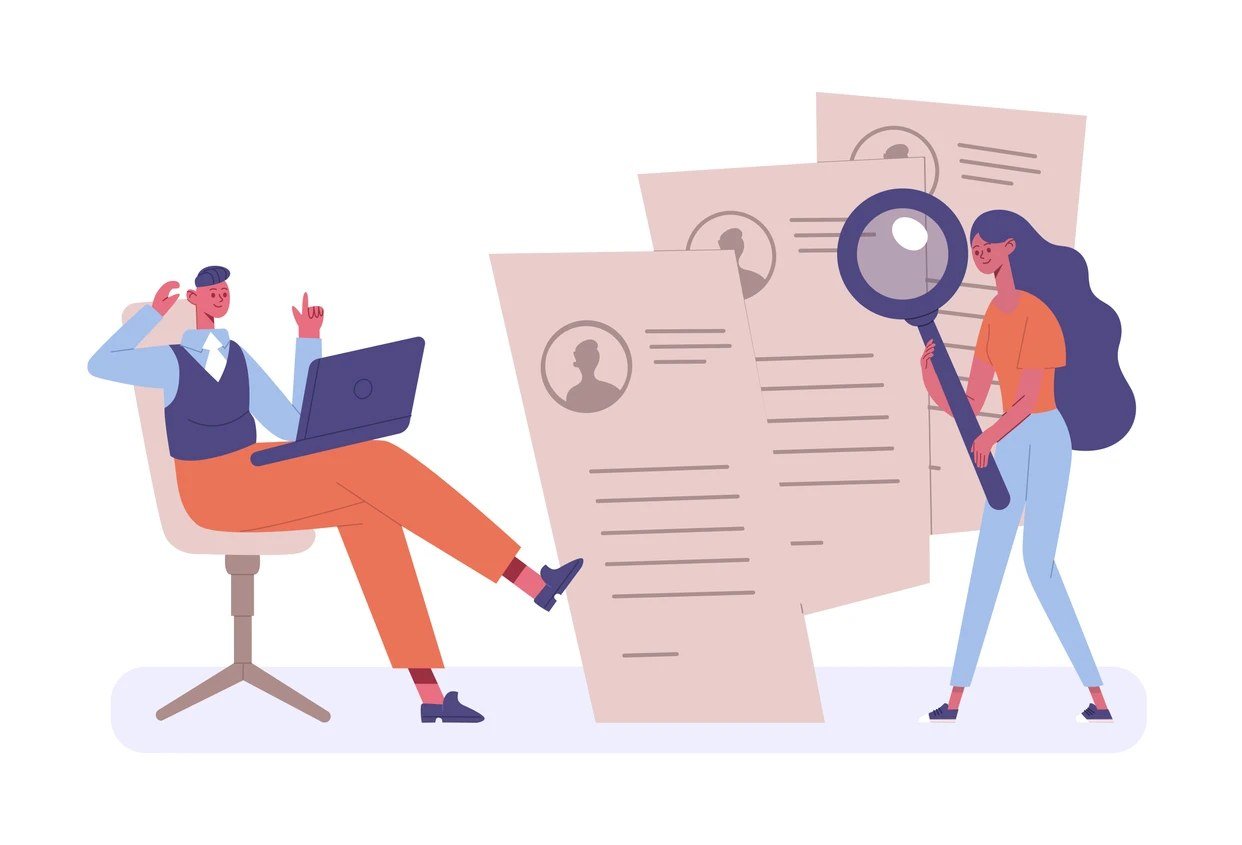
What are the ethical concerns around AI in hiring decisions? Your resume may already have been judged by an algorithm — screened, scored, and ranked before any human saw it. AI hiring tools now touch nearly every stage: resume screening, video interview analysis, skills assessments, even predicting “culture fit” and flight risk. The efficiency gains are real. So are the ethical problems. And if you’re a job seeker, an employer, or just someone who’ll ever apply for a job (everyone), you should understand what’s at stake.
What Are the Ethical Concerns Around AI in Hiring Decisions?
The core ethical issue: AI learns from historical hiring data, and historical hiring data is full of human bias. Train a model on a decade of a company’s hiring decisions, and it learns to prefer the demographics of people previously hired — which, in many industries, means men over women, certain races over others, prestigious schools over state schools. The infamous example: a major tech company’s AI recruiting tool that learned to penalize resumes containing the word “women’s” (as in “women’s chess club”). The company scrapped it — but the underlying problem persists everywhere.
Vendors claim to “debias” their models, and some techniques help. But bias in AI hiring is hydra-headed: remove explicit demographic signals and the model finds proxies — zip codes correlating with race, employment gaps correlating with maternity, word choices correlating with gender. Auditing helps but isn’t foolproof, and most hiring AI operates as a black box even to the employers using it. The EEOC’s AI fairness initiative makes clear that employers remain liable for discriminatory outcomes regardless of whether a human or algorithm made the call.
Concern 2: Transparency — The Black Box Problem
When a human rejects you, you can (theoretically) ask why. When an algorithm scores you 62/100 and auto-rejects, nobody may know why — not the vendor, not the employer, not you. Video interview AI that analyzes facial expressions, vocal tone, and word choice is particularly opaque: candidates have no idea which micro-expression tanked their score, and no way to contest it.
This opacity breaks the feedback loop that makes hiring fair. Candidates can’t improve what they can’t see. Employers can’t audit what they can’t understand. And the power asymmetry is total: the candidate surrenders data and receives silence. Emerging regulations (New York City’s Local Law 144 requiring bias audits, the EU AI Act classifying hiring AI as high-risk) are pushing toward transparency, but enforcement is early and uneven.
What Are the Ethical Concerns Around AI in Hiring? Concerns 3-5
Concern 3: Privacy invasion. AI hiring tools analyze far more than resumes — social media scraping, voice stress analysis, even keystroke patterns in assessments. Candidates rarely understand the full scope of data collection, and consent is typically buried in application terms. Your digital exhaust becomes hiring signal without meaningful informed consent.
Concern 4: Gaming and inequality. Savvy candidates now optimize resumes for AI screening — keyword matching, formatting tricks, even AI-generated applications at scale. This creates a new divide: those who understand the algorithms versus those who don’t, layered over existing inequalities. Is the “best” candidate the most qualified, or the best at gaming the screener?
Concern 5: Dehumanization. Reducing candidates to scores and predictions changes the employer-employee relationship from the start. When hiring becomes optimization, qualities that resist quantification — character, potential, unconventional brilliance — get systematically undervalued. The candidates algorithms love (conventional, pattern-matching past successes) aren’t always the ones companies actually need.
What Employers Should Do (The Responsible Playbook)
- Audit regularly: Test hiring AI for disparate impact across demographic groups — not once, but continuously, as models drift
- Keep humans in the loop: AI should assist screening, not auto-reject. Every rejection deserves human review
- Be transparent: Tell candidates AI is used, what it evaluates, and how to request human review
- Minimize data: Collect only what’s job-relevant; ban the creepy stuff (facial analysis, social media scraping) unless you can defend it publicly
- Validate scientifically: Demand evidence the tool actually predicts job performance — many don’t, they’re just efficient at replicating past patterns
What Job Seekers Can Do
Know your rights (varying by jurisdiction — NYC, Illinois, and the EU have specific protections), prepare for AI-mediated interviews understanding what the systems measure, keep your application materials ATS-friendly and truthful, and remember: a company that treats candidates as data points during hiring will treat employees as data points afterward. How they hire tells you how they’ll manage. Choose accordingly.
The Regulatory Patchwork (Know Your Jurisdiction)
Rules vary dramatically by where you are. New York City requires bias audits for automated hiring tools and candidate notification. Illinois regulates AI video interview analysis specifically. The EU AI Act classifies hiring AI as “high-risk,” imposing conformity assessments, data governance, and transparency requirements. Several US states have pending or passed laws on algorithmic hiring accountability.
For employers operating across jurisdictions, the practical approach is to meet the strictest applicable standard everywhere — it’s simpler than maintaining different processes, and the strictest standards (transparency, auditing, human oversight) are good practice regardless. For job seekers, knowing your local protections turns abstract rights into usable ones: if your jurisdiction requires disclosure or offers appeal rights, use them.
The Practical Takeaway
The ethical concerns around AI in hiring — bias baked into training data, black-box opacity, privacy invasion, gaming inequality, and dehumanization — are real and unresolved, even as the technology becomes ubiquitous. Employers should audit continuously, keep humans deciding, and be transparent. Job seekers should know their rights and read hiring practices as culture signals. The goal isn’t to ban AI from hiring; it’s to ensure the efficiency gains don’t come at the cost of fairness. Technology should expand opportunity, not launder old biases through new math — and getting this right matters for everyone who will ever apply for a job, which is to say, everyone — because the hiring systems we build today shape the workforce, and the society, of tomorrow — and that future is being decided in hiring software choices being made right now.