
Here’s the truth ad agencies won’t tell you: the cheapest ways to market a small business online are also, for local businesses, often the most effective. A claimed Google Business Profile, genuine review generation, and consistent local social media outperform a $2,000/month ad spend for most small businesses — because trust beats reach at local scale.
I’ve marketed small businesses with $0 budgets and watched what actually moves the needle. Ranked by ROI, cheapest first.
Tier 1: Free and High-Impact (Do These This Week)
- 1. Google Business Profile — the #1 free marketing tool. Claim it, complete every field, add photos weekly, post updates, and answer questions. This is what shows up when locals search “[your service] near me]” — it’s your most valuable digital real estate and it’s free. Businesses with complete profiles get dramatically more calls.
- 2. Review generation system. After every happy transaction: “Would you mind leaving us a Google review? It takes 30 seconds” + a QR code at the counter or a link in the follow-up text. Reviews are the currency of local trust — 50 genuine 5-star reviews beat any ad. Never buy reviews; never offer incentives for positive ones (against Google’s policy).
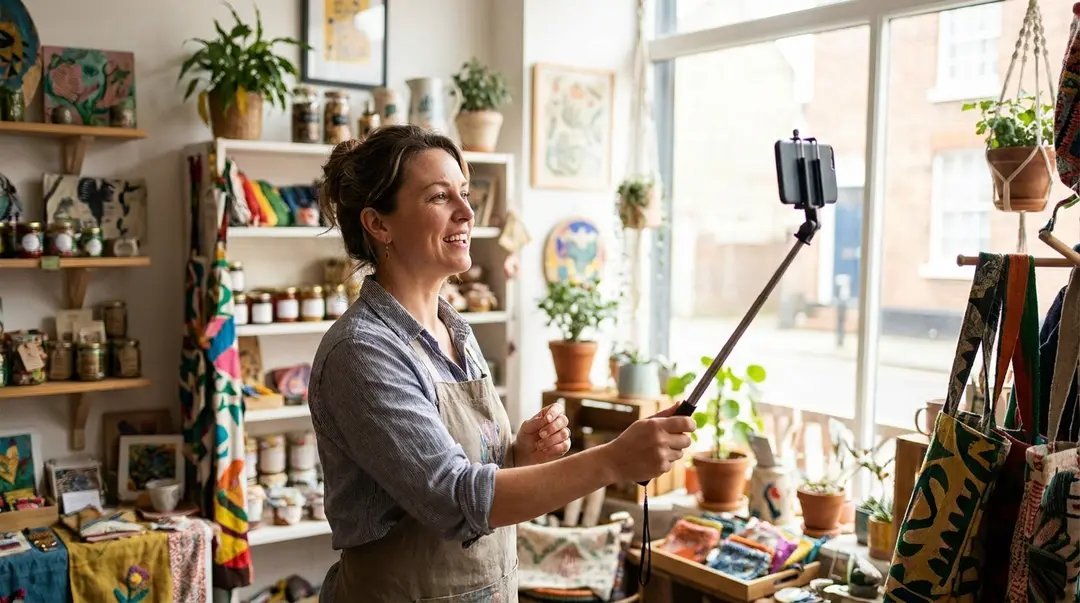
- 3. One social platform, done consistently. Not five platforms sporadically — one platform, 3-5 posts a week. Pick where your customers are: Instagram/TikTok for visual/consumer, Facebook for 35+ local, LinkedIn for B2B. Behind-the-scenes, before/afters, and owner personality outperform polished ads.
- 4. Your website’s basics. You don’t need a $5,000 site — you need: what you do, where you are, phone number clickable, hours, and a contact form. That’s it. A clean one-pager beats a broken fancy site.
Tier 2: Free With Sweat Equity (Ongoing)
- 5. Local SEO content. Write genuinely useful pages: “How much does [service] cost in [city]?” “5 questions to ask a [your trade].” These rank, build trust, and pre-sell customers. One good article a month compounds.
- 6. Email list from day one. “Join our list for 10% off” at checkout — email is the highest-ROI digital channel ($36 return per $1, per industry studies) and you own it, unlike social followers. Free tiers: Mailchimp (500 contacts), Brevo (300 emails/day).
- 7. Community participation. Local Facebook groups, Nextdoor (free business page), Reddit’s local subs — answer questions helpfully, don’t pitch. “The plumber who answers questions in the neighborhood group” gets the calls.
- 8. Referral program. “Refer a friend, you both get $20 off.” Formalize what happy customers do naturally — referred customers are cheaper to acquire and more loyal. Track it simply (ask “who sent you?”).
- 9. Partnerships with complementary businesses. The wedding photographer partners with the florist; the gym with the smoothie shop. Cross-promote to each other’s audiences — free, targeted, trusted.
When to Spend: the First Dollars That Are Worth It
Free gets you far, but these paid moves earn their keep:
- Google Ads for high-intent searches ($200-$500/month to start): “[service] near me” searches are customers with wallets open. Start narrow (your service + your city), track calls, kill what doesn’t convert. One new customer often pays for the month.
- Facebook/Instagram ads for visual businesses ($5-$10/day): hyperlocal targeting (5-mile radius) with before/after content. Cheap tests; scale winners.
- Professional photos ($200-$500 one-time): the highest-ROI paid asset for visual businesses — good photos lift your Google profile, website, and social simultaneously for years.
- Basic SEO help ($300-$1,000 one-time audit): if your Google profile and site are solid but you’re invisible, a one-time technical cleanup beats months of guessing.
What NOT to buy early: expensive branding packages, billboards, radio, print ads, or any agency retainer before you’ve maxed the free tier. Prove the message free, then pay to amplify it.
Measuring What Works (the 30-Minute Monthly Review)
- Ask every customer: “How’d you hear about us?” — tally it. This crude data beats sophisticated analytics for small businesses.
- Google Business Profile insights: free — shows calls, direction requests, and searches. Watch the trend.
- Track one metric per channel: social → profile visits/messages; email → open/click rates; ads → cost per lead. Kill channels with no trend after 90 days.
- The only metric that matters ultimately: cost to acquire a customer vs. what they’re worth. If a $50 Google Ad brings a $500 customer, that’s not an expense — it’s a machine.
- Double down ruthlessly: most small businesses find 1-2 channels drive 80% of customers. When you find yours, pour fuel on it instead of dabbling in six others.
Marketing isn’t about being everywhere — it’s about being unavoidable in the 1-2 places your customers actually look. For most local businesses, that’s Google search and one social platform. Master those before expanding.
The Mindset Shift (Why Cheap Beats Expensive Here)
Big-company marketing is about reach (millions of impressions). Small-business marketing is about trust (dozens of neighbors believing you’re the right choice). Trust is built with:
- Consistency over campaigns: 3 useful posts a week for a year beats one viral moment.
- Reviews over ads: a stranger’s 5-star review outsells your best ad copy.
- Helpfulness over hype: the free advice, the answered question, the honest “we’re not the right fit, try X” — these compound into reputation.
- Owner visibility: people buy from people. The owner’s face and voice in content outperforms stock-perfect branding for local businesses, every time.
The businesses winning locally in 2026 aren’t outspending — they’re out-caring, out-answering, and out-reviewing. That’s free. It just isn’t easy — which is exactly why it works as a moat. For the customer-acquisition side, getting your first customers without ads goes deeper on the zero-budget playbook.
Keep Reading
If this was useful, you might also like getting your first customers without ads and accounting software.
The Bottom Line
This week’s free wins: claim and complete your Google Business Profile, start systematically asking for reviews, pick one social platform and post 3-5x weekly. Ongoing: build the email list, publish one useful local article monthly, formalize referrals. First paid moves: Google Ads on high-intent local searches, professional photos. Measure monthly, double down on what works — trust beats reach at local scale.
Frequently Asked Questions
How much should a small business spend on marketing?
The old rule is 7-10% of revenue, but early-stage businesses often spend more like time than money. Start with the free tier above (Google profile, reviews, one social platform), then add paid channels once you know your cost per customer.
Is social media actually worth it for small businesses?
One platform done consistently: yes. Five platforms done sporadically: no. Pick where your customers are, post useful/behind-the-scenes content 3-5x weekly, and measure messages/calls — not likes.
What’s the fastest free way to get customers?
Google Business Profile optimization + review generation. Most local buying journeys start with ‘[service] near me’ — being the complete, well-reviewed listing that appears is the closest thing to free customers that exists.






One Comment