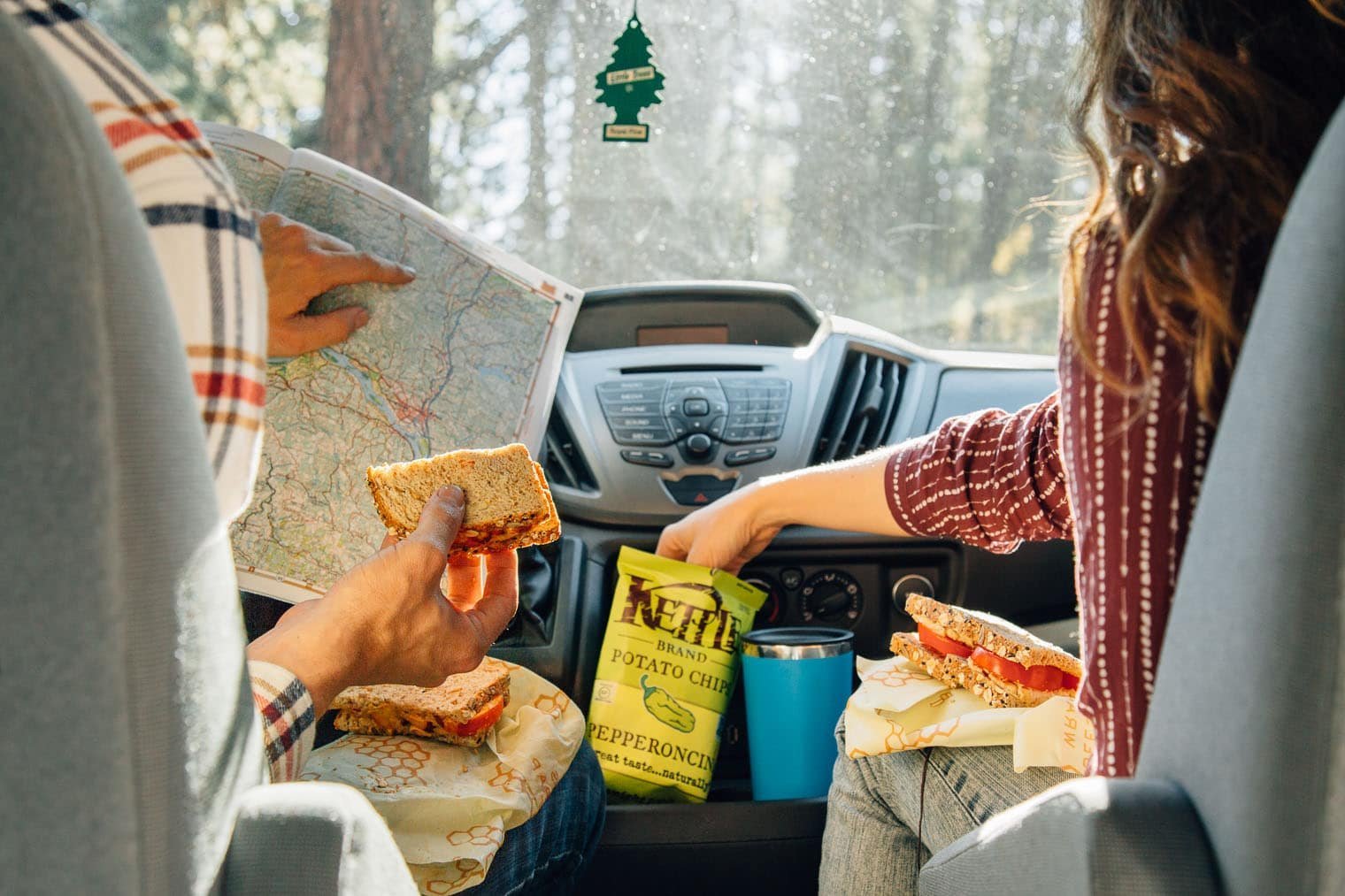
Road trip snacking is an art form. Buy wrong and you’re dealing with melted chocolate, crushed chips, stale everything, and a car that smells like gas-station regret. Buy right and the snack bag becomes a highlight of the trip — the thing everyone reaches for between stops. So what are the best road trip snacks that actually stay fresh? The ones engineered for the car’s hostile environment: heat, jostling, limited space, and hours between stops.
After four cross-country drives, I’ve developed strong opinions about car food. Here’s what survives and what doesn’t.
The Rules of Car Food Physics
Before the list, the principles:
- Heat resistance: Cars get hot — even with AC, the trunk and sun-side seats cook. Anything chocolate, cheese-dependent, or meltable needs the cooler or gets skipped.
- One-hand friendly: The driver (or the passenger feeding the driver) needs grab-and-eat simplicity. Nothing requiring two hands, utensils, or assembly.
- Low crumb/mess: Powdered donuts in a car are a war crime. Choose contained, clean-eating snacks.
- Stays fresh open: Resealable packaging or naturally portioned items. A bag of chips goes stale in hours once opened; individual packs don’t.
- Variety of textures: Sweet, salty, crunchy, chewy — the mix prevents flavor fatigue on hour six.
What Are the Best Road Trip Snacks That Actually Stay Fresh? The Tier List
Tier 1: Indestructible (no cooler needed, days of freshness)
- Nuts and trail mix: The undisputed champion. Protein, healthy fats, sustained energy, zero mess (in portion packs), survives any temperature. Make your own mix: almonds, cashews, dark chocolate chips (in cool weather), dried cranberries, pretzel pieces.
- Beef/turkey jerky: Protein-dense, shelf-stable forever, satisfying chew. The meat sticks in individual packs are the neatest option.
- Granola/protein bars: The emergency meal. Choose bars that don’t melt into goo (avoid chocolate-coated in summer). Keep a few in the door pocket always.
- Dried fruit: Mango, apricots, apple rings, banana chips. Sweet, chewy, no mess, lasts indefinitely. (Fresh fruit is great too — see Tier 2.)
- Crackers and pretzels: In individual packs or resealable containers. The crunch factor matters psychologically on long drives.
- Popcorn (pre-popped bags): Light, voluminous, satisfying. The individual bags stay fresh; the big bag goes stale.
- Roasted chickpeas / broad beans: Crunchy, protein-rich, endlessly snackable. The hipster jerky.
Tier 2: Cooler-worthy (better fresh, needs ice)
- Fresh fruit: Apples, grapes, clementines, bananas (eat early — they bruise), berries in rigid containers. Nature’s original road snack.
- Cut vegetables + hummus cups: Carrots, cucumbers, bell peppers, cherry tomatoes. The individual hummus cups are key — no double-dipping a tub in a moving car.
- Cheese sticks / Babybel: Portioned, contained, protein. Fine for hours in a cooler; the wax-wrapped ones survive brief warmth.
- Hard-boiled eggs: Pre-peeled, in a container, eaten day one or two. Protein powerhouse.
- Wraps/sandwiches: Made morning-of or night-before. Tortilla wraps hold up better than bread (no sogginess). Eat within a day.
- Yogurt tubes/pouches: Freezer the night before — they thaw into perfect cold snacks by midday and double as ice packs.
Tier 3: The fun stuff (morale snacks)
- Gummy candy / licorice: Pure morale. Heat-stable, portionable, universally loved.
- Mints and gum: Not snacks, but essential — fresh breath and something to chew fights drowsiness.
- Regional specialties: Buy local snacks at stops — the pralines in Louisiana, the cheese curds in Wisconsin. Edible souvenirs.
The Cooler Strategy
A small cooler ($25–40) transforms road trip eating. Pack it morning-of with: frozen water bottles (drink as they melt — no soggy ice mess), the Tier 2 items, and condiments. Refreeze bottles at hotels overnight (or buy ice — $3). The cooler pays for itself by day two versus gas-station snack prices, and it keeps the good stuff actually good. For the full car setup, see what to pack for a road trip.
What to Avoid
- Anything chocolate in summer (unless in the cooler and eaten fast)
- Powdered/ultra-crumbly items (your car’s upholstery begs you)
- Strong-smelling foods (tuna packets, hard-boiled eggs are borderline — eat at stops, not while driving with windows up)
- Gas station impulse buys as the plan: Fine occasionally, ruinous as a strategy — $4 for a candy bar adds up over 3,000 miles. Stock up at grocery stores before departure and at restocks along the way.
And know the rules if you’re flying to your road trip start: TSA snack rules cover what you can bring through security.
DIY Trail Mix Recipes (Better Than Store-Bought)
Store trail mix is fine; homemade is better, cheaper, and exactly to your taste. Three house recipes — mix in bulk before departure, portion into zip bags:
- The Classic: 2 cups almonds + 1 cup cashews + 1 cup dark chocolate chips + 1 cup dried cranberries + 1 cup pretzel pieces. The crowd-pleaser.
- The Savory: 2 cups roasted chickpeas + 1 cup wasabi peas + 1 cup sesame sticks + 1 cup roasted pumpkin seeds + 1 tsp each garlic powder and smoked paprika tossed in. For the salt-cravers.
- The Tropical: 2 cups banana chips + 1 cup dried mango pieces + 1 cup coconut flakes (unsweetened, toasted) + 1 cup macadamia nuts + 1 cup dried pineapple. Tastes like vacation.
- Pro tips: Toast nuts at 350°F for 8–10 minutes before mixing — transformative. Portion into individual bags immediately (the big bag goes stale and gets overeaten). Keep chocolate versions out of summer cars or embrace the melt.
Cost: roughly half of store-bought premium mix. Time: 20 minutes. And the car smells amazing for the first hour — the only time a car full of snacks smells good instead of like regret.
Food safety matters on the road: the USDA Food Safety and Inspection Service publishes clear guidance on keeping perishables safe, including how long cold foods survive in a cooler.
Don’t Forget Drinks
Snacks get all the attention, but hydration makes or breaks a driving day. The car drink strategy: a case of water in the trunk (the foundation — dehydration causes the headaches and fatigue blamed on “travel tiredness”), a few electrolyte packets for hot days or long stretches, and one “fun” drink per person per day (cold brew, sparkling water, whatever keeps morale up). Refillable bottles up front, case water for refills. Skip the giant sugary gas-station drinks — the sugar crash at hour three is real, and the $4 price is insult on top of injury. Coffee strategy: one good travel mug filled at the hotel or a real café beats three gas-station coffees. Hydrated drivers are alert drivers; the drink plan is secretly a safety plan.
The Takeaway
The best road trip snacks that stay fresh are the indestructible tier (nuts, jerky, bars, dried fruit, crackers in portion packs) plus cooler-kept fresh items (fruit, veg + hummus cups, cheese, wraps) and a few morale treats. Pack a small cooler, buy in portion sizes, stock up at grocery stores instead of gas stations, and keep the variety high. Good car food doesn’t just prevent hanger — it’s part of the trip’s joy. The snack bag done right is a rolling picnic; done wrong, it’s a melted mess. Choose wisely.