Every fall, the same scene plays out across the northern states: the first real cold snap strands thousands of drivers who meant to prepare their cars “next weekend.” Winter is brutal on vehicles — batteries lose half their cranking power at 0°F, tire pressure drops with every ten-degree temperature fall, and summer oil turns sluggish when the mercury plummets. Winterizing your car before the cold hits is not paranoia; it is the cheapest insurance you will ever buy against a tow truck bill.
Start With the Battery and Charging System
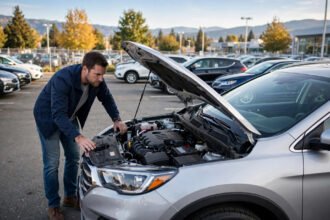
Your battery is the number-one winter failure point, so it gets attention first. If your battery is more than three years old, have it load-tested at an auto parts store — the test is free and takes five minutes. A battery that tests “marginal” in October will test “dead” in January. Clean any white or blue-green corrosion from the terminals with a wire brush and a paste of baking soda and water, then coat the terminals with dielectric grease or petroleum jelly to slow new corrosion.
Check the alternator and starter while you are at it. Most parts stores test the whole charging system free during the battery test. If your headlights dim at idle or the engine cranks slowly on cool mornings, the charging system is already telling you it will not survive January. Replacing a weak battery in your driveway in October costs $150 to $250; replacing it in a tow-truck yard in February costs that plus the tow. Learn AAA’s winter car care recommendations for a full pre-season checklist.
Tires: Pressure, Tread, and the Winter Tire Question
Tire pressure drops roughly 1 PSI for every 10°F of temperature decrease. A tire correctly inflated at 70°F in September can be 5 PSI low at 20°F in December — enough to hurt handling, braking, and fuel economy. Check pressures monthly through winter, always when the tires are cold, and inflate to the pressure on the driver’s door jamb placard, not the number molded on the tire sidewall.
Measure tread depth with the quarter test: insert a quarter upside down into the tread, and if you can see the top of Washington’s head, your tread is below 4/32 inch and it is time for new tires before snow arrives. All-season tires are adequate for mild winters, but if your area sees regular snow and ice, dedicated winter tires are transformative — the rubber compound stays flexible below 45°F, and braking distances on ice can shrink by 30 percent or more compared to all-seasons. The NHTSA tire safety resources explain how tread and pressure affect winter stopping distances.
Fluids: Oil, Coolant, Washer Fluid, and Fuel
Switch to the winter-weight oil your owner’s manual recommends — typically 5W-30 or 0W-20 for modern cars. The “W” stands for winter, and the lower the first number, the better the oil flows on cold starts, when most engine wear occurs. While you are under the hood, check the coolant: it should test to at least −30°F freeze protection with a $5 hydrometer from any parts store. If the coolant looks rusty or is more than five years old, flush and replace it before winter.
Swap your washer fluid for a winter formula rated to −20°F or lower — summer fluid freezes on the windshield exactly when you need visibility most. Top off the reservoir and carry a spare gallon in the trunk. Keep the fuel tank at least half full all winter: a fuller tank means less moist air inside, which means less condensation and a lower risk of fuel-line freeze. Add a bottle of fuel-line antifreeze (dry gas) if your car will sit outside in extreme cold.
Wipers, Lights, and Visibility
Install fresh wiper blades before the first snow — beam-style blades resist ice buildup better than traditional framed blades. If you park outside, lift the wipers off the windshield during snowstorms or slip old socks over them to prevent them freezing to the glass. Check every exterior light: headlights, taillights, brake lights, turn signals, and hazards. Short winter days mean you drive in the dark far more, and a dead taillight in a snowstorm is genuinely dangerous.
Clean the headlights too. Yellowed, hazy lenses can cut light output by half or more; a restoration kit costs about $20 and takes an hour. Inside the car, treat the windshield with an anti-fog treatment or keep the defroster in good working order — condensation on a cold windshield blinds you at the worst moments. Visibility is a system: blades, fluid, lights, and glass all have to work together.
Build a Real Winter Emergency Kit
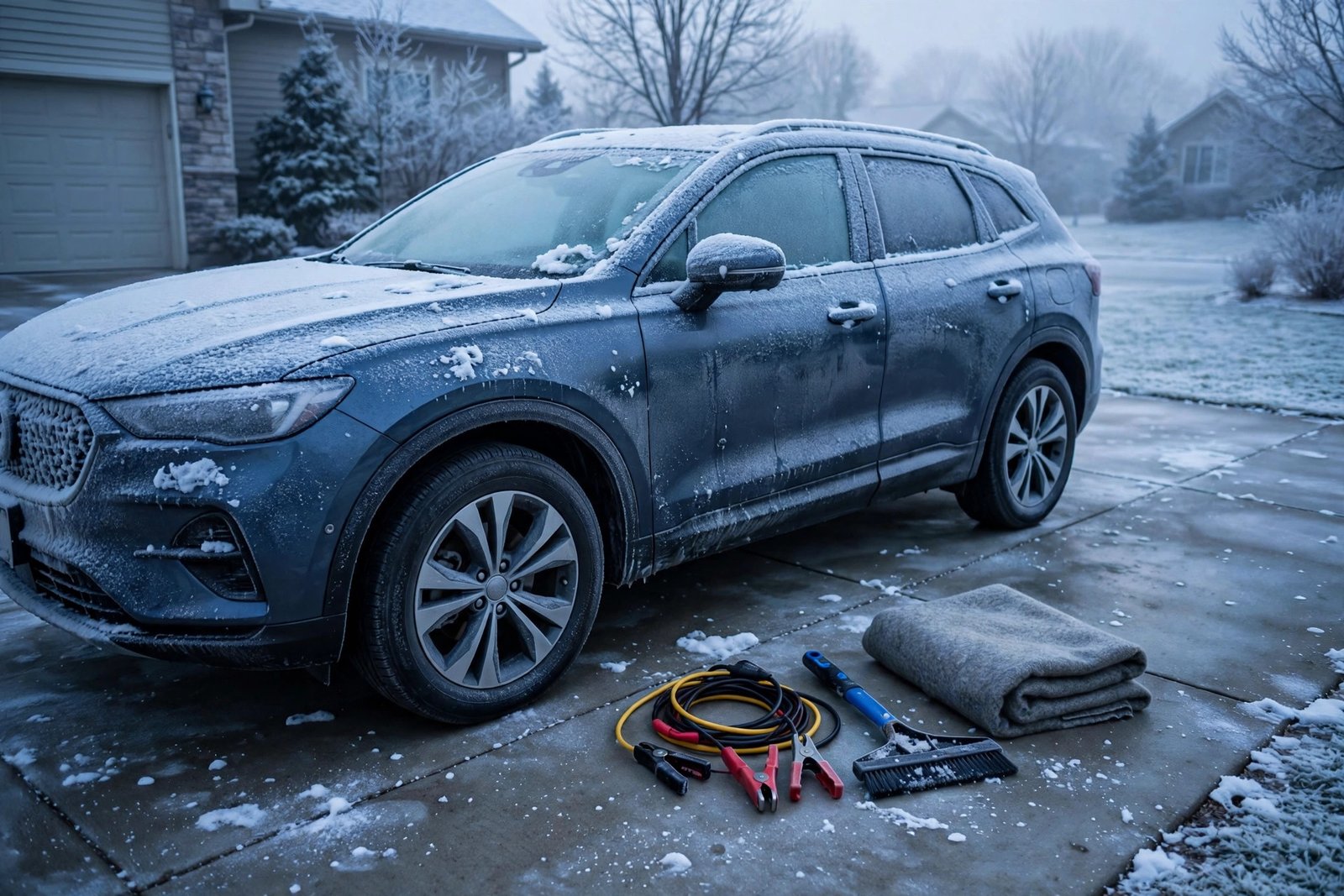
Every car in a cold climate should carry a winter survival kit from November through March. The essentials: a warm blanket or sleeping bag, extra warm clothing and gloves, a flashlight with fresh batteries, jumper cables or a portable jump pack, a small shovel, a bag of cat litter or sand for traction, an ice scraper and snow brush, a phone charger, bottled water, and high-energy snacks. A warm winter coat you actually like wearing belongs in the car, not the closet — if you break down at night in January, the coat in the back seat matters more than the one at home.
Add flares or reflective triangles so other drivers see you if you are stuck on a shoulder in blowing snow. Keep the kit in the passenger compartment or trunk where you can reach it, not buried under luggage. Tell someone your route and expected arrival time before long winter drives, and keep the phone charged — in a real emergency, communication is survival. Winterizing is not just for cars, either; giving your house the same treatment, like sealing gaps around windows before winter, cuts heating bills the same way car prep cuts repair bills.
The Underbody and Exterior
Road salt is the slow killer of northern cars. A fresh coat of wax before winter gives the paint a sacrificial barrier, and regular car washes through the season — including the underbody spray — wash salt off before it eats through. Pay attention to the exhaust system, brake lines, and fuel lines, which corrode first. If you notice the car pulling or the brakes feeling soft, get them inspected immediately; salt accelerates brake-line corrosion, and a failed line in winter traffic is catastrophic.
Lubricate door locks and hinges with graphite or silicone spray so they do not freeze shut, and treat rubber door seals with silicone protectant to keep doors from freezing to the frame. Keep the gas-tank door hinge lubricated too — nothing is more frustrating than being unable to open the fuel door at a gas station in a blizzard.
Conclusion
Winterizing your car comes down to a single October afternoon: test the battery, set tire pressures, switch fluids, refresh wipers and lights, and pack an emergency kit. None of it is expensive or difficult, and all of it is dramatically cheaper than the alternative — a dead battery, a slide into a ditch, or a night spent freezing on a highway shoulder. The cold is coming whether you prepare or not. Prepare.
Frequently Asked Questions
When should I start winterizing my car?
October is ideal in most northern states — before the first hard freeze but while you can still work comfortably outside. Waiting until the first snowstorm means competing with everyone else for appointments and parts.
Are winter tires really necessary, or are all-seasons enough?
It depends on your climate. In areas with regular snow and sustained temperatures below 45°F, winter tires are genuinely transformative for braking and cornering. In mild-winter regions, good all-seasons with adequate tread are fine.
How often should I check tire pressure in winter?
At least monthly, and ideally every two weeks during the coldest months. Pressure drops about 1 PSI per 10°F, so a cold snap can leave properly inflated tires significantly underinflated overnight.
Should I warm up my car before driving in winter?
Thirty seconds to a minute is enough for modern cars. Long idling wastes fuel and warms the engine slowly; gentle driving warms it faster. The exception is clearing ice and fog from the windows — never drive until you can see clearly.
What is the most important winter car prep item?
The battery, by a wide margin. It causes more winter breakdowns than every other failure combined. A free load test in October prevents the most common January disaster.