That little cardboard tree hanging from your rearview mirror? It’s masking the problem, not solving it — and in many states, it’s technically illegal (obstructed view). The pine-scented air freshener covers odors for a week, then fades, leaving the original smell plus a chemical undertone. If your car smells like old fast food, wet dog, mildew, or mystery funk, here’s the truth: lasting freshness comes from removing odor sources and cleaning properly, not from adding fragrance. This guide covers the real methods — most of them free or nearly so. For more detail on a related topic, see our article on what to know before renting a car in another country.
Step 1: Find and Remove the Source (90% of the Battle)
Odors have sources, and no amount of fragrance defeats an active one. The systematic hunt: under and between seats (the fossil record of every dropped fry, lost sippy cup, and forgotten gym sock — pull the seats forward and prepare yourself), trunk and spare tire well (moisture collects here; check for mold), floor mats (pull them out — the smell is often in the mat, not the car), headliner (absorbs smoke like a sponge; the hardest odor to remove), and the HVAC system (musty AC smell usually means mold on the evaporator core).
Remove everything removable and clean it separately. Old food, trash, forgotten items — out. If you find moisture or mold, that’s the priority: dry it completely (mold needs moisture; eliminate the moisture and you eliminate the colony). This step alone resolves most car odor problems — people are often shocked that the “mystery smell” was a six-month-old protein bar under the passenger seat.
The Deep Clean Protocol
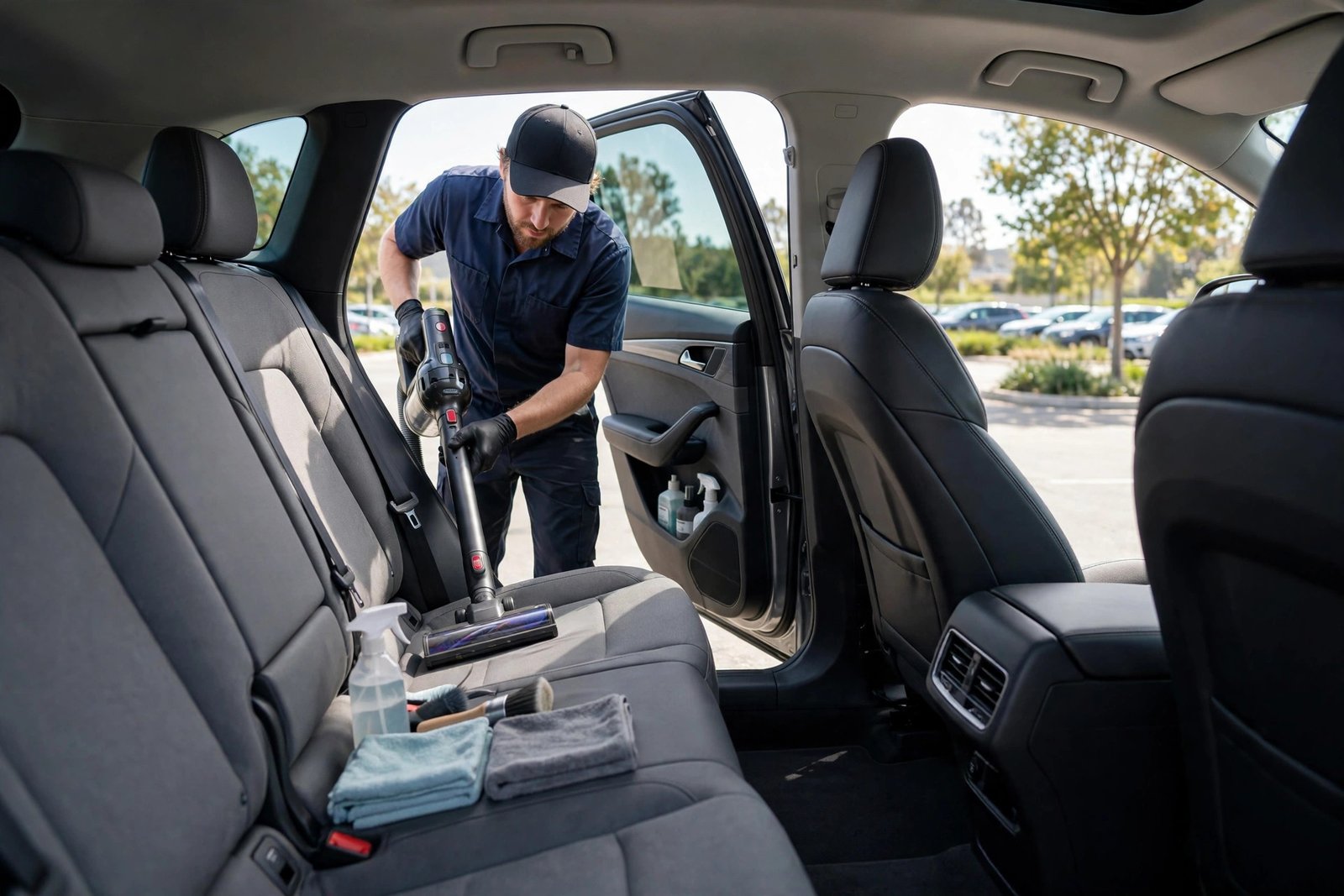
With sources removed: vacuum everything thoroughly (seats, carpets, crevices with the crevice tool, trunk), shampoo carpets and cloth seats with an extractor or rented carpet cleaner (the dirty water that comes out will horrify and satisfy you), wipe all hard surfaces with an all-purpose cleaner, and clean windows inside (film buildup traps odors). For leather, use a proper leather cleaner and conditioner — household cleaners dry and crack it. This deep clean is the foundation; everything after is maintenance. The same odor-removal principles apply at home — making your home smell amazing on a budget uses the same source-removal-first philosophy.
Step 2: Attack Specific Odors With the Right Weapon
Smoke: The toughest automotive odor — it permeates the headliner, seats, and HVAC. Full protocol: deep clean everything, replace the cabin air filter, run an ozone treatment or chlorine dioxide odor bomb (follow instructions exactly, air out thoroughly after), and clean the headliner gently (it’s delicate — light passes with upholstery cleaner, no soaking). Severe cases may need professional detailing with an ozone chamber. Prevention beats cure: the smell never fully leaves a heavily smoked-in car’s headliner.
Mildew/musty AC: Replace the cabin air filter (a $15–$25 DIY job on most cars — check YouTube for your model), then run the heater on high for 10 minutes to dry the evaporator, and consider an AC vent cleaning foam. If the musty smell persists, the evaporator may need professional cleaning.
Pet odors: Enzymatic cleaners (Nature’s Miracle and similar) — these contain bacteria that digest the organic compounds causing the smell, rather than masking them. Standard cleaners can’t do this; enzymes are the only real solution for urine and deep pet odor. Follow with baking soda treatment below.
Food/spill smells: Baking soda is the workhorse: sprinkle generously on carpets and seats, leave overnight (or 24 hours for bad cases), vacuum thoroughly. It absorbs odors rather than covering them. For stubborn spots, white vinegar solution (1:1 with water) breaks down organic residues — test on hidden areas first.
Ozone Generators: Powerful but Respect Them
Ozone (O3) destroys odor molecules at the chemical level — it’s what professionals use for the worst cases. Small automotive ozone generators cost $50–$80. The rules: run 1–2 hours with the car sealed and HVAC on recirculate, then air out completely (30+ minutes) before entering — ozone irritates lungs. Never run it with people or pets inside. It’s the nuclear option: extremely effective, deserving of respect.
Step 3: Maintain Freshness (the Easy Part)
Once clean, staying fresh is simple habits, not products: no eating in the car (the single biggest freshness preserver — or at minimum, no-eating rule for the kids’ back seat), remove trash daily (a small trash bag habit beats monthly purges), address spills immediately (a spill cleaned in 5 minutes is nothing; left for a week it’s permanent), ventilate regularly (crack windows when parked safely; run fresh air through the HVAC weekly), and replace the cabin air filter annually (it’s your car’s lungs — a clogged filter recirculates staleness; AAA’s auto care guidance at aaa.com covers replacement intervals for most models).
For ongoing pleasant scent without the cardboard tree: a small open box of baking soda under a seat (absorbs odors continuously, replace monthly), dried lavender sachets, or a quality vent-clip diffuser with essential oils (subtle, not overwhelming). The goal is neutral-clean with a hint of pleasant — not a fragrance fog that screams “covering something.” The EPA’s indoor air quality resources at epa.gov reinforce the core principle: source control beats air freshening for lasting air quality, in cars as in buildings.
When to Call a Professional Detailer
DIY handles 90% of odor situations. Call a pro for: persistent smoke odor after your best efforts (they have commercial ozone chambers and extraction equipment), mold in the HVAC evaporator (requires dashboard disassembly on some cars), biohazard-level situations (milk spills in summer heat — veterans shudder), or when selling (a $150–$300 professional detail routinely adds $500–$1,000+ to sale price by transforming buyer perception). Get quotes from 2–3 detailers specifying odor removal — not just a “full detail,” which may not include the odor-specific treatments.
Conclusion
Keeping your car smelling fresh without air fresheners comes down to: hunting down and removing odor sources, deep-cleaning properly (vacuum, shampoo, wipe-down), attacking specific odors with the right weapon (enzymes for pets, baking soda for general, ozone for the nuclear cases), and maintaining with simple habits (no eating, trash out daily, annual cabin filter). Fragrance products mask; cleaning cures. Do the real work once, maintain lightly, and your car smells like nothing — which is exactly what fresh smells like.
Frequently Asked Questions
Why does my car smell bad even with air fresheners?
Air fresheners mask odors without removing their sources. The underlying cause — old food, mold, pet odor, dirty cabin filter — continues producing smell. Lasting freshness requires source removal and deep cleaning, not stronger fragrance.
How do I get smoke smell out of a car?
Deep clean all surfaces, replace the cabin air filter, clean the headliner gently, and run an ozone treatment (1–2 hours, then air out thoroughly). Severe cases need professional detailing. The headliner absorbs the most smoke and is hardest to fully deodorize.
Does baking soda really remove car odors?
Yes — baking soda absorbs odor molecules rather than masking them. Sprinkle generously on carpets and seats, leave 12–24 hours, then vacuum thoroughly. It’s most effective on general food and mustiness odors; pet urine needs enzymatic cleaners.
How often should I replace my car’s cabin air filter?
Annually or every 15,000–20,000 miles — it’s a $15–$25 DIY job on most cars. A clogged filter recirculates stale air and is a common cause of musty HVAC smells.
Are ozone generators safe for cars?
Yes, when used correctly: run 1–2 hours with the vehicle sealed and unoccupied, HVAC on recirculate, then ventilate 30+ minutes before entering. Never breathe concentrated ozone — it’s a lung irritant. It’s the most effective DIY odor destroyer available.