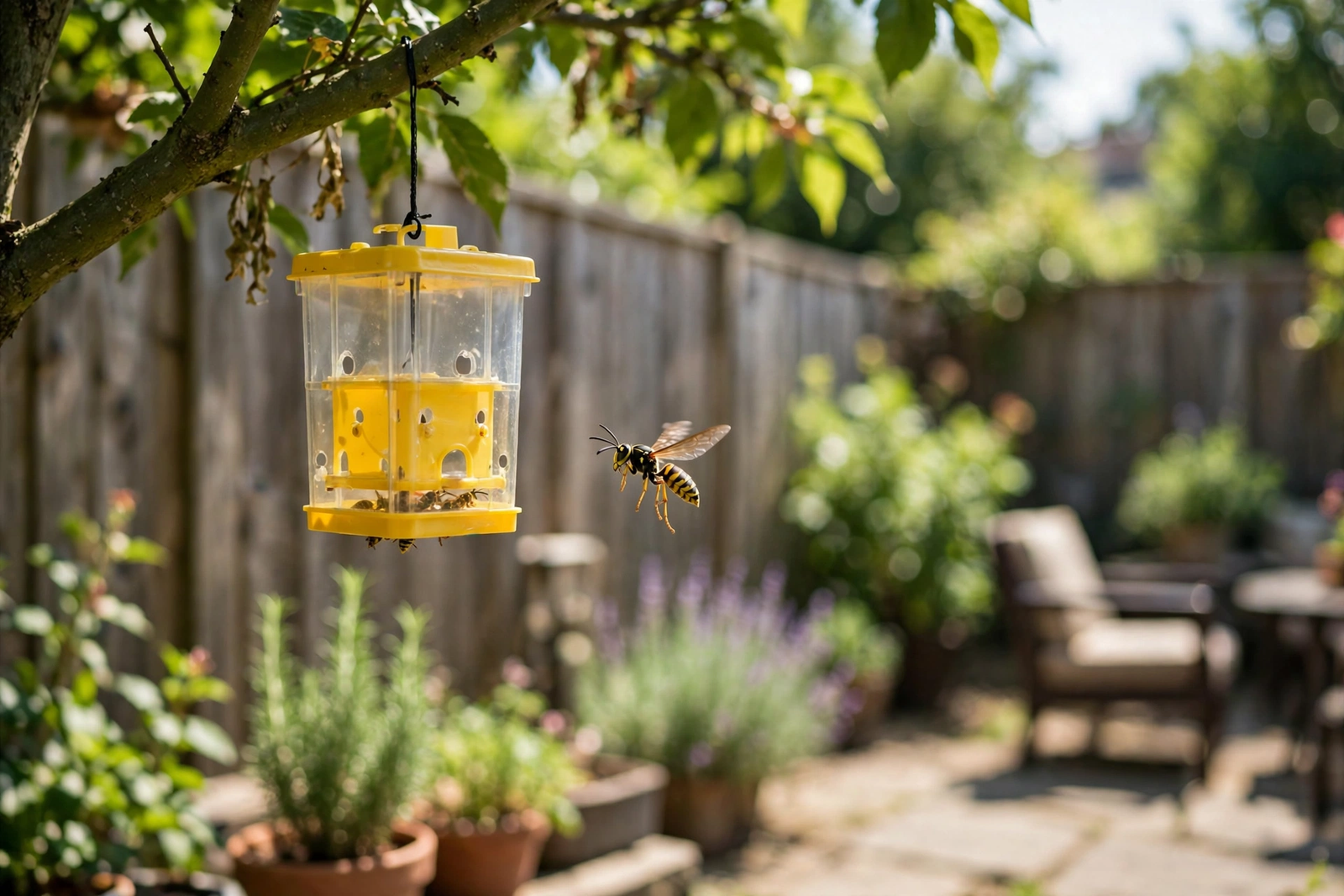
Quick Answer: To keep wasps away, remove what attracts them: cover food and drinks outdoors, seal trash cans tightly, eliminate standing water, and seal cracks in siding and eaves where they nest. Set wasp traps in early spring to catch emerging queens, use natural repellents like peppermint oil around gathering areas, and hang decoy nests to discourage new colonies. If you find an active nest, treat it at night or call a professional.
Wasps can turn a pleasant backyard barbecue into a stressful swatting session. Unlike bees, wasps are aggressive scavengers drawn to your food, your drinks, and the sheltered corners of your home. The good news is that wasps are highly motivated by simple rewards, which means removing those rewards is remarkably effective.
This step-by-step guide covers how to make your yard and home unattractive to wasps in 2026, from prevention through safe nest removal.
Step 1: Remove Food Sources
Food is the number one reason wasps visit your property. In late summer and fall, when their natural prey dwindles, wasps become aggressive sugar-seekers, which is why they swarm your soda cans and fruit plates.
- Cover food outdoors. Use mesh food covers or keep dishes indoors until serving time. Clean up immediately after eating, including crumbs and spills.
- Cover drinks. Wasps crawl into open cans and bottles, a common cause of stings inside the mouth. Use cups with lids and straws, or keep a napkin over your can.
- Seal trash cans. Use cans with tight-fitting lids and take trash out regularly. Rinse cans periodically to remove sugary residue. Keep outdoor bins as far from seating areas as practical.
- Pick up fallen fruit. Fallen apples, pears, and berries ferment and attract wasps in droves. Harvest promptly and clear drops daily during fruit season.
Step 2: Eliminate Water Sources
Wasps need water, especially in hot weather. They gather at puddles, birdbaths, pet bowls, and leaky faucets, and they use water to cool their nests.
- Fix leaky outdoor faucets, hoses, and irrigation heads.
- Empty saucers under potted plants and change birdbath water frequently, or move birdbaths away from patios.
Step 3: Seal Nesting Spots and Entry Points
Queen wasps emerge in spring and look for sheltered cavities to start new colonies. Deny them options before nesting season begins.
- Inspect in early spring. Walk your property in March and April looking for small, golf-ball-sized starter nests under eaves, in sheds, and inside hollow structures. Removing these tiny nests early prevents a full colony.
- Seal cracks and gaps. Caulk gaps in siding, around windows, under eaves, and where utility lines enter the house. Yellow jackets often nest inside wall voids entered through tiny openings.
- Screen vents and chimneys. Cover attic vents, soffit vents, and chimney tops with fine mesh screens.
- Cap hollow fence posts and seal gaps in decking where wasps build aerial nests.
Step 4: Set Traps and Decoys
Traps work best as a supplement to sanitation, not a replacement for it.
Wasp traps
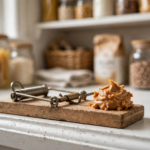
Commercial traps or DIY bottle traps baited with sugar water, fruit juice, or a protein bait (tuna works well in spring) catch foraging workers. Place traps at least 20 feet away from seating areas so you draw wasps away from people, not toward them. The EPA’s safe pest control guidance emphasizes combining traps with sanitation for the best results.
Timing matters enormously: trapping queens in early spring prevents entire colonies. A single queen caught in April means thousands fewer wasps in August.
Decoy nests
Wasps are territorial and tend to avoid building near existing colonies. Hanging fake wasp nests (paper decoys sold at garden centers) under eaves and near patios can discourage scout wasps from settling. Results vary, but they are cheap, chemical-free, and worth trying.
Step 5: Use Natural Repellents
Several scents and plants discourage wasps from lingering around patios and doorways:
- Peppermint oil: Mix a few drops with water in a spray bottle and apply around outdoor seating, door frames, and trash areas. Reapply after rain.
- Clove, geranium, and lemongrass oils have similar repellent effects in small-scale tests.
- Plants: Mint, basil, lemongrass, and wormwood planted near gathering areas may help, though they are not force fields on their own.
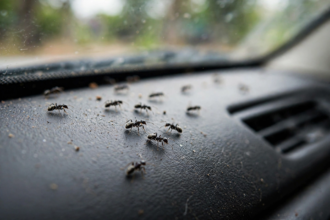
Think of repellents as a supporting layer. They reduce wasp visits but will not overcome uncovered garbage and open soda cans. For broader insect problems indoors, see our guide on how to get rid of ants in the kitchen step by step guide 2026“>getting rid of ants in the kitchen.
Dealing With an Active Nest Safely
Prevention failed and now there is a nest? Handle it carefully:
- Identify the nest type. Paper wasps build open, umbrella-shaped nests under eaves. Yellow jackets nest underground or in wall voids and are far more aggressive. Hornets build large enclosed paper nests in trees.
- Treat at night. Wasps are least active after dark when most are inside the nest. Use a red-filtered flashlight if you need light, since bright white light agitates them.
- Use a wasp-specific insecticide. Aerosol sprays labeled for wasps and hornets shoot 15 to 20 feet, letting you treat from a safe distance. Follow the label exactly. University extension services like UMN Extension provide species-specific control advice.
- Wear protection. Long sleeves, pants, gloves, and eye protection at minimum. Avoid perfumes and bright floral clothing.
- Have an escape route. Never stand on a ladder treating a nest above your head. Plan where you will retreat.
If you are also battling other stinging insects, read how to repel carpenter bees step by step guide 2026“>how to repel carpenter bees for species-specific tactics.
When to Call a Professional
Call a pest control professional when:
- The nest is large (bigger than a softball) or in a wall void, attic, or underground burrow you cannot safely reach.
- Anyone in the household is allergic to stings. Do not take risks with anaphylaxis.
- DIY treatment failed or the nest is in a high-traffic area like a playground or doorway.
- You are dealing with aggressive yellow jackets near children or pets.
Professionals have commercial-grade products and protective equipment, and a typical wasp nest removal costs far less than an emergency room visit. And if pests have moved indoors too, check our guide on how to get rid of german cockroaches step by step guide 2026“>getting rid of German cockroaches.
Frequently Asked Questions
What attracts wasps to my yard?
Food, water, and shelter. Sugary drinks, uncovered food, open trash, fallen fruit, pet food, and standing water are the biggest draws. In spring, queens also seek sheltered spots under eaves and in sheds to start new nests.
When is the best time to put out wasp traps?
Early spring, as soon as temperatures consistently reach the 50s. Trapping queens in spring prevents entire colonies from forming. Keep traps out through summer, placed well away from areas where people gather.
Will wasps come back to the same spot every year?
Wasps do not reuse old nests, but queens are attracted to the same sheltered locations year after year. Sealing entry points and removing old nests in winter, then inspecting those spots each spring, breaks the cycle.
What should I do if I get stung?
Wash the area, apply ice, and take an antihistamine or pain reliever. Watch for signs of a severe allergic reaction: difficulty breathing, swelling of the face or throat, dizziness, or hives spreading beyond the sting site. Those symptoms require emergency care immediately.