
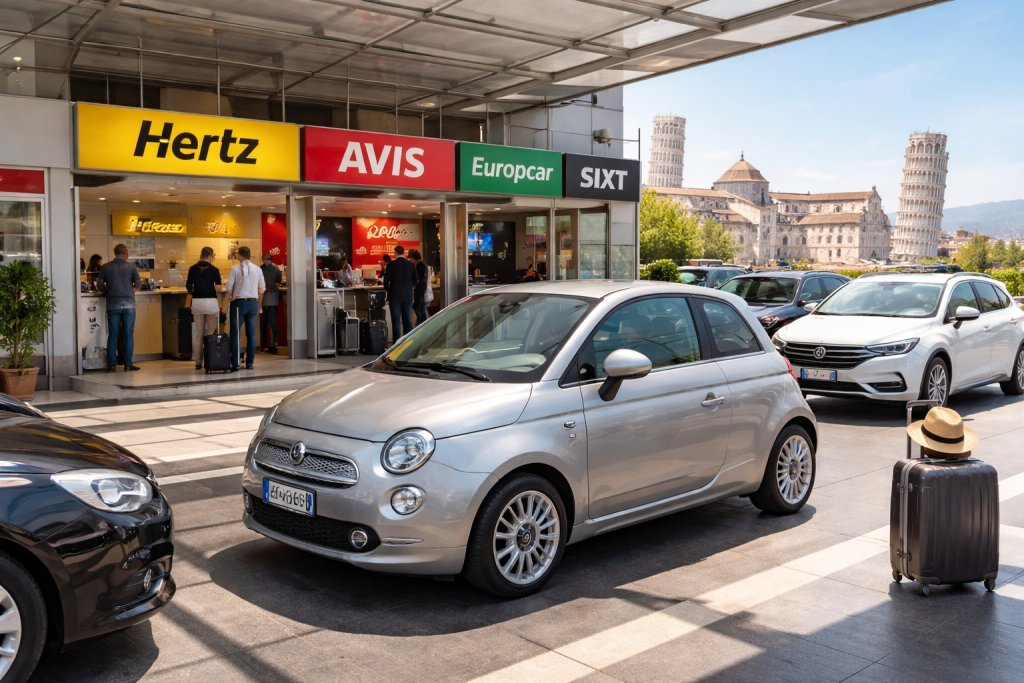
Renting a car in another country sounds simple until you’re standing at a foreign rental counter, jet-lagged, while an agent explains — in rapid-fire local jargon — why your booking doesn’t include the insurance you assumed it did. I’ve rented cars on four continents, and I can tell you the surprises are almost never about the car itself. They’re about paperwork, insurance, and rules nobody told you about. Here’s what you should know before renting a car in another country so the only surprise is how good the scenery looks.
Get Your License Situation Sorted Before You Fly
Your regular driver’s license works in many countries, but plenty of others legally require an International Driving Permit (IDP) alongside it. An IDP is basically a standardized translation of your license into ten languages, and it’s recognized in over 150 countries. In the U.S., only two organizations are authorized to issue them: AAA and the American Automobile Touring Alliance. It costs around $20 plus passport photos, and you can often get one same-day at a local AAA office.
Here’s the part people miss: the IDP is not a license by itself. You must carry your actual state license with it, and rental agencies in countries like Italy, Spain, Japan, and Thailand can and do refuse rentals without one. The U.S. State Department’s road safety abroad page is worth a read for country-specific requirements. Get the IDP even if you think you won’t need it — twenty bucks is cheap insurance against a ruined itinerary.
Also check: some countries require you to have held your license for a minimum period (often one to two years), and many rental companies won’t rent to drivers under 21 — or they slap young drivers with a hefty daily surcharge up to age 25.
Understand Insurance Before You Decline Anything at the Counter
The rental counter is the most expensive place on earth to buy insurance. Agents earn commission pushing collision damage waivers and supplemental liability, and after a long flight, “just sign here” is tempting. Don’t.
Before your trip, check these three things:
- Your credit card benefits. Many premium travel cards include rental car collision coverage abroad — but most exclude certain countries (Ireland, Israel, and Jamaica are common exclusions) and almost never cover liability. Call the benefits line and ask specifically about your destination.
- Your personal auto policy. U.S. policies sometimes extend to Canada and occasionally Mexico, but rarely beyond North America.
- What’s legally required locally. Many countries mandate third-party liability insurance, which the rental company must provide — but the included limits can be shockingly low.
My rule: I photograph every scratch, dent, and scuff on the car during pickup — all four sides, the windshield, the wheels — with timestamps on. I’ve had two damage disputes evaporate the moment I produced dated photos. It takes three minutes and has saved me hundreds.
Learn the Local Driving Rules That Actually Get Tourists in Trouble
Every country has its own gotchas. A few that routinely catch American drivers off guard:
- Speed cameras are everywhere in Europe and fines follow you home through the rental company — plus an “administrative fee” from the rental agency on top, often $40–$60 per ticket.
- Roundabouts, right-of-way, and blood alcohol limits differ wildly. Several European countries have effectively zero-tolerance drunk driving laws.
- Manual transmissions dominate outside North America. Automatics exist but cost significantly more and sell out — reserve one early if you can’t drive stick.
- Toll systems vary. Some countries use windshield vignettes (stickers) you must buy before hitting the highway; others are fully electronic. Ask the rental agent exactly how tolls work.
- Fuel types matter. Diesel (“gasoil,” “gasóleo”) is common in Europe. Putting gasoline in a diesel car is a trip-ending mistake — always double-check at the pump.
Before driving anywhere unfamiliar, give the local road culture a day of observation if you can. And if you’re also navigating cities on foot, our guide to exploring a new city on foot safely covers the pedestrian side of getting around abroad.
Book Smart: Timing, Fuel Policies, and the Fine Print
A few booking habits that consistently save money and headaches:
- Book directly with a major company when possible, and re-check prices a week before departure — rates often drop.
- Choose “full to full” fuel policies. Prepaid fuel is almost always a bad deal; you pay for a full tank at inflated prices and rarely return it empty.
- Decline the GPS upsell. Your phone with offline maps downloaded works better and costs nothing.
- Read the cross-border policy. Many rentals forbid taking the car into neighboring countries, or charge extra for it. This matters a lot in Europe where borders are invisible.
- Inspect the spare tire and jack. Seriously. In rural areas of some countries, roadside assistance can take hours.
One more money tip: airport rental locations carry hefty surcharges. If your first day is in a city with good transit, consider renting from an in-town location on day two — the savings can be 20–30%.
What to Do If Something Goes Wrong
Accidents happen. If you’re in a fender-bender abroad: don’t move the car if local law requires a police report (many European countries do for any accident), call the rental company’s emergency line immediately, and document everything with photos. Keep the rental agreement and emergency numbers in your phone, not just the glove box. And if your travel plans unravel before you even get the car — say your flight gets scrapped — our advice on what to do when your flight is cancelled will help you salvage the trip.
The Bottom Line
Renting a car in another country is one of the best ways to see a place properly — you just have to do the boring homework first. Get the International Driving Permit, sort out insurance before you reach the counter, learn the local rules that catch tourists out, and document the car’s condition at pickup. Handle those four things and you’ll spend your trip enjoying the drive instead of arguing about it. If you’re bringing a pet along for the ride, by the way, start with our guide on finding pet-friendly hotels for a road trip to plan stops that work for everyone.






One Comment