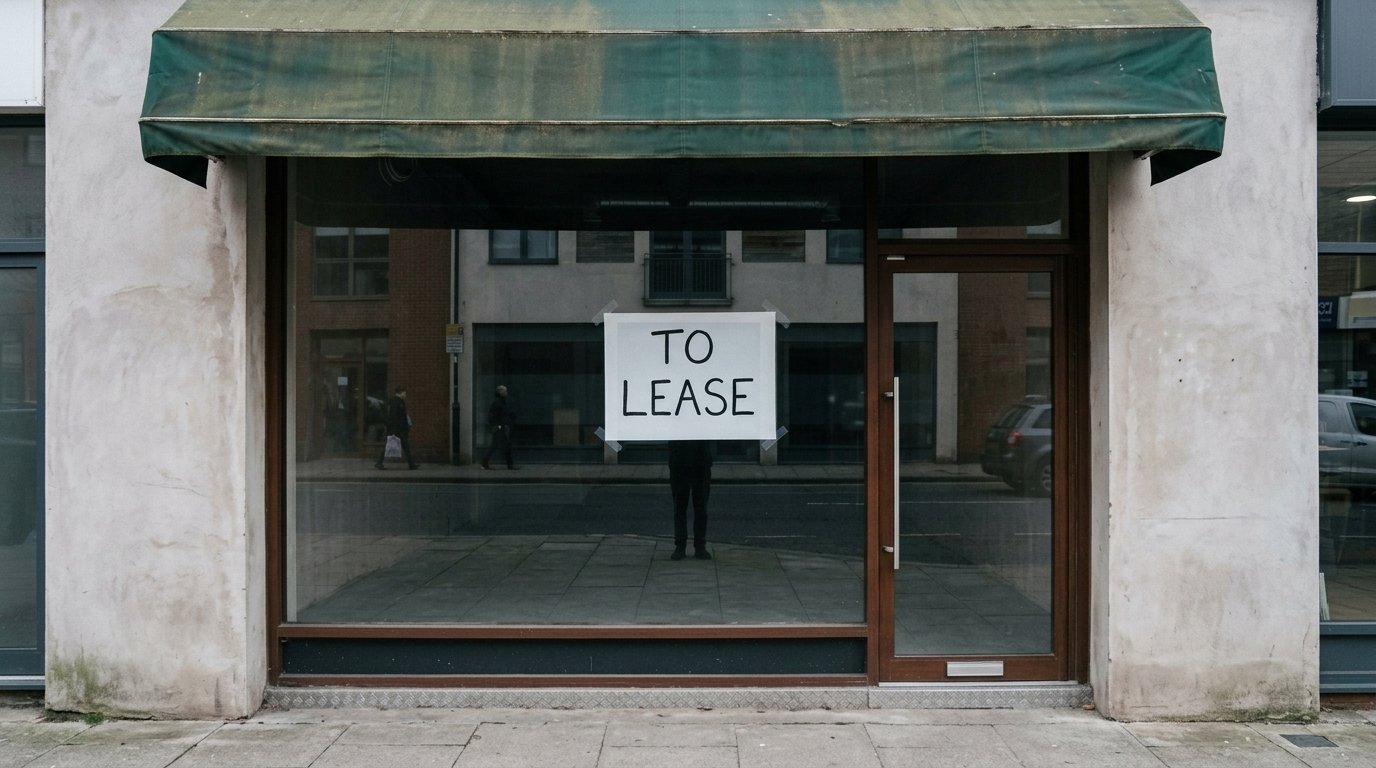
Negotiating rent for a commercial storefront is nothing like apartment hunting — everything is negotiable: base rent, free-rent periods, tenant improvement allowances, renewal options, and personal guarantee terms. Landlords expect negotiation; the listed price is the opening bid, not the price.
I’ve seen tenants save tens of thousands with a few smart asks. Here’s the playbook — including what landlords hope you don’t know.
Know the Market Before You Talk Numbers
- Research comparable rents: LoopNet, Crexi, and local brokers reveal asking rents — but asking isn’t getting. Ask brokers what spaces actually leased for; 10-20% below ask is common in soft markets.
- Check vacancy duration: a space vacant 12+ months = a motivated landlord. Long vacancies are your leverage — every empty month costs them.
- Understand the rent structure: triple net (NNN) — you pay base rent + taxes + insurance + maintenance (common in retail); gross/modified gross — landlord covers some/all extras. A $20/sq ft NNN vs. $28 gross aren’t comparable until you add the NNN extras (~$8-$12/sq ft).
- Know your walk-away number: the rent-to-revenue rule — retail rent should be ~5-10% of gross revenue; restaurants 6-10%. If the math doesn’t work at the asking rent, no amount of liking the space fixes it.
- Talk to neighboring tenants: “What are you paying? How’s the landlord?” — invaluable intelligence no listing provides.
The 12 Negotiable Terms (Beyond Base Rent)
- 1. Free rent (abatement): 1-3 months free on a 3-5 year lease is standard to request — more for long vacancies or heavy build-out needs. Ask for it upfront; it’s often easier for landlords than lowering face rent.
- 2. Tenant improvement (TI) allowance: $10-$50+/sq ft from the landlord for build-out. This is often worth more than a rent reduction — $30k in TI on a 1,500 sq ft space beats $200/month off.
- 3. Base rent reduction: always ask — 10-15% below ask is a reasonable opening in most markets.
- 4. Renewal options: one or two 5-year options at pre-negotiated increases (or fair market with caps). This is crucial — without it, a successful business faces eviction-by-rent-hike at renewal.
- 5. Rent escalation caps: limit annual increases to 2-3% (not the 4-5% landlords propose). Over 10 years, this compounds enormously.
- 6. Personal guarantee limits: negotiate a burn-off (guarantee expires after 12-24 months of on-time payment) or cap it. Unlimited personal guarantees are standard to ask for, not standard to accept.
- 7. Exclusive use clause: landlord can’t lease to a direct competitor in the same center. Essential in multi-tenant properties.
- 8. Co-tenancy clause: if anchor tenants leave, you get rent reduction or exit rights. Protects against dead-mall syndrome.
- 9. Signage rights: pylon signs, window coverage, banners — get specifics in writing, not verbal promises.
- 10. Assignment/sublease rights: reasonable consent standard (not landlord’s “sole discretion”) — your exit strategy.
- 11. Maintenance responsibilities: push HVAC, roof, and structural to the landlord — these are five-figure surprises you don’t want.
- 12. Early termination option: a buyout clause (e.g., 6 months rent) after year 2-3. Costs a little leverage; buys a lot of sleep.
Negotiation Tactics That Work
- Get a tenant-rep broker: free to you (landlord pays the commission) and they know the market, the landlords, and the tricks. Never negotiate a commercial lease without one — it’s like trial without a lawyer, except the lawyer is free.
- Get everything in an LOI first: the Letter of Intent outlines all terms before lawyers draft the lease. Negotiate hard at the LOI stage — it’s cheaper and faster than redlining a 60-page lease.
- Lead with term, not just rent: “We’ll sign 7 years instead of 5 if you do $25k TI and 2 months free” — landlords value committed occupancy; trade term length for concessions.
- Have a real Plan B: the best leverage is a credible alternative space. Tour multiple properties; let each landlord know you’re deciding between options.
- Negotiate the renewal now: your leverage is highest before you sign. After you’re built out and successful, it’s gone.
- Read every word of the final lease: LOI promises evaporate if they’re not in the lease. Hire a commercial real estate attorney ($1,500-$3,000) for review — the cheapest insurance in the deal.
What Landlords Won’t Tell You
- The “face rent” game: landlords prefer high face rent + concessions (free months, TI) over low rent — it protects their property valuation (based on rental income). Use this: accept their face rent, extract maximum concessions. You care about effective cost; they care about the headline number.
- Vacancy costs them more than concessions cost: a $3,000/month space vacant 6 months loses $18,000 — they’d rather give you $10k in TI than stay empty. Time is your ally; don’t rush.
- Personal guarantees are negotiable: presented as standard, frequently reduced (burn-off clauses, caps, good-guy guarantees). Always push back.
- CAM charges are auditable: Common Area Maintenance fees get padded — negotiate caps (5% annual increase max) and audit rights. Review the CAM reconciliation yearly; overcharges are common.
- They know about their problem tenants: ask directly about turnover, disputes, and why the last tenant left. Evasive answers are answers.
When to Walk Away (Red Flags)
- The math doesn’t work: if rent exceeds 10% of realistic gross revenue (retail) and no concession fixes it — walk. Loving a space isn’t a business plan.
- Landlord won’t put promises in writing: verbal TI allowances and handshake renewal terms are worthless. Everything in the lease or it doesn’t exist.
- Excessive personal guarantee + no burn-off: unlimited lifetime personal liability for a startup is an unacceptable risk profile.
- No exclusive use protection in a competitive center — the landlord can put your direct competitor next door.
- Deferred maintenance everywhere: a landlord who won’t fix the roof before you sign won’t fix anything after.
- Pressure tactics: “another tenant is about to sign” (sometimes true, often theater) — never let urgency override diligence. Good spaces come up constantly; bad leases last years.
Commercial leases run 3-10 years — a bad lease outlives most business problems and creates new ones. The week of diligence feels slow; the years of regret feel slower. The SBA’s location guide covers site selection fundamentals.
Keep Reading
If this was useful, you might also like franchise vs independent and cash flow management.
The Bottom Line
Everything is negotiable: target 10-15% below ask on base rent, 1-3 months free rent, TI allowance ($10-$50/sq ft), renewal options with capped escalations, personal-guarantee burn-off, and exclusive-use clauses. Get a tenant-rep broker (free to you), negotiate via LOI before lease drafting, trade longer terms for bigger concessions, and have a commercial attorney review the final lease. Know your walk-away number (rent ≤10% of revenue) — and walk when the math doesn’t work.
Frequently Asked Questions
What is a triple net (NNN) lease?
You pay base rent PLUS property taxes, insurance, and maintenance (the three ‘nets’). Common in retail. Always calculate the all-in cost — a $20/sq ft NNN with $10 in extras costs the same as $30 gross.
How much free rent can I negotiate?
Typically 1-3 months on a 3-5 year lease; more for long-vacant spaces or heavy build-outs. Landlords often prefer granting free rent over lowering face rent (protects property valuation) — use that preference.
Should I use a broker to find commercial space?
Yes — tenant-rep brokers cost you nothing (landlord pays commission) and bring market knowledge, landlord intelligence, and negotiation experience. It’s the rare genuinely free professional advantage.