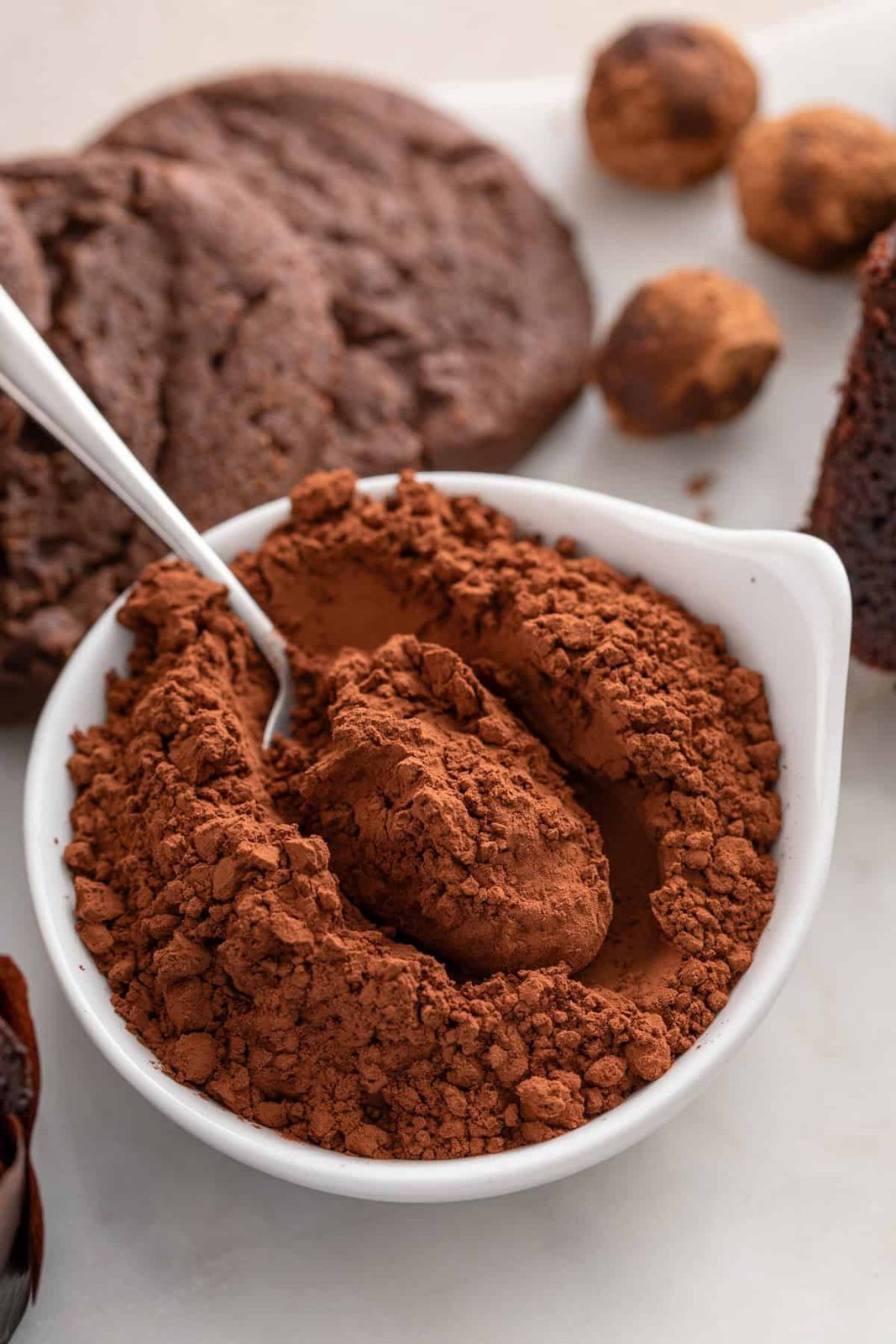
Standing in the baking aisle staring at two kinds of cocoa powder, wondering if it actually matters which one you grab? It does — more than most people realize. Natural and Dutch-process cocoa look similar, but they behave completely differently in recipes. Use the wrong one and your cake might not rise, or it might taste flat and soapy. Here’s the difference, explained simply.
What Is Natural Cocoa Powder?
Natural cocoa is cocoa in its most basic form: roasted cacao beans ground up, with most of the cocoa butter pressed out. It’s acidic (pH around 5), light brown in color, and has a sharp, intense chocolate flavor — almost fruity or tangy. Think Hershey’s cocoa powder, the red-brown can that’s been in American pantries forever.
What Is Dutch-Process Cocoa Powder?
Dutch-process cocoa starts the same way, but then it’s washed with an alkaline solution (potassium carbonate) that neutralizes its acidity. This “Dutching” process — invented by a Dutch chemist named Coenraad van Houten in the 1800s, hence the name — does three things:
- Darkens the color dramatically, from light brown to deep, almost black brown
- Mellows the flavor — smoother, earthier, less sharp, more “chocolatey” in the Oreo-cookie sense
- Neutralizes the acidity (pH around 7-8), which changes how it reacts with leaveners
If you’ve ever wondered why Oreos are so dark, that’s Dutch-process cocoa doing its thing.
The Key Difference: How They React With Leaveners
This is where it actually matters in your kitchen. It’s basic chemistry:
- Natural cocoa (acidic) + baking soda (alkaline) = reaction. They fizz together and create lift. Recipes using natural cocoa rely on baking soda for rising.
- Dutch-process cocoa (neutral) + baking soda = nothing happens. No acid, no reaction, flat cake. Recipes with Dutch-process cocoa use baking powder instead, which brings its own acid.
This is why you can’t just swap them freely. A recipe developed with natural cocoa and baking soda will fail with Dutch-process cocoa — the cake won’t rise properly and can taste soapy from unreacted baking soda. Going the other direction (Dutch-process recipe with natural cocoa) can make things taste tangy or metallic.
So Which One Should You Buy?
Honest answer: it depends on what you bake.
- Buy natural cocoa if you mostly make classic American recipes — old-fashioned chocolate cake, brownies from vintage cookbooks, hot cocoa. Most traditional American recipes were written for natural cocoa.
- Buy Dutch-process if you want that deep dark color and smooth flavor — European-style cakes, elegant chocolate desserts, ice cream, or anything where you want Oreo-level darkness.
- Buy both if you bake a lot. They’re not expensive, and having the right one for the recipe makes a real difference.
If you only want one can in the pantry, natural cocoa is the more versatile default for American-style baking — more recipes call for it. Check your recipe’s leavener as a cheat code: baking soda usually means natural cocoa; baking powder usually means Dutch-process.
Flavor Differences in Practice
In a side-by-side taste test (I’ve done this, it’s a fun afternoon), the differences are clear:
- Natural: brighter, sharper, more complex — fruity notes, more intense chocolate punch. Better in recipes where chocolate is the star and you want it bold.
- Dutch-process: smoother, mellower, deeper color. Better when you want rich-looking, mellow chocolate flavor — frostings, elegant layer cakes, drinking chocolate.
Neither is “better” — they’re different tools. A devil’s food cake wants Dutch-process for that dark, dramatic look. A classic Hershey’s-style chocolate cake wants natural.
If you’re making simple treats, this matters less — for easy three-ingredient desserts, either cocoa works fine since leavening usually isn’t involved.
Cocoa Powder FAQ
Can I substitute one for the other? In recipes without chemical leaveners (frostings, sauces, hot cocoa, ice cream), yes — freely. In baked goods with baking soda or powder, it’s risky. If you must swap, adjust the leavener too, but results vary.
Is Dutch-process cocoa less healthy? The alkalizing process does reduce flavanol (antioxidant) content somewhat. Natural cocoa retains more. But let’s be honest — you’re eating chocolate cake, not taking supplements. The difference is nutritionally trivial.
What is black cocoa powder? An extra-dark Dutch-process cocoa, heavily alkalized. It’s what makes Oreos black. A little goes a long way — it’s intense and can taste almost burnt if overused. Fun for dramatic desserts.
Does cocoa powder go bad? It doesn’t spoil, but it loses flavor after 2-3 years. Keep it sealed in a cool, dark place. If it smells like nothing, it’s time for a new can.
The Takeaway
The difference between natural and Dutch-process cocoa comes down to acidity: natural is acidic and pairs with baking soda; Dutch-process is neutralized and pairs with baking powder. Match the cocoa to your recipe’s leavener, and your chocolate baked goods will rise properly and taste the way they’re supposed to. When in doubt, check what the recipe calls for — the recipe developer already did the chemistry for you.
Cocoa Beyond Baking: Savory Uses
Here’s something fun: cocoa powder isn’t just for sweets. Unsweetened cocoa (either kind) adds incredible depth to savory dishes:
- Chili: a tablespoon of cocoa powder deepens chili’s flavor dramatically — it’s the secret ingredient in many award-winning recipes, including Cincinnati-style chili.
- Mole sauce: the classic Mexican sauce built on chiles, spices, and chocolate. Dutch-process cocoa gives the smoothest result.
- Dry rubs: cocoa + coffee + brown sugar + chili powder makes a phenomenal rub for brisket or ribs. The cocoa adds bitterness and color that caramelizes beautifully.
- Enriching stews: a teaspoon stirred into beef stew or braised short ribs adds background richness nobody can identify but everyone notices.
Start small — a tablespoon or less — since cocoa’s bitterness can take over. Natural cocoa’s sharper flavor stands up better in bold dishes; Dutch-process melts more seamlessly into sauces.
Storing Cocoa Powder Right
Cocoa powder is low-maintenance, but a few habits keep it fresh: keep it sealed tight in a cool, dark cabinet (not above the stove), and don’t store it near strong spices — cocoa absorbs odors. It won’t really spoil, but after 2-3 years the flavor fades noticeably. If your cocoa is older than your car payment memories, do the smell test: rich and chocolatey means it’s fine; faint and dusty means it’s time for a new can. And never scoop with a wet spoon — moisture causes clumping and can introduce mold over time.
The Invention That Changed Chocolate
Dutch-process cocoa exists thanks to Coenraad van Houten, whose 1828 hydraulic press and alkalizing process revolutionized chocolate-making — the same innovations that made affordable chocolate possible. The story of Dutch process chocolate is a great reminder that the ingredients we take for granted were once cutting-edge technology.
Chocolate desserts are party naturals — if you’re planning a spread, party snacks that pair with chocolate desserts round out the table nicely.