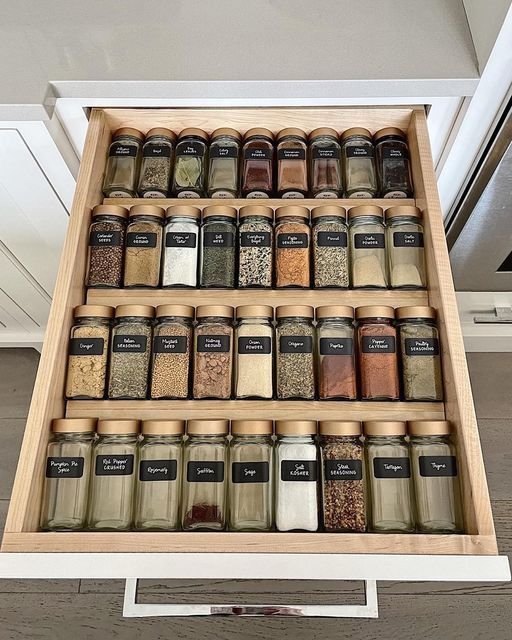
Every small kitchen has one: the spice cabinet of chaos. You open the door, jars avalanche onto the counter, and you buy a third bottle of cumin because you couldn’t find the first two. Organizing spices in a small kitchen isn’t about having a Pinterest-perfect display — it’s about being able to find the paprika in under five seconds without a jar falling on your foot.
Step One: The Great Spice Purge
Before buying any organizers, pull out every spice you own and check dates. Ground spices lose their punch after 6 to 12 months; whole spices last 2 to 3 years. Do the sniff test: crush a pinch between your fingers. If it barely smells like anything, it’s dead — toss it. Most people discover they’re hoarding expired oregano from 2021 and three half-empty jars of the same thing.
Decant what’s left into uniform jars if you can. Matching jars aren’t just pretty — uniform sizes stack and fit organizers far better than the random assortment of tall, short, wide, and tiny bottles spices come in.
The Best Ways to Organize Spices in a Small Kitchen
1. The drawer insert (my top pick)
If you have even one spare drawer near the stove, a tiered drawer insert is the single best spice organizer for small kitchens. Jars lie at an angle with labels facing up — you see everything at a glance, nothing hides behind anything else, and it uses zero counter or cabinet space you need for other things. This is what I use, and it’s genuinely life-changing for cooking flow.
2. Inside the cabinet door
Cabinet doors are dead space begging to be used. Slim mounted racks on the inside of a door hold a surprising number of jars and keep them visible every time you open the cabinet. Just make sure the door still closes — measure your jar depth first.
3. A pull-out cabinet organizer
For deep cabinets where jars vanish into the dark, a two-tier pull-out or a lazy Susan changes everything. The pull-out brings the back row to you; no more blind reaching and knocking things over.
4. Magnetic wall or fridge strips
Small magnetic tins on a wall-mounted strip or the side of the fridge free up cabinet space entirely. They look great and keep spices at eye level. The catch: keep them away from the stove, because heat and steam degrade spices fast.
5. A tiered shelf riser
The cheapest fix. A simple stepped riser inside a cabinet turns one shelf into three visible rows. No installation, under $15, works immediately.
The Labeling Rule
Whatever system you choose, label everything — top and front. When jars are in a drawer, you read the lids. When they’re on a shelf, you read the fronts. Label both and you’ll never grab cinnamon when you wanted cumin again (a mistake that ruins chili, ask me how I know).
Include the purchase date on the label. Future-you will thank present-you when deciding whether that turmeric is still alive. A label maker is nice; masking tape and a marker work just as well.
What NOT to Do
- Don’t store spices above the stove. I know the little rack looks convenient. The heat and steam from cooking kill flavor fast. Spices belong in a cool, dark spot.
- Don’t keep them next to the dishwasher for the same reason — heat and moisture.
- Don’t buy the giant Costco containers unless you cook with that spice constantly. They go stale before you finish them and eat half a shelf.
Keep Your Collection Lean
Here’s an uncomfortable truth: most home cooks use about 12 to 15 spices regularly and own 40. Be honest about what you actually cook. If you make Italian food weekly, keep the oregano, basil, and red pepper flakes front and center. That garam masala you bought for one recipe in 2023? It’s okay to let it go.
A lean, well-organized collection beats a sprawling chaotic one every time. And when your spices are fresh and findable, you’ll actually use them — which makes everything you cook taste better, from weeknight one-pot meals to slow weekend projects.
If your kitchen overhaul has you eyeing other upgrades, check out kitchen gadgets actually worth buying — but honestly, a $15 drawer insert will improve your cooking life more than most gadgets.
The Takeaway
The best way to organize spices in a small kitchen: purge the dead ones, pick one system that fits your space (drawer insert if possible), label everything with dates, and keep them cool and dark. Fifteen minutes of organizing saves you hours of frustrated searching over the year — and you’ll stop buying duplicate cumin.
A Starter Spice List for Small Kitchens
If you’re rebuilding your collection from scratch, these are the workhorses worth owning first:
- The everyday crew: kosher salt, black peppercorns, garlic powder, onion powder
- Warm and cozy: cumin, paprika (smoked if you like depth), chili powder, cinnamon
- Herby: dried oregano, basil, thyme, bay leaves
- The extras: red pepper flakes, turmeric, curry powder
That’s 15 spices that cover probably 90% of American home cooking. Buy the rest only when a specific recipe calls for them — and after you cook that recipe twice, decide if the spice earned its shelf space.
Spice Organization FAQ
How long do spices actually last? Ground spices: 6-12 months at peak. Whole spices: 2-3 years. Dried herbs: 6-12 months. Salt lasts indefinitely. The sniff-and-crush test is more reliable than any date.
Should I store spices in the original containers? You can, but uniform jars make any organizer work better and let you see how much is left. Decant when you have a free ten minutes.
Is it okay to keep spices near the stove if it’s convenient? It’s the most common setup and the worst one — heat and steam degrade flavor fast. Even moving them one cabinet over makes a measurable difference.
What’s the best label maker for spice jars? Honestly, masking tape and a Sharpie. Waterproof, cheap, easy to change. Save the label maker money for actual spices.
The Fascinating History Behind Your Spice Rack
Many common spices traveled thousands of miles and sparked wars, empires, and fortunes — the history of the spice trade reads like an adventure novel. Knowing that black pepper was once worth its weight in gold makes you appreciate the jar in your cabinet a little more — and might inspire you to actually use the spices you’ve been hoarding.