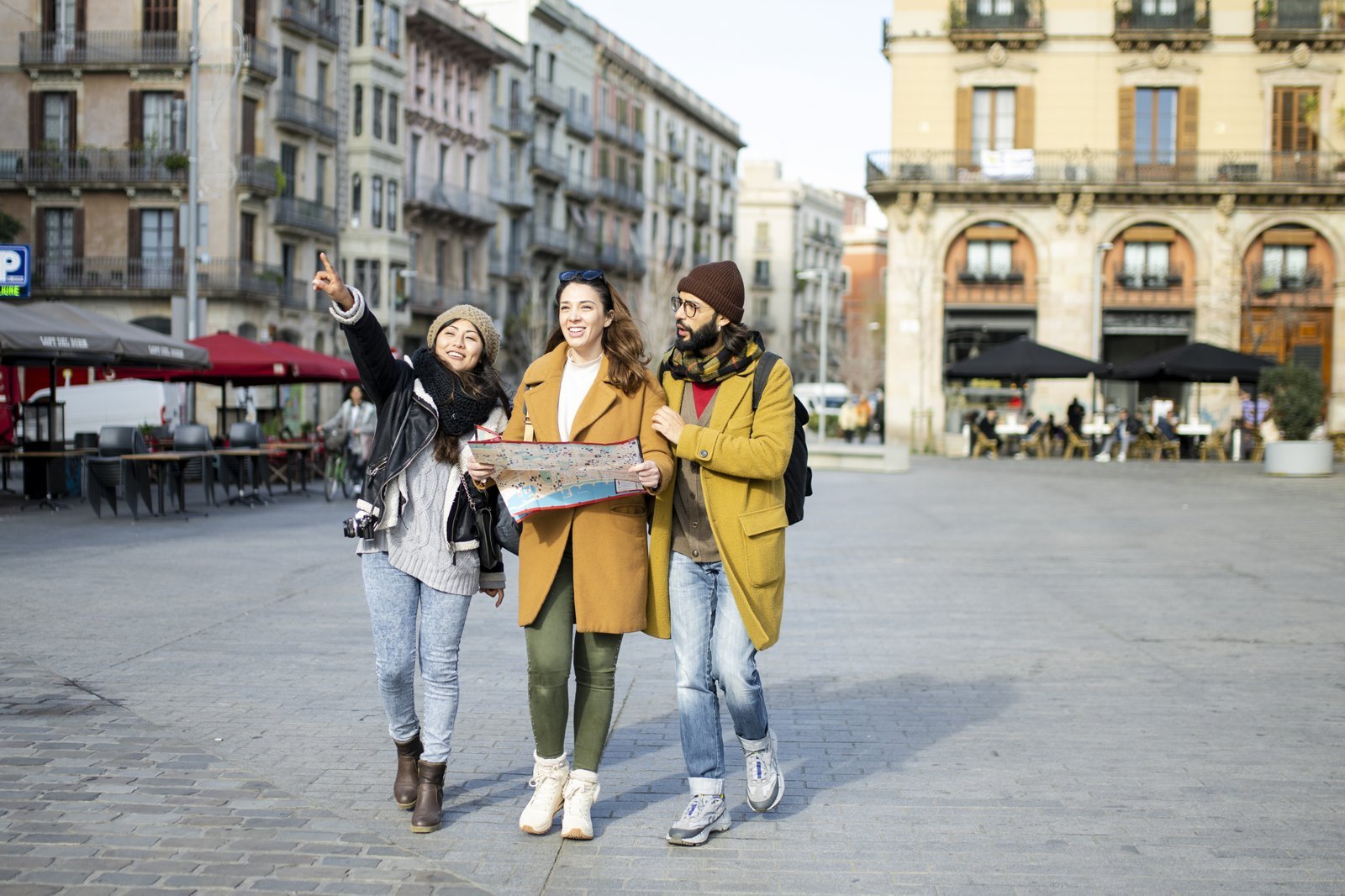
Some of my best travel memories aren’t from famous landmarks — they’re from wrong turns. The tiny bakery I found while lost in Lisbon. The street musician in a New Orleans alley. Walking is how a city reveals itself. But wandering unfamiliar streets also requires a bit of street smarts. Here’s how to explore a new city on foot safely so you can enjoy the serendipity without the anxiety.
Do Your Homework Before You Lace Up
Safe walking starts before you leave the hotel. Spend 15 minutes with a map and learn the city’s layout: where’s your hotel relative to the main sights? Which neighborhoods are fine by day but sketchy at night? Where are the well-lit main streets?
A few pre-walk habits that pay off:
- Download offline maps for the city. You don’t want to be the obvious tourist staring at a phone with no signal — or worse, with a dead battery.
- Share your plans. Text someone your rough route or drop a pin. It takes ten seconds.
- Check local advisories. The State Department’s travel advisories flag specific neighborhoods and scams by destination.
- Note emergency numbers. It’s not 911 everywhere — in Europe it’s 112, and many countries have their own.
How to Explore a New City on Foot Safely: The Street-Smart Basics
Most of staying safe on foot comes down to not looking like an easy target. That doesn’t mean being paranoid — it means being aware:
- Walk with purpose. Confident body language and a steady pace signal that you know where you’re going, even when you don’t. If you’re lost, step into a shop or café to check your map, not the middle of the sidewalk.
- Keep valuables minimal and split up. One card and some cash in a front pocket or money belt; leave the passport in the hotel safe and carry a photo of it.
- Stay on populated, well-lit streets at night. The charming empty alley is charming at noon and a bad idea at midnight.
- Trust your gut. If a street feels wrong, turn around. I’ve never once regretted listening to that instinct.
- Watch the traffic, not just the people. In many cities, scooters on sidewalks and unfamiliar traffic patterns are a bigger hazard than crime. Look both ways — then look again, because they may drive on the other side.
Blend In (or at Least Don’t Broadcast “Tourist”)
You don’t need to go full incognito, but small adjustments help. Ditch the giant camera around your neck, the fanny pack worn outside your shirt, and the loud map-unfolding at intersections. Dress a notch closer to how locals dress — in many European cities, athletic wear and flip-flops scream tourist.
Scams target walkers specifically: the “friendship bracelet” tie-on, the petition clipboard, the spilled-something-on-your-jacket routine. The universal defense is simple — keep walking, don’t engage, don’t stop. Anyone who needs your attention that urgently on the street doesn’t have your interests at heart.
Walk Smart: Routes, Timing, and Company
A little structure makes wandering safer and more rewarding:
- Start with a guided walking tour. Free walking tours (tip-based) are brilliant on day one — you learn the layout, the history, and which areas to revisit or avoid, all with a local.
- Do unfamiliar areas by day, favorites by night. Explore new neighborhoods in daylight; revisit the ones you liked after dark.
- Walk against the “tourist flow” sometimes. The street one block over from the main drag is often calmer, cheaper, and more interesting.
- Consider company for night walks. Evening food tours or pub crawls give you the nightlife experience with a group and a guide.
- Know your limits. Tired walkers make bad decisions. Rest, hydrate, and head back before you’re exhausted — fatigue kills awareness.
If you’re documenting your walks, our guide to documenting a trip without a fancy camera has phone-photography tips that won’t mark you as a target.
Gear That Helps (and Gear That Hurts)
What you carry matters. A crossbody bag worn in front beats a backpack in crowds (pickpockets love backpacks). Comfortable broken-in shoes beat fashionable ones — blisters end walking days early. A portable charger keeps your map alive. And skip the flashy jewelry and expensive watch; leave them home.
One thing worth carrying: a small flashlight or headlamp. Not for danger — for those poorly lit staircases, unmarked alleys, and “shortcut” paths that seemed like a good idea at sunset.
Staying Healthy on Long Walking Days
Walking 20,000 steps in heat or unfamiliar conditions takes a toll. Carry water (more than you think), use sunscreen even on cloudy days, and eat regularly — low blood sugar makes everything feel sketchier than it is. Our guide on avoiding getting sick while traveling abroad covers the health side in more detail.
Free Walking Tours and Self-Guided Routes
The best way to learn a new city on foot is to let someone who knows it show you around first. Free walking tours (tip-based, usually $10–$20 per person tip) run in most major cities worldwide — search “[city] free walking tour” and you’ll find them. They hit the highlights in 2–3 hours, the guides live on tips so they’re motivated to be good, and you’ll learn the city’s layout, history, and current vibe in one shot. Go on day one; everything after gets better.
For self-guided days, build a loose loop rather than a checklist: pick 3–4 anchor stops (a market, a viewpoint, a neighborhood, a museum), connect them on your offline map, and let the streets between them surprise you. The “anchor” method gives structure without rigidity — you always know the next destination, but the journey stays open to discovery.
Time your walking for the light: early mornings for markets and photography (fewer crowds, better light), late afternoons for neighborhoods and golden hour. Midday is for museums, long lunches, and rest — walking 20,000 steps in midday heat is how walking days end early.
The Bottom Line
Exploring a new city on foot safely isn’t about fear — it’s about preparation that fades into the background so you can enjoy the walk. Learn the layout, blend in a little, stay aware, and trust your instincts. Do that, and the wrong turns become the best stories. And if you’re getting around by rental car between walking adventures, read what to know before renting a car abroad first.