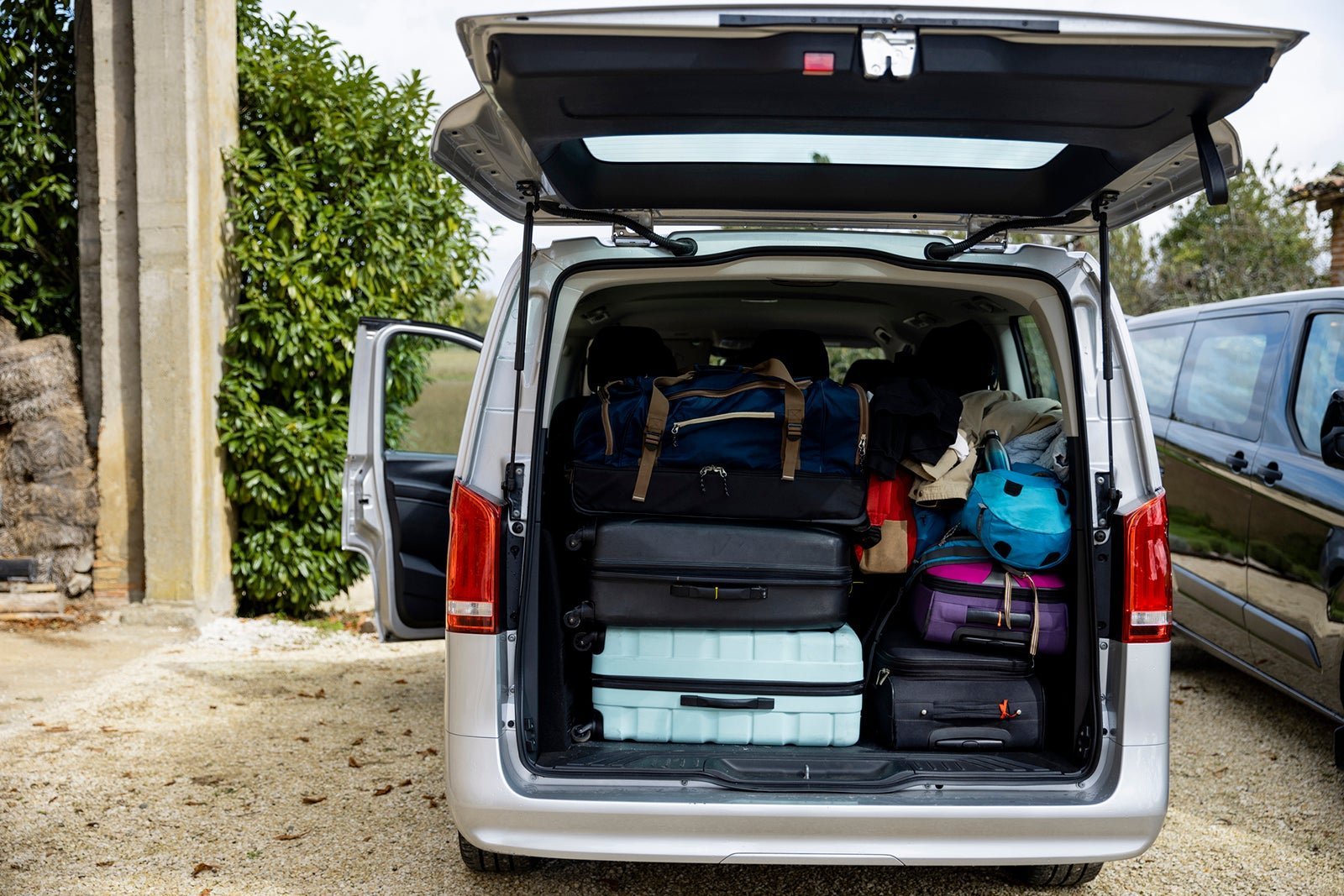
A two-week road trip across the US is one of the great American experiences — 3,000 miles of diners, deserts, weird roadside attractions, and the particular freedom of the open highway. But packing for two weeks in a car is its own puzzle: too much and you’re living out of a Tetris nightmare; too little and you’re buying overpriced essentials at gas stations. The question of what to pack for a two-week road trip across the US has a sweet spot — and it’s less than you think.
I’ve driven cross-country four times, and every trip taught me the same lesson: the car carries the weight, so pack for comfort and contingencies, not for fashion shows. Here’s the complete list.
The Packing Philosophy: Car ≠ Suitcase
Road trip packing differs from flying in one crucial way: weight and volume barely matter, but organization matters enormously. You’ll live out of bags in parking lots, hotel rooms, and rest stops. The system: one bag per person for clothes (duffels beat hard suitcases — they squish), plus shared “car bins” for communal gear. Everything accessible without unpacking the trunk.
What Should I Pack for a Two-Week Road Trip Across the US? The Complete List
Clothing (per person, 14 days)
Here’s the liberating math: you don’t need 14 outfits. You need 7–8, plus laundry once mid-trip (every town has a laundromat; many hotels have machines).
- 7–8 tops (mix of tees and one nicer shirt)
- 4–5 bottoms (jeans, shorts, comfortable pants — layers beat quantity)
- 1 light jacket + 1 warm layer (fleece or hoodie) — deserts get cold at night, mountains colder
- 1 rain layer (packable rain jacket — weather happens)
- 8 pairs underwear, 8 pairs socks (the one category worth overpacking)
- 1–2 sleep sets
- Comfortable walking shoes (broken in!) + sandals/flip-flops + one nicer pair if dining out
- Swimsuit (you’ll find water — lakes, hotel pools, hot springs)
- Hat and sunglasses
The car kit (shared)
- Cooler with drinks and road trip snacks that stay fresh — the cooler pays for itself by day two versus gas-station prices
- Paper towels, trash bags, wet wipes — the holy trinity of car cleanliness
- Basic first-aid kit + any prescriptions + motion sickness remedies
- Phone mounts, chargers, and a car power inverter — dead phones on unfamiliar highways are no joke
- Paper maps or downloaded offline maps — cell dead zones are real in the rural West
- Blanket and pillows — for naps, drive-in movies, and emergency warmth
- Reusable water bottles + a case of water in the trunk
- Small tool kit, jumper cables, spare tire check, flashlight — before you leave, not after you need them
Comfort and entertainment
- Downloaded playlists, podcasts, and audiobooks — 40+ hours of driving needs content. Audiobooks make long stretches fly.
- A real camera if you’re into travel photography — the landscapes deserve better than a windshield phone shot
- Travel games, a deck of cards, a frisbee — rest-stop entertainment
- Laundry bag, travel detergent packets — for the mid-trip wash
- Sunscreen and bug spray (buy before the tourist-trap markup zones)
Documents and money
- Driver’s license, insurance cards, roadside assistance info (AAA or equivalent)
- Hotel confirmations (screenshot them — offline access)
- National Parks Pass ($80 America the Beautiful pass — pays for itself in 3 parks)
- Mix of payment methods + some cash (small towns, park entrances, and emergencies)
What NOT to Pack
- Too many “just in case” outfits. The car has limited accessible space. If you haven’t worn it in the first week, you won’t.
- Full-size toiletries. Travel sizes + one mid-trip restock. Every Walmart in America sells shampoo.
- Valuables you don’t need. Fine jewelry, extra electronics — theft risk with zero trip benefit. For what’s worth bringing, see keeping valuables safe while traveling.
- A rigid itinerary. Not packing, but critical: leave slack days. The best road trip moments — the weird museum, the local’s recommendation, the detour — can’t be scheduled.
Route Planning Basics
Two weeks = roughly 3,000–4,000 miles comfortably, which means 250–300 miles of driving per day average with rest days built in. Classic routes: I-40 (southern, Grand Canyon, deserts), I-80/I-90 (northern, Badlands, Yellowstone proximity), or Route 66 for the nostalgia tour. Book the first and last nights; leave the middle flexible. And check the NPS park finder along your route — underrated national parks make the best detours.
Pre-Trip Car Checklist
The car is your home for two weeks — make sure it’s ready before you load it:
- ☐ Oil and fluids: Oil change if due within the trip’s mileage; check coolant, brake fluid, windshield washer fluid, power steering.
- ☐ Tires: Pressure (including the spare!), tread depth, and a visual check for damage. Uneven wear means an alignment check.
- ☐ Brakes: Any squealing, grinding, or soft pedal? Get it checked now — mountain descents are not the time to discover brake issues.
- ☐ Battery: If it’s over 3 years old, have it tested. A dead battery in rural nowhere is a day-killer.
- ☐ Lights and wipers: All lights working, wiper blades streak-free. You’ll drive in rain eventually.
- ☐ Emergency kit: Jumper cables, tire jack + lug wrench (know where they are!), flashlight, basic tools, first-aid kit, blanket, extra water.
- ☐ Documents: Registration, insurance cards, roadside assistance number saved in your phone AND on paper.
- ☐ Clean-out: Empty the trunk completely before packing. You’ll be amazed how much space the accumulated junk was eating.
A $100 pre-trip inspection at your mechanic is the cheapest travel insurance there is. Breakdowns don’t just cost money — they cost days, and days are the real currency of a road trip.
Entertainment: The Passenger Kit
Forty hours of driving needs content. The passenger entertainment kit: download 2–3 audiobooks before departure (a 15-hour epic covers two full driving days — thrillers and memoirs work best in cars), a shared playlist everyone contributes to (the “no skips” rule makes it an adventure), 3–4 podcast series queued, and offline games (20 Questions, the Alphabet Game with license plates, “would you rather” — timeless for a reason). For solo drivers: call a friend for the boring interstate stretches (hands-free, obviously), or save the best podcast episodes for the longest legs as a reward. The rule: never start a driving day without the day’s audio ready. Silence is fine for the scenic parts; the flat interstate miles demand entertainment.
The Takeaway
Packing for a two-week US road trip means 7–8 outfits (not 14) with one mid-trip laundry day, a well-stocked car kit (cooler, emergency gear, offline maps), comfort items for long drives, and the discipline to leave the “just in case” stuff home. Organize by person (duffels) + shared (car bins), keep daily essentials accessible, and leave room — literally and figuratively — for the trip to surprise you. The packing takes an afternoon; the memories take care of themselves.