
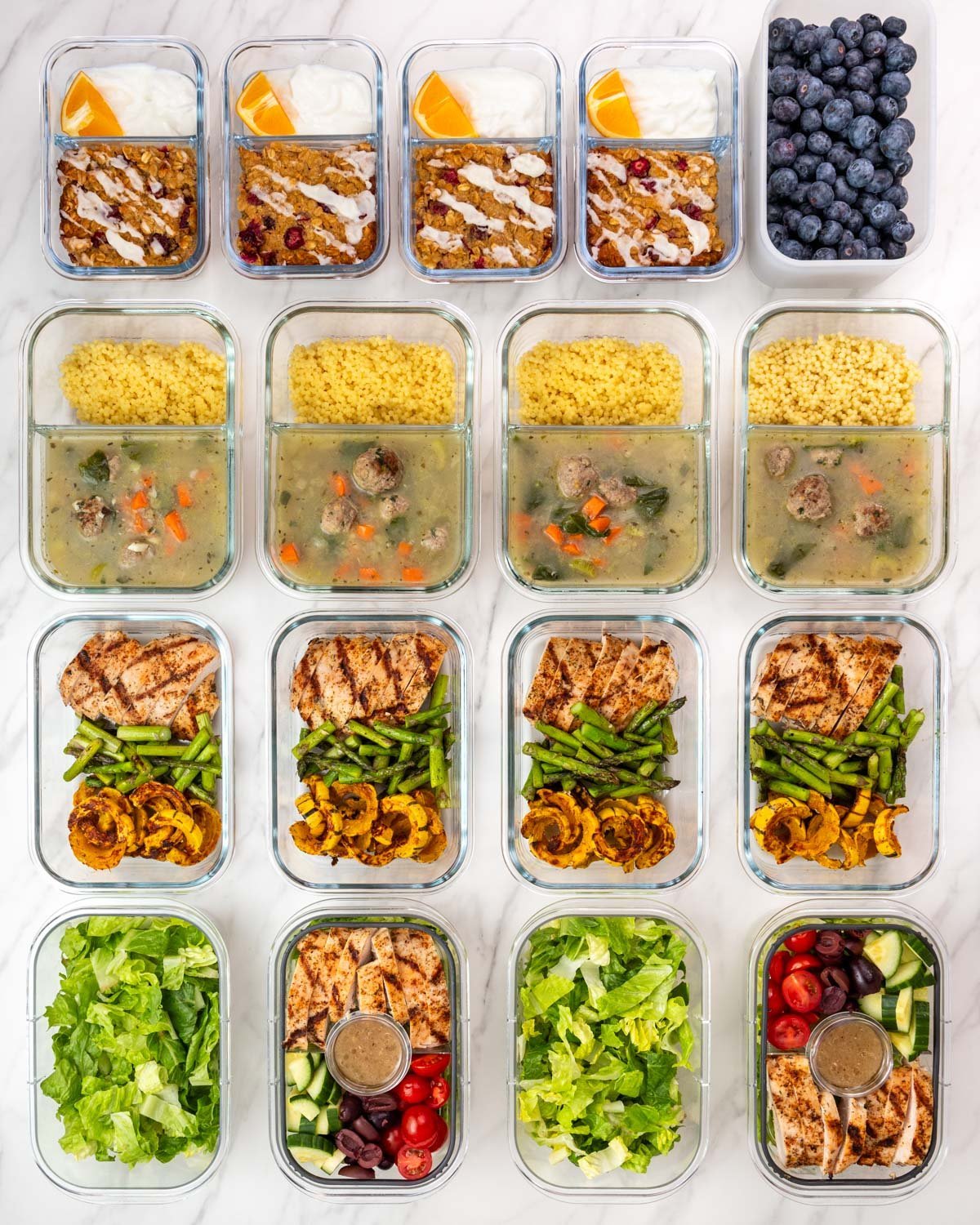
Every January, millions of people swear they’ll meal prep. By February, the containers are stacked in a cabinet and takeout is back on speed dial. The problem was never willpower — it was the system. If you want to know how to build a weekly meal prep routine that actually sticks, you need a plan designed for real life: limited time, picky eaters, and weeks when everything goes sideways.
I’ve meal prepped through newborn phases, job changes, and one memorable month with a broken oven. What survived all of it is a flexible system, not a rigid one. Here’s how to build yours.
Forget the Instagram Version
The meal prep you see online — 21 identical containers lined up like soldiers — is a fantasy for most people. Nobody wants to eat the same chicken-and-broccoli five days straight. The version that sticks is component prepping: you cook versatile building blocks, then mix and match them through the week. Monday’s roasted chicken becomes Tuesday’s tacos and Thursday’s soup. Same effort, zero boredom.
This mindset shift matters more than any recipe. Rigid plans break the first time your kid has a meltdown or you work late. Components bend without breaking.
How to Build a Weekly Meal Prep Routine That Actually Sticks: The Core System
Step 1: Pick your prep window (90 minutes, once a week)
Choose a consistent slot — Sunday afternoon works for most people, but any 90-minute block does. Put it on your calendar like an appointment, because that’s what it is: an appointment that saves you five weeknight cooking sessions. If scheduling is your struggle generally, these time management skills will help you protect that window.
Step 2: Choose your formula, not your recipes
Each week, pick:
- 2 proteins (e.g., shredded chicken, ground turkey, baked tofu, hard-boiled eggs)
- 2 grains (rice, quinoa, pasta, tortillas)
- 3 vegetables (roasted sheet-pan veg, raw salad greens, frozen stir-fry mix)
- 1–2 sauces (this is the secret weapon — salsa, peanut sauce, vinaigrette, tzatziki)
- 1 breakfast (overnight oats, egg muffins, or smoothie packs)
The sauces deserve emphasis. The same chicken + rice + broccoli tastes completely different with teriyaki versus chipotle crema versus lemon-herb vinaigrette. Variety lives in the sauce bottle, not in cooking twelve different meals.
Step 3: Cook in parallel, not in sequence
The 90-minute magic comes from overlapping. While the oven roasts vegetables and chicken (30 min), the rice cooker runs, eggs boil on the stove, and you chop salad ingredients. Dead time is the enemy — if something’s in the oven, your hands should be doing something else. Put on a podcast and it genuinely flies by.
Storage That Doesn’t Ruin Everything
Bad storage kills meal prep faster than bad recipes. A few rules I’ve learned the hard way:
- Glass containers with locking lids beat cheap plastic — they don’t stain, don’t warp, and reheat evenly. Buy one matching set so lids are never a scavenger hunt.
- Keep components separate. Store proteins, grains, and veg in separate containers. Assemble at mealtime. Soggy pre-assembled bowls are why people quit.
- Label with masking tape and a marker. “Chicken — Sun” takes three seconds and prevents the Thursday mystery-container gamble.
- Respect the 4-day rule. Cooked proteins and grains are good for 3–4 days refrigerated. Planning five days of lunches? Freeze day 4–5 portions on prep day and thaw overnight. The FoodSafety.gov guidelines have the full chart if you want specifics.
Make It Survive Real Life
The weeks that break meal prep aren’t failures — they’re data. Build in escape hatches:
- The “emergency shelf.” Keep 2–3 ultra-simple backup meals (frozen dumplings, canned soup + bread, breakfast-for-dinner ingredients) for weeks when prep doesn’t happen. The system survives because it has a backup.
- Prep for 4 days, not 7. A midweek 20-minute mini-prep (or just planned leftovers + takeout night) keeps food fresh and you sane.
- Involve the household. Kids can wash produce and portion snacks. Partners can own one component. Shared prep is faster and nobody resents “your” system.
Pair this with learning how to make grocery shopping faster and cheaper — a tight grocery list built from your prep formula cuts both the store trip and the bill.
What This Actually Saves You
Let’s be honest about the payoff, because “it saves time” is vague. A solid routine typically saves 3–5 hours of weeknight cooking and cleanup, cuts food spending by 20–30% (less takeout, less waste), and — the underrated one — eliminates the 5 p.m. “what’s for dinner” dread that ruins more evenings than anything else. For general nutrition guidance while you plan, MyPlate.gov is the no-nonsense official reference.
5 Starter Combos for Your First Prep Week
Don’t overthink week one. Pick one combo below — each uses the component formula and takes about 90 minutes total:
- Taco week: Seasoned ground turkey + cilantro-lime rice + roasted peppers and onions + salsa + tortillas. Tacos, burrito bowls, quesadillas — zero boredom.
- Mediterranean week: Lemon-herb chicken + quinoa + roasted vegetables + tzatziki + pita. Bowls, wraps, salads.
- Asian-inspired week: Teriyaki chicken or tofu + jasmine rice + stir-fry veg + peanut sauce. Bowls, lettuce wraps, noodle soups (add broth).
- Comfort week: Pulled pork or shredded chicken + mashed potatoes or mac and cheese + roasted broccoli + BBQ sauce. Hearty, kid-approved.
- Breakfast focus: Egg muffins + overnight oats + cut fruit + yogurt. Solves the hardest meal of the day for the whole week.
Shop for exactly one combo — nothing extra. Cook everything Sunday afternoon using the parallel method. By Friday, you’ll have eaten well all week with minimal weeknight effort, and you’ll understand the system in your bones. Week two, try another combo or repeat the winner.
Double It for the Freezer
Once the weekly routine clicks, add one freezer batch a month: double a soup, stew, or casserole recipe and freeze half in labeled portions. After three months you’ll have a freezer full of emergency meals — the ultimate escape hatch for weeks when prep doesn’t happen. Soups, chilis, pulled meats, and casseroles freeze beautifully for 2–3 months; thaw overnight in the fridge. Label everything with contents and date (masking tape + marker), because mystery containers get thrown away, not eaten. The freezer stash is what separates “I meal prep most weeks” from “we always have good food” — it’s the difference between a habit and a lifestyle.
The Takeaway
Building a weekly meal prep routine that actually sticks comes down to three things: prep components instead of full meals, keep it to 90 minutes in parallel, and build escape hatches for chaotic weeks. Start this Sunday with just proteins, grains, veg, and one great sauce. Two weeks in, you’ll wonder why weeknight cooking ever felt hard — and your future self, walking in the door at 6 p.m. to a fridge full of options, will thank you.






One Comment