
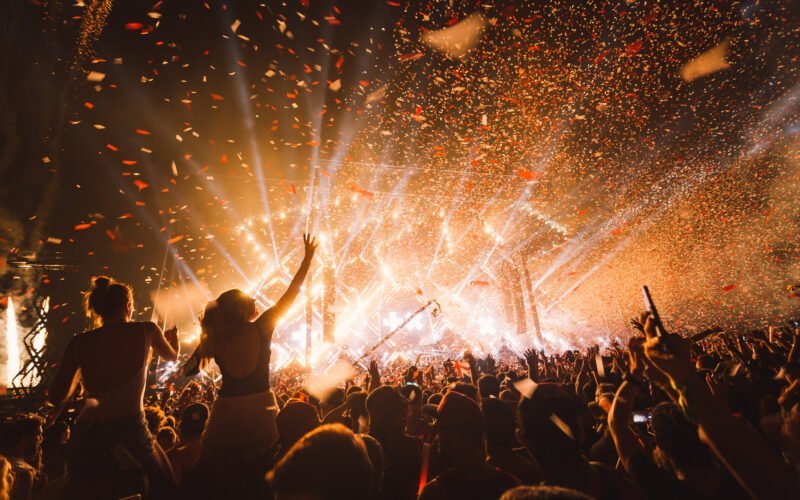
Here’s a number that should change how you do concerts: 120 decibels. That’s a typical rock concert up front — as loud as a chainsaw, and enough to cause permanent hearing damage in minutes. The ringing in your ears after a show isn’t a badge of honor; it’s your auditory system filing a damage report. The question of how can I protect my hearing at loud concerts and events comes up constantly — here’s what actually works.
But nobody wants to be the person stuffing neon foam in their ears while everyone else rocks out. Good news: modern hearing protection is discreet, comfortable, and — counterintuitively — can make music sound better. Here’s how to protect your ears without sacrificing the experience.
Why Concerts Are Dangerous for Your Ears
Hearing damage is about dose: volume × time. At 85 decibels (heavy traffic), damage starts after about 8 hours. At 100 dB (a typical concert), safe exposure drops to 15 minutes. At 115-120 dB near the speakers, we’re talking minutes. Most concerts run 2-3 hours, which means unprotected ears at a loud show are virtually guaranteed some damage. CDC guidance on noise-induced hearing loss
The scary part is that it’s cumulative and permanent. The tiny hair cells in your inner ear don’t regenerate — once they’re damaged, they’re gone. That post-concert ringing (tinnitus) usually fades, but each episode represents real, irreversible cell loss. Hearing loss from concerts typically shows up as trouble hearing conversations in noisy rooms years later, and by then it’s too late to undo.
- 85 dB for 8 hours = damage threshold: every 3 dB halves your safe time. Concerts run 100-120 dB.
- Damage is cumulative and permanent: inner-ear hair cells don’t regenerate once destroyed.
- Post-show ringing is a warning: temporary tinnitus means real damage just occurred.
- It sneaks up over years: you won’t notice loss until conversations in noise get hard.
- Front row is the danger zone: volume drops significantly even 30 feet back from speakers.
The Right Earplugs (Not the Foam Ones)
Forget the image of orange foam plugs that muffle everything into mud. High-fidelity earplugs (sometimes called musician’s earplugs) use acoustic filters that turn the volume down evenly — typically 15-25 dB — while keeping the sound clear. Music still sounds like music, just at a safe level. Vocals stay crisp, bass stays punchy. Honestly, many concertgoers report the sound is better because the painful harshness is gone.
They cost $15-30 for good reusable pairs from brands like Etymotic, Loop, or Alpine — and they last for years. They come in discreet designs that are nearly invisible. For the price of one concert ticket, you protect your hearing for a decade of shows. Custom-molded plugs from an audiologist ($150-200) are the premium option for serious concertgoers. National Institute on Deafness hearing protection resources
- Get high-fidelity earplugs: $15-30, reduce volume evenly without muffling — music stays clear.
- They’re discreet: modern designs are nearly invisible; nobody will notice or care.
- Sound often improves: removing painful harshness reveals detail lost in the blast.
- Keep a pair on your keychain: a small carrying case means you’re always prepared.
- Custom molds for regulars: audiologist-fitted plugs are the gold standard for frequent attendees.
Smart Habits Beyond Earplugs
Earplugs are the main event, but a few habits help too. Don’t stand next to the speakers — volume falls off fast with distance, and moving back 30 feet can drop exposure by 10+ dB. Take breaks: step out to the lobby or bathroom between sets to give your ears recovery time. Your ears, like muscles, benefit from rest intervals.
If you forgot plugs, improvise — even wadded tissue is better than nothing, though it’s a poor substitute. And protect kids aggressively: children’s ears are more vulnerable, and child-sized earmuffs are cheap and effective. A good rule for the whole family: if you have to shout to be heard by someone an arm’s length away, it’s too loud for unprotected ears.
- Move away from speakers: distance is free protection — 30 feet back makes a huge difference.
- Take listening breaks: step out between sets to give ears recovery time.
- Shout test: if you must shout to talk at arm’s length, it’s too loud unprotected.
- Protect kids’ ears: child earmuffs are cheap; young ears are more vulnerable.
- Improvise if unprepared: tissue is a weak substitute, but weak beats nothing.
Common Mistakes to Avoid
Let me save you some trial and error. These five mistakes are the reason most people’s efforts in this area stall out — and each one is completely avoidable with a minute of awareness.
- Assuming foam plugs are the only option: high-fidelity plugs ($15-30) cut volume evenly without muffling — music actually sounds better.
- Standing next to the speakers: volume drops fast with distance. Thirty feet back can mean 10+ dB less exposure — free protection.
- Skipping breaks: ears recover during quiet intervals. Step out between sets instead of enduring 3 straight hours at full blast.
- Forgetting kids’ ears: children’s ears are more vulnerable to damage. Child-sized earmuffs are cheap and non-negotiable for young concertgoers.
- Treating post-show ringing as normal: temporary tinnitus means real damage occurred. It’s a warning, not a badge of honor.
Frequently Asked Questions
How loud are concerts, really?
Typically 100-120 decibels — rock shows and festivals at the front often hit 115+. For context: 85 dB is the damage threshold for 8 hours, and every 3 dB halves safe time. At 115 dB, damage begins in minutes.
Do high-fidelity earplugs ruin the music?
Counterintuitively, no — most users say music sounds better. They reduce volume evenly across frequencies (unlike foam, which muffles), removing painful harshness while keeping clarity. Vocals and bass stay crisp, just safer.
Can hearing damage from concerts heal?
The ringing usually fades, but the underlying hair-cell damage is permanent — inner ear hair cells don’t regenerate. Repeated ‘temporary’ episodes accumulate into permanent loss, typically noticed years later as trouble hearing in noisy rooms.
Are earplugs noticeable at concerts?
Modern high-fidelity plugs are tiny and discreet — most are nearly invisible. And honestly, nobody at a concert is inspecting your ears. The social worry is entirely in your head.
Pro tip: Revisit this guide in 30 days. You’ll catch details you missed the first time, and the second read tends to stick because you’ve got real experience to attach it to.
How can I protect my hearing at loud concerts and events: The Bottom Line
Concerts regularly exceed safe volume by a wide margin, and the damage is cumulative and permanent — but it’s entirely preventable. A $20 pair of high-fidelity earplugs makes music sound clearer while cutting volume to safe levels, and they’re practically invisible. Add distance from speakers and occasional breaks, and you can enjoy live music for decades. Your 60-year-old self, still hearing every note, will thank you.






One Comment