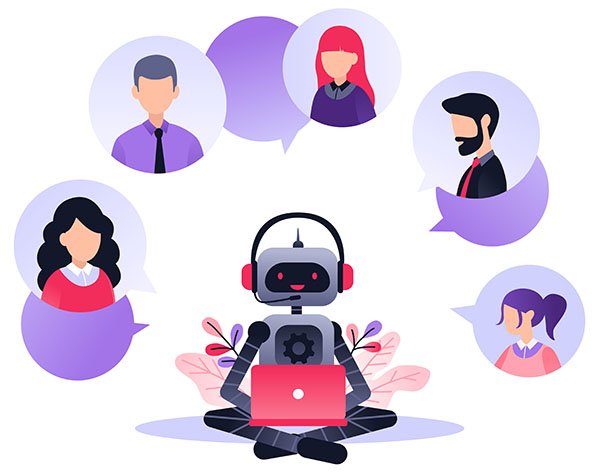
How can I tell if a customer support chat is a bot or a human? You’re mid-conversation with “support,” getting suspiciously instant replies that don’t quite answer your question, and you’re wondering: am I talking to a person? It matters — not just for curiosity, but because bots and humans need completely different approaches. The strategy that works on a human (explaining nuance, appealing to empathy) fails on a bot, and vice versa. Here’s how to tell, and what to do once you know.
How Can I Tell If a Customer Support Chat Is a Bot or a Human?
Response speed: Instant, lengthy, perfectly formatted replies at 3 AM? Bot. Humans type at human speed, with typos, pauses, and “let me check on that” delays. Suspiciously fast is suspicious — though note that humans using AI-suggested replies can also be quick, so speed alone isn’t proof.
Language patterns: Bots (especially older or simpler ones) use formal, consistent, slightly generic language. They rarely use contractions naturally, almost never make typos, don’t use humor well, and respond to emotional messages with tone-deaf cheerfulness. Modern AI bots are much better at natural language — but they still struggle with genuine empathy, sarcasm, and reading between the lines.
The loop test: Rephrase your question in an unusual way, or ask something slightly off-script. Bots excel within their training but stumble outside it — you’ll get a non-sequitur, a repeated answer, or a sudden “I don’t understand.” Humans adapt; bots deflect. Asking the same question three different ways is remarkably revealing.
How Can I Tell If a Customer Support Chat Is a Bot? Try These Tests
- The empathy test: Express frustration naturally (“This is really stressing me out, I’ve been trying for an hour”). Humans acknowledge feelings; bots offer another troubleshooting step.
- The complexity test: Combine two issues in one message, or describe an unusual edge case. Humans untangle; bots pick one thread or get confused.
- The direct ask: “Are you a bot or a human?” — surprisingly, many systems are programmed to answer honestly. (Though some aren’t, so a “human” claim isn’t conclusive.)
- The typo test: Make a typo or use slang. Humans roll with it; simpler bots get confused. (Advanced AI bots handle this fine, so this mainly catches older systems.)
- The escalation test: Say “I’d like to speak with a human agent.” Bots either comply immediately (well-designed) or loop desperately (poorly designed) — either way, you’ve learned something.
Why Companies Use Bots (And Why They’re Often Bad at Disclosing It)
The economics are straightforward: bots handle routine inquiries at a fraction of human cost, 24/7. The problem is disclosure — many companies blur the line, using human names, profile photos, and typing indicators to imply humanity. This erodes trust when discovered, which is why the best practice (and emerging regulation in some jurisdictions) favors transparency. Businesses deploying chatbots should note: customers who choose bot help for quick answers are satisfied; customers who feel tricked are furious. Honesty is the better strategy.
Once You Know: How to Get What You Need
If it’s a bot: Be simple and specific. One issue per message. Use keywords, not stories. If it offers options, pick the closest — don’t explain why none fit (it can’t process that). And the moment you’re going in circles, escalate: “connect me to a human agent,” “speak to representative,” or just typing “agent” repeatedly works on most systems. Don’t waste 20 minutes fighting a bot out of politeness — that’s what it’s for, absorbing the simple stuff, and you’re not simple-stuff.
If it’s a human: Now bring the context. Explain the full situation, including what you’ve already tried. Be kind — support agents deal with frustration all day, and genuine courtesy measurably improves outcomes. If they’re using AI-suggested replies (increasingly common — see how AI is changing support jobs), give them clear information to work with rather than testing them.
The Bigger Question: Should You Have to Ask?
Here’s the thing that bothers people most: why is this a detective game at all? The emerging consensus — among consumer advocates, and increasingly regulators — is that companies should disclose when you’re talking to AI. California’s bot disclosure law was an early move; the EU’s AI Act includes transparency obligations for AI systems interacting with humans. The direction of travel is clear: the guessing game is a transitional phase, not a permanent feature.
Until disclosure is universal, you can push for it with your wallet and your feedback. Tell companies when undisclosed bots frustrate you. Praise the ones that are upfront. Businesses listen to customer feedback about support experiences more than you’d think — support is a cost center under constant scrutiny, and “customers hate our chatbot” is a powerful internal argument. The market will converge on transparency faster if customers reward it.
A Note on Voice: The Harder Detection Problem
Text bots are one thing; AI voice agents on phone calls are another. Modern voice AI handles interruptions, uses natural pauses, even laughs — and disclosure on calls is spottier than in chat. The tells: slightly too-perfect diction, odd handling of unexpected questions, and that uncanny valley feeling when something’s almost human. Some jurisdictions require disclosure on automated calls; where they don’t, the direct ask (“Am I speaking with an AI?”) remains your best tool. The technology here is advancing fastest, so expect this to get harder before norms catch up.
The Practical Takeaway
To tell if a customer support chat is a bot or a human: watch for inhuman speed, overly formal language, and failure on rephrased or emotional messages — then test with empathy, complexity, or a direct question. Once you know, adapt: bots get simple keywords and quick escalation when stuck; humans get full context and courtesy. And remember the meta-lesson — the fact that you sometimes can’t tell means AI support has gotten genuinely good at the routine stuff, which is exactly what it’s for — and the sooner companies are transparent about which is which, the better the experience gets for everyone. This whole guessing game descends from the Turing test — proposed in 1950, still the philosophical benchmark for machine conversation.