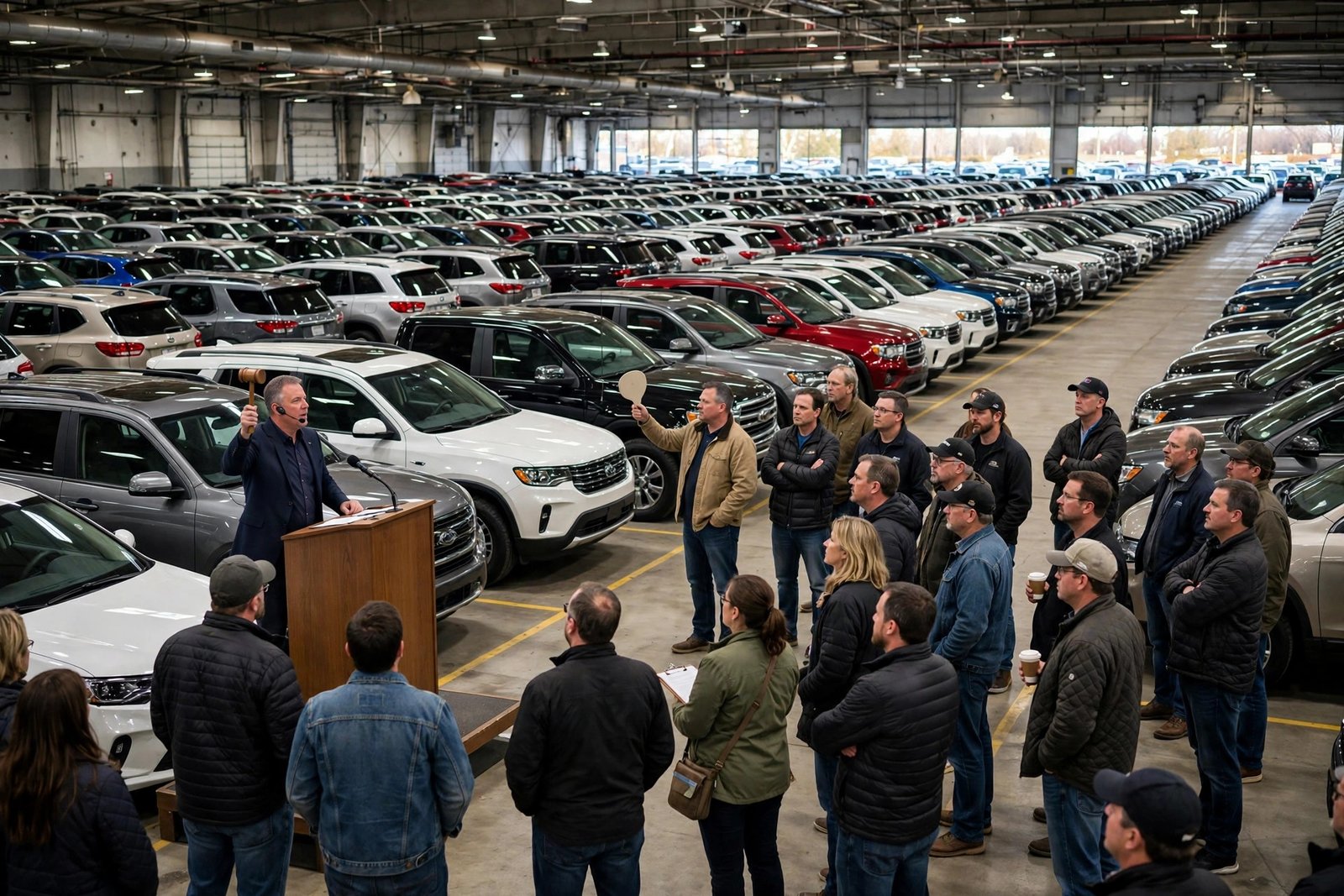
Car auctions — the fast-talking auctioneer, the adrenaline, the deal that seems too good to be true (and sometimes is). Auctions can deliver cars 20–40% below retail, but they’re also where the market’s problem children go: flood cars, frame damage, mechanical time bombs, all sold as-is with no warranties and no take-backs. Buying at auction without overpaying isn’t about auction-day heroics — it’s about preparation, discipline, and knowing exactly when to put your hand down. This is the complete playbook. For more detail on a related topic, see our article on what to know before renting a car in another country.
Understand the Auction Landscape First
Not all auctions are equal. Public auto auctions (open to everyone) offer the accessibility but also the fiercest competition from dealers and the least vehicle screening. Dealer-only auctions (Manheim, ADESA) require a dealer license — but many dealers will bid on your behalf for a flat fee ($300–$500), giving you wholesale access. Government auctions (federal, state, municipal fleet vehicles) are the hidden gem: well-maintained fleet cars with service records, sold through sites like government auction portals — search USA.gov’s auction resources at usa.gov for legitimate listings. Online auctions (Bring a Trailer, Cars & Bids for enthusiast cars; Copart/IAAI for salvage) let you bid remotely but remove the physical inspection advantage.
Repo and fleet auctions deserve special mention: repossessed cars and off-lease fleet vehicles are often mechanically sound (fleet cars get maintained on schedule) and sell below retail because the seller’s goal is liquidation speed, not maximum price. These are where the genuine deals live — not in the “no reserve barn find” theater.
The As-Is Reality (Read This Twice)
Auction cars sell as-is, where-is, with no warranty, no returns, and no cooling-off period. That $8,000 SUV with the slipping transmission is yours the moment the hammer falls — all $8,000 plus the $4,000 transmission job. Every strategy below exists to manage this single brutal fact. If you’re not comfortable with as-is risk, auctions aren’t for you — and that’s fine. Buy retail with a warranty instead.
Before Auction Day: The Preparation That Decides Everything
Set your absolute maximum price — in writing — before you go. Research the car’s retail value (multiple pricing guides), subtract expected reconditioning costs ($1,000–$2,000 minimum for any auction car — tires, brakes, fluids, detailing), subtract the buyer’s premium (typically 5–10% at physical auctions, sometimes flat fees online), subtract taxes and registration, and what’s left is your walk-away number. Write it on a card. Keep it in your pocket. This card is worth more than any bidding strategy.
Understand all the fees: Buyer’s premium, gate fees, documentation fees, transportation (if you can’t drive it home), and immediate insurance. A $10,000 hammer price easily becomes $12,000 out the door — budget the total, bid the remainder.
Arrange financing and transport in advance: Most auctions require payment within 24–72 hours (cashier’s check or wire — no “I’ll get a loan next week”). Have funds ready, insurance bindable by phone, and a transport plan for non-running vehicles. Auction-day logistics failures have cost buyers their deposits.
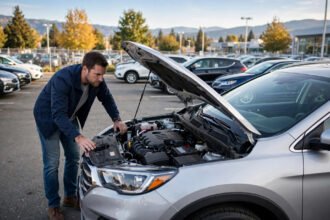
Preview the inventory: Serious auctions offer preview days — go. Bring a flashlight, an OBD-II scanner ($20, reads check-engine codes through your phone), and a knowledgeable friend. Check VINs against history reports on-site via your phone, look for the same red flags as any used car purchase (flood signs, frame damage, title brands), and note which lots interest you with maximum prices already assigned. When buying through online platforms, apply standard caution: verify the auction website is legitimate before registering or wiring any deposits.
Auction Day: Bidding Discipline
Arrive early, register, get your bidder number. Understand the auction’s specific rules — bid increments, whether the auctioneer can take “chandelier” bids (phantom bids to drive price — legal in many jurisdictions, infuriating everywhere), and the payment timeline.
The discipline rules: (1) Never bid on a car you haven’t previewed — no exceptions. (2) Open bidding low or let others open — never open at your maximum. (3) Bid in confident, prompt increments — hesitation signals your limit. (4) Set your absolute ceiling and stop — when the bidding passes your card’s number, your hand stays down. No “just one more bid.” The card is the boss. (5) Don’t get emotional — the auctioneer’s entire job is manufacturing urgency and competition. The car you “lose” at $500 over your max wasn’t a loss; it was discipline working.
Watch for shill patterns: If the same bidder seems to drive prices on multiple lots without winning, or bidding jumps suspiciously against you alone, step back. Not every auction is clean, and your best defense is the willingness to walk away from any lot that smells wrong.
After the Hammer: Immediate Steps
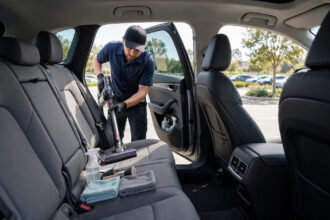
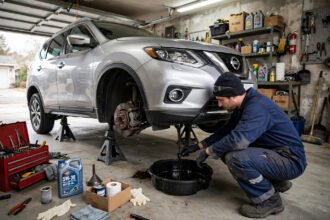
Pay within the deadline (bring the cashier’s check), get the title/bill of sale paperwork correct on the spot (errors here create DMV nightmares), arrange immediate insurance before driving, and get the car to your mechanic for a full inspection within days — auction cars need the $1,000–$2,000 reconditioning budget you planned. Check for open recalls at nhtsa.gov/recalls and address safety items first.
The Math: When Auctions Actually Save Money
The honest accounting: hammer price + 10% buyer’s premium + taxes/fees + $1,500 reconditioning + your time and risk. Compare that total against retail pricing for equivalent cars (not asking prices — actual transaction prices). Auctions win when: you’re buying fleet/government vehicles (maintained, honestly described), you have mechanical skills (reconditioning costs drop dramatically), or you’re buying at off-peak times (winter auctions, mid-week sales see less competition).
Auctions lose when: you bid emotionally past your max, you skip the preview inspection, you underestimate reconditioning, or you buy salvage-title vehicles without understanding the insurance and resale implications (salvage cars are cheaper for reasons — many insurers won’t fully cover them, and resale is brutal). The winners at auctions are the boring ones: prepared, disciplined, and willing to go home empty-handed. Going home empty-handed with your money intact is a successful auction day.
Conclusion
Buying a car at auction without overpaying comes down to: choosing the right auction type (government and fleet sales offer the best risk-reward), setting a written maximum price accounting for all fees and reconditioning, previewing and VIN-checking every lot you might bid on, bidding with absolute discipline (the card is the boss), and budgeting the true total cost honestly. The auction rewards preparation and punishes emotion — be the most prepared person in the room, and the deals come to you. Or rather, you calmly take them while everyone else overpays.
Frequently Asked Questions
Can anyone buy a car at auction?
Public auctions are open to everyone; dealer-only auctions (Manheim, ADESA) require a license, though some dealers will bid on your behalf for a fee. Government fleet auctions are public and often the best value for regular buyers.
How much below retail do auction cars sell for?
Typically 20–40% below retail for the hammer price — but add 5–10% buyer’s premium, taxes, fees, and $1,000–$2,000 in reconditioning. The true savings are real but smaller than the hammer price suggests; do the full math before bidding.
What fees do car auctions charge buyers?
Buyer’s premium (5–10% or flat fee), gate/documentation fees, plus taxes and registration. Budget roughly 15–20% over the hammer price for the true out-the-door cost before reconditioning.
Are auction cars reliable?
It varies enormously — fleet and government vehicles are often well-maintained; others are problem cars being liquidated. Everything sells as-is with no warranty. Preview inspections, VIN history checks, and a reconditioning budget are essential risk management.
What should I bring to a car auction?
Your written maximum prices, a flashlight, an OBD-II scanner, your phone (for VIN checks), payment method (cashier’s check — confirm accepted forms in advance), and a knowledgeable friend. Leave emotion at home.