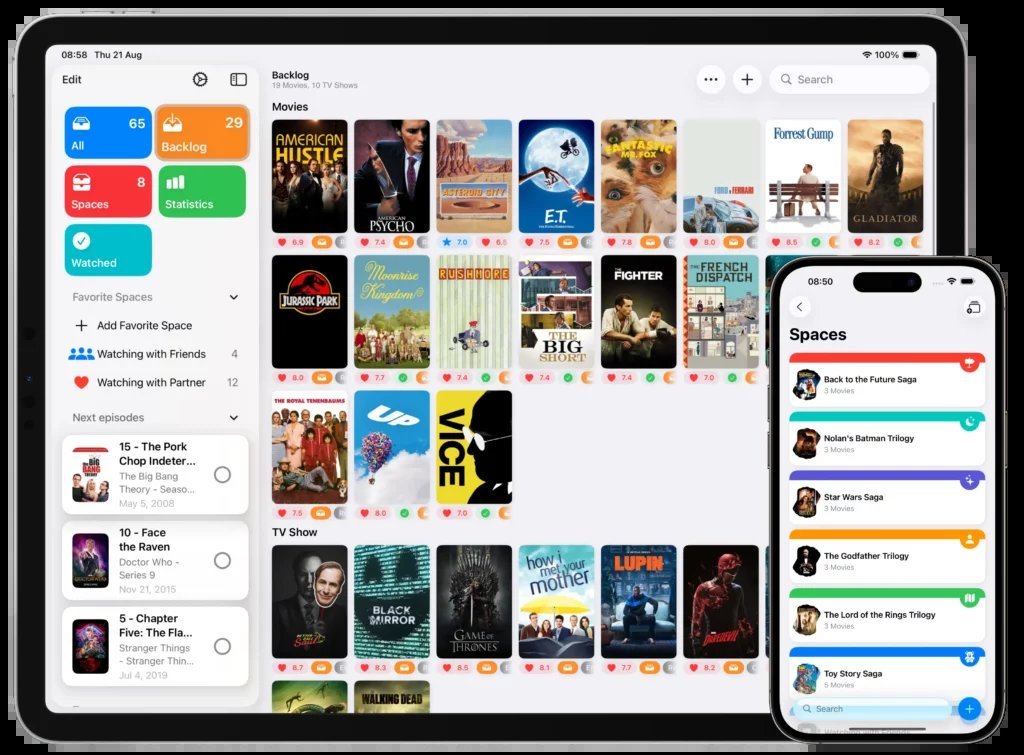
You hear about a great movie, think “I’ll watch that later,” and never think of it again. Or you spend 30 minutes scrolling, unable to remember what you wanted to watch. A tracking app fixes both problems. But which one? Here’s the honest breakdown of the best app for tracking movies you want to watch.
What a Good Tracking App Does
- Watchlist: save movies/shows to watch later, quickly, from anywhere.
- Watched log: record what you’ve seen, with dates and ratings.
- Discovery: recommendations based on your taste, trending lists, friend activity.
- Where to watch: shows which services stream each title (critical in the fragmented era).
- Social (optional): see what friends watch, share lists, discuss.
The Top Contenders
Letterboxd (Best overall)
The film lover’s standard. Beautiful interface, powerful diary and list features, active community, excellent discovery via friends’ activity and curated lists. The free tier is generous; the paid tier ($19/year) adds stats and features worth having. Weaknesses: TV tracking is secondary (it’s film-first), and “where to watch” data varies by region. If you primarily track movies, this is the answer — it’s what most cinephiles use, and the social features make movie-watching feel communal. The list feature alone (“every A24 film ranked,” “cozy autumn movies”) is endlessly entertaining.
IMDb (Best database)
The biggest database on earth — if it exists, IMDb has it, including the most obscure titles. Watchlists are functional, ratings are comprehensive. Weaknesses: the app is clunky, the interface is ad-heavy, and discovery is weak. Best for: looking up anything and maintaining a simple watchlist. It’s the reference library, not the social club.
TV Time (Best for TV shows)
Purpose-built for series tracking: episode-level check-ins, “next episode” countdowns, spoiler-protected comments per episode. If you watch a lot of TV, this beats Letterboxd’s show features. The community is active and the episode tracking is genuinely useful for keeping up with weekly releases.
JustWatch (Best for “where to watch”)
Not a full tracker — its superpower is showing where everything streams, rents, or sells, across all services, in your country. Use it alongside a tracker: find it on Letterboxd, check where on JustWatch. Indispensable in the streaming fragmentation era. Also great for price-tracking digital purchases.
Simkl (Best all-in-one)
Tracks movies, TV, and anime in one place with automatic tracking integrations. Less beautiful than Letterboxd, less comprehensive than IMDb, but the “everything in one app” appeal is real for multi-format watchers.
My Recommendation
Letterboxd + JustWatch. Letterboxd for tracking, logging, lists, and discovery; JustWatch for the “where can I actually watch this” question. This combo covers everything, both have generous free tiers, and together they’re better than any single app. Add TV Time if you’re a heavy series watcher. That’s the complete stack — three free apps, total coverage.
This pairs with keeping up with new releases (the watchlist is where release tracking pays off) and streaming cost management (knowing where things stream prevents duplicate subscriptions).
Building the Habit
- Add immediately: trailer catches your eye? Add it now, not later. The 10-second habit is the whole system.
- Log as you go: rate movies right after watching — your future self wants to know what you thought, and ratings power recommendations.
- Make lists: themed lists (“rainy day movies,” “films to watch with mom”) turn the watchlist from a chore into a playground. See family movie picks for starter-list material.
- Review monthly: clear out the “meh” additions, prioritize the exciting ones. A curated watchlist beats an endless one.
- Follow interesting people: on Letterboxd, following reviewers with taste similar to yours is the best discovery engine in movies.
Tracking App FAQ
Is Letterboxd free? Yes, with a generous free tier. The $19/year Patron tier adds stats, no ads, and extra features — worth it if you’re a heavy user, unnecessary if you’re casual.
Can I import my IMDb ratings? Yes — Letterboxd and most trackers support CSV import from IMDb. Your years of ratings transfer over.
What’s best for tracking TV specifically? TV Time for episode-level tracking; Simkl for combined movie+TV+anime. Letterboxd added TV support but it’s still film-first.
Do these apps tell me where to stream? JustWatch does this best. Letterboxd shows streaming info (region-dependent). Always verify — licensing changes constantly.
The Takeaway
The best app for tracking movies you want to watch: Letterboxd for tracking and discovery, JustWatch for where-to-watch, TV Time if you’re series-heavy. The combo is free, covers everything, and turns “I’ll watch that later” into an organized, exciting watchlist. Download Letterboxd today and add the three movies you’ve been meaning to watch — future movie nights will thank you.
Privacy and Data Considerations
A quick note: tracking apps collect your viewing data — that’s how recommendations work. Letterboxd’s data use is relatively benign (it’s the product you’re using, not you being sold), but it’s worth knowing. If privacy matters to you, check each app’s settings: most let you make your profile private, disable data sharing, and control what’s visible. IMDb (Amazon-owned) collects more broadly. The trade-off is real — better recommendations require data — but you can enjoy 90% of the value with a private profile. Your watchlist is your business; configure accordingly.
Beyond Apps: The Analog Option
Some people prefer a physical movie journal — a notebook where you log what you watch with a few lines of thoughts. It’s slower, more deliberate, and weirdly satisfying. No recommendations, no social features, no “where to watch” — just your own record. For the reflectively inclined, it’s actually superior: writing a few sentences forces deeper engagement than tapping a star rating. The apps are better tools; the journal is a better ritual. Some cinephiles do both — app for the watchlist, journal for the reflections.
Sharing and Discovering Lists
Letterboxd’s social layer is its secret weapon: follow friends, critics, and interesting strangers, and your feed becomes a personalized recommendation engine better than any algorithm. Curated lists — “every film that won the Palme d’Or,” “best movies of the 1970s,” “cozy horror for October” — are rabbit holes of discovery. Make your own lists public; the feedback and suggestions you’ll get are part of the fun. Movie tracking stops being a chore and becomes a hobby in itself — which, for film lovers, is exactly the point.
Letterboxd’s Rise
Letterboxd launched in 2011 and grew into film culture’s central social network — proof that movie lovers wanted community, not just databases. Its list culture and diary features turned tracking into a creative act. Join the millions logging, listing, and arguing about movies. Your watchlist will thank you.