A bread machine is convenient, but it’s absolutely not necessary. People baked incredible bread for thousands of years without one, and you can too — with better results, honestly, since you control everything. Baking bread at home without a bread machine takes a little more hands-on time but produces loaves with better crust, better crumb, and that unbeatable fresh-bread smell filling your house.
What You Actually Need (Less Than You Think)
- A big bowl — for mixing and rising.
- Your hands — the original dough mixer. A wooden spoon helps for the initial mix.
- An oven — that’s the “machine.”
- Optional but nice: a Dutch oven (for artisan loaves), a loaf pan (for sandwich bread), parchment paper, a kitchen scale.
No stand mixer needed either, though it saves your arms. Hand-kneading 10 minutes is a workout and weirdly satisfying.
Easy No-Knead Bread (Start Here)
If you’ve never baked bread, start here. This method is nearly foolproof:
- Mix 3 cups bread flour, 1 1/2 tsp salt, 1/2 tsp instant yeast, and 1 1/2 cups lukewarm water in a bowl until shaggy. No kneading — seriously.
- Cover and leave at room temperature 12-18 hours (overnight). The long ferment does the kneading for you via time.
- Scrape the bubbly dough onto a floured surface, shape into a rough ball, and rest 30 minutes while your oven preheats to 450°F with a Dutch oven inside.
- Plop the dough into the hot Dutch oven, cover, bake 30 minutes. Uncover, bake 15 more for a deep golden crust.
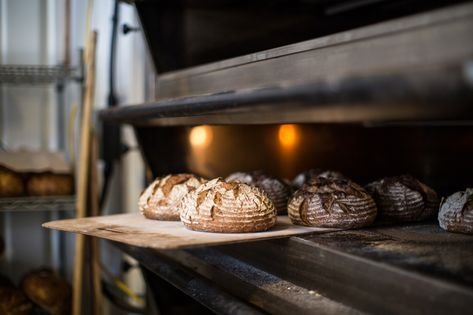
The result: crackling crust, open airy crumb, complex flavor — bread that looks and tastes like it came from an artisan bakery. Total hands-on time: about 15 minutes. The Dutch oven traps steam, which is the professional secret to great crust at home.
Classic Sandwich Loaf (With Kneading)
For everyday sandwich bread:
- Mix 3 1/2 cups bread flour, 2 1/4 tsp instant yeast, 1 tbsp sugar, 1 1/2 tsp salt. Add 1 1/4 cups warm water and 2 tbsp softened butter or oil.
- Knead 8-10 minutes until smooth and elastic. The windowpane test (stretch a piece thin enough to see light through) tells you when it’s ready.
- Rise in an oiled bowl, covered, 1-1.5 hours until doubled.
- Shape into a loaf: flatten into a rectangle, roll up tightly, pinch the seam, place seam-down in a greased 9×5 loaf pan.
- Rise again 45-60 minutes until crowned above the pan rim.
- Bake at 350°F for 30-35 minutes until golden and hollow-sounding when tapped. Internal temp should hit 190°F.
Cool completely on a rack before slicing — cutting hot bread gives you a gummy interior (I know it’s torture; wait anyway). Then store it right with proper bread storage so it stays fresh.
The Science You Need (Just the Useful Bits)
- Yeast likes warmth, not heat: 75-85°F is ideal for rising. Above 140°F yeast dies. A turned-off oven with the light on is the classic proofing spot.
- Salt matters: it controls yeast activity and builds flavor. Unsalted bread tastes flat and rises too fast. But don’t let salt sit directly on yeast in the initial mix — combine with flour first.
- Steam = crust: professional ovens inject steam. At home, the Dutch oven method or a pan of hot water on the oven floor approximates it.
- Don’t over-flour: sticky dough is better than dry dough. Wet your hands or oil the counter instead of dumping in extra flour.
Troubleshooting Common Bread Failures
- Dense, heavy loaf: under-kneaded, under-proofed, or old yeast. Check yeast freshness by proofing it in warm water with sugar — it should foam in 10 minutes.
- Collapsed loaf: over-proofed. The dough rose too long and ran out of steam. Watch the dough, not the clock.
- Pale, soft crust: oven not hot enough, or no steam. Crank the heat and try the Dutch oven.
- Big tunnels/holes: under-kneaded or shaped too loosely, trapping big air pockets. Knead thoroughly and shape tightly.
- Tastes yeasty: too much yeast or too warm a rise. Less yeast + longer, cooler ferment = better flavor.
Once you’re comfortable with basic loaves, the same skills transfer to homemade pizza dough — it’s essentially bread dough with more attitude.
Bread Baking FAQ
Do I really not need a bread machine? Really. A bread machine just mixes, kneads, proofs, and bakes in one box — all things your hands, a bowl, and an oven do better with more control. Machines are about convenience, not quality.
What’s the best flour for bread? Bread flour (higher protein) gives the chewiest, most structured loaves. All-purpose works fine for most recipes. Whole wheat adds nutrition and nuttiness but makes denser bread — start with a blend.
Can I bake bread without a Dutch oven? Yes — a heavy oven-safe pot with a lid works, or bake on a sheet pan with a pan of hot water below for steam. The Dutch oven just makes it easier.
Why did my bread not rise? Dead yeast (expired or killed by hot water) is cause #1. Cold kitchen is cause #2 — just give it more time. Old flour can also underperform; flour over a year old loses strength.
The Takeaway
Baking bread at home without a bread machine is one of the most rewarding kitchen skills — and one of the easiest to start. Begin with no-knead Dutch oven bread (15 minutes of work, bakery-level results), graduate to sandwich loaves when you’re feeling ambitious, and enjoy the fact that your house smells incredible every time. The bread machine industry doesn’t want you to know how little you need it.
Leveling Up: Your Next Breads to Try
Once the basics are comfortable, these are the natural next steps:
- Focaccia: high-hydration dough pressed into an oiled pan, dimpled with your fingers, topped with rosemary and flaky salt. Forgiving, impressive, incredible.
- Dinner rolls: enriched dough (milk, butter, egg) shaped into balls. Soft, golden, gone in minutes.
- Cinnamon rolls: same enriched dough family, rolled with cinnamon-sugar. Weekend project, legendary payoff.
- Sourdough: the deep end — wild yeast starter, long ferments, incredible flavor. Start a starter when you’re bored with everything else; it’s a hobby as much as a recipe.
Each one teaches you something new about dough handling. And every loaf you bake makes the next one easier — bread baking is a skill that compounds fast.
Baking: Humanity’s Oldest Craft
Oven baking goes back to ancient Egypt, where closed ovens and leavened bread transformed food forever. The history of baking is essentially the history of civilization — bread and cities rose together. When you pull a loaf from your oven, you’re participating in a 6,000-year-old craft. No machine required, then or now.