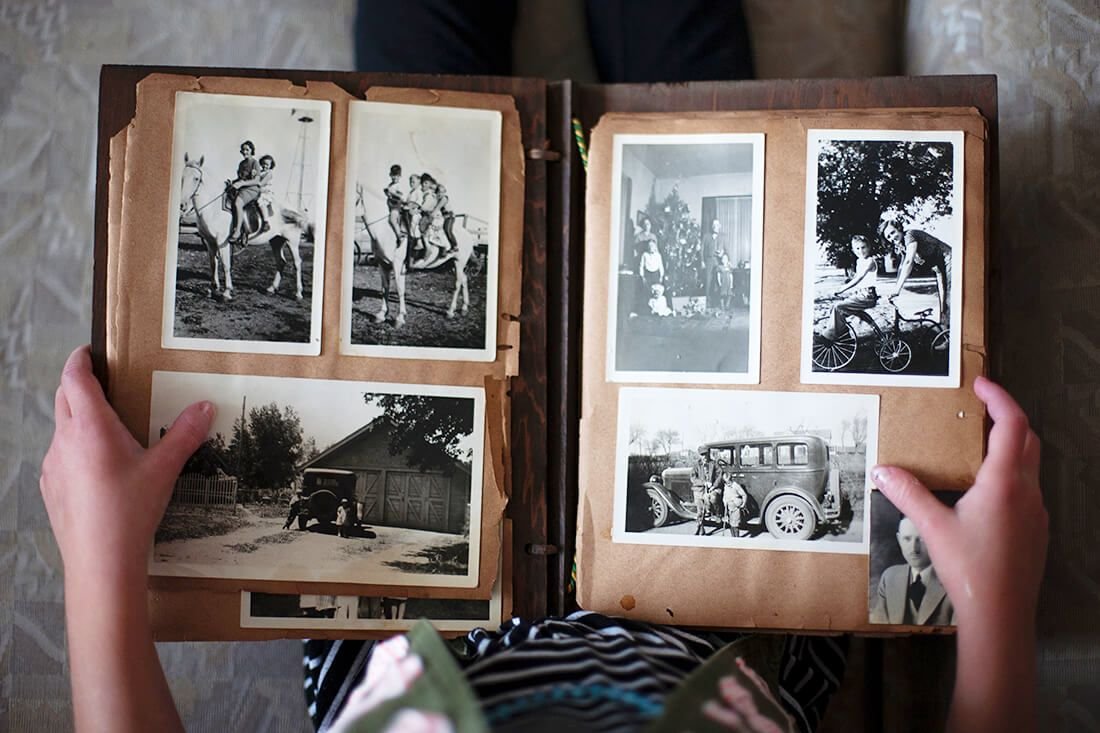
What should I know before using AI to edit my family photos? Those boxes of family photos — weddings, birthdays, grandparents long gone — are among your most precious possessions. AI tools promise to restore, enhance, colorize, and even animate them. Before you upload your family’s visual history to an AI service, there are things worth knowing about privacy, consent, accuracy, and what it means to alter memories. This isn’t a “don’t do it” lecture — it’s the informed guide I wish someone had given me first.
Know This First: Where Do Your Photos Go?
When you upload family photos to an AI editing app, those images go to company servers — and what happens next varies enormously. Some services process and delete; others retain images indefinitely, use them for training data, or share them with third parties. Family photos are uniquely sensitive: they contain children’s faces, home interiors, locations, and identifiable information about people who never consented to any of this.
Before uploading: read the privacy policy’s data retention section (not the whole thing — just find how long they keep uploads and whether they train on them). Prefer services with clear deletion policies and opt out of training data use where offered. Be extra cautious with children’s photos — kids can’t consent, and their images deserve the highest protection. For the full privacy picture, see the privacy risks of free AI apps and what’s safe to share with AI services.
What Should I Know Before Using AI to Edit My Family Photos? The Accuracy Question
This is the big one people miss: AI doesn’t restore lost detail — it invents plausible detail. When AI “sharpens” great-grandma’s blurry face, it’s generating what a face probably looked like based on millions of other faces. The result can be subtly, significantly wrong — different features, modernized styling, anachronistic details. For a deep dive on this, see how accurate AI photo restoration really is.
Ask yourself what the photo is for. Casual sharing with family? AI enhancement is delightful. Archival preservation? Keep originals untouched and label AI versions as interpretations. Anything where accuracy matters — genealogy, historical records, legal contexts? The original, flaws and all, is the truth; the AI version is a beautiful guess. Never let the enhanced version replace the original in your archive.
The Consent Conversation
Photos contain other people — and AI editing raises consent questions traditional editing didn’t. Living relatives: ask before posting AI-altered photos of them publicly, especially significant alterations (age progression, “de-aging,” style transfers). What seems like a fun tribute to you might feel violating to them. Deceased relatives: consider what they’d have wanted and how living family feels — “animating” a deceased grandparent (those “bring photos to life” features) comforts some families and deeply disturbs others. There’s no universal rule; there’s only thoughtfulness.
Children’s photos deserve special care: once an AI-altered image of your child is online, you’ve lost control of it. Future-them might have opinions about baby photos run through beauty filters. When in doubt, keep AI experiments private within the family.
Practical Workflow: Do It Right
- Scan originals at high resolution first (600 DPI) and back them up in two places. This is the irreplaceable step — do it before any AI touches anything.
- Work on copies, never the archival scans. Keep a clear folder structure: originals / AI-enhanced / final selects.
- Start with the least aggressive tools: basic scratch removal and gentle enhancement before dramatic restoration or colorization.
- Zoom in on faces at 100% and compare against the original. If features changed, decide consciously whether that matters for this photo’s purpose.
- Label AI versions clearly in filenames or metadata (“restored-AI-2026”) so future family historians know what they’re looking at.
- Get a second opinion from a relative who remembers the person — “does this still look like Mom to you?” is the ultimate accuracy test.
The Emotional Dimension (Nobody Talks About This)
Restoring photos of lost loved ones is emotional work, and AI intensifies it. Seeing a sharpened, colorized image of someone you miss can be profoundly moving — or profoundly unsettling, if the AI got them subtly wrong. Give yourself grace with the process. It’s okay to prefer the faded original; the wear is part of the memory. And it’s okay to love the restoration. There’s no correct way to feel about your own family’s images — only your way.
Sharing Restored Photos: Creating a Family Legacy
Once you’ve restored treasured photos, consider what to do with them beyond your hard drive. A shared family cloud album (Google Photos, iCloud shared library) lets relatives everywhere enjoy the restored collection — and often prompts them to contribute their own photos and identifications, enriching the archive collaboratively. Printed photo books of restored images make extraordinary gifts for older relatives, who often prefer physical prints to screens.
For the truly precious ones, consider professional printing: a beautifully restored grandparent portrait, printed large and framed, becomes a family heirloom for the next generation. That’s the real payoff of all this work — not the pixels, but the presence. A face from 1950, clear and vivid on your wall, connecting your children to their history in a way no faded original quite could.
And document the stories while you can. Pair restored photos with recorded memories — even voice memos of relatives describing what’s in the picture. A photo shows a moment; a story gives it meaning. Future generations will thank you for both.
The Practical Takeaway
Before using AI to edit family photos: check where your uploads go and opt out of training use, get consent from living relatives (and be thoughtful about the deceased), understand that AI invents rather than recovers facial detail, always preserve originals untouched, label AI versions clearly, and keep children’s images especially protected. Done thoughtfully, AI photo editing is a gift — breathing new life into fading memories. Done carelessly, it risks privacy, accuracy, and feelings. A few minutes of forethought makes all the difference — and the family members who’ll treasure these restored memories for decades will never know how much care went into them, only how much love they feel. A grasp of the basics of digital photography — resolution, noise, dynamic range — tells you what AI editing can and can’t fix.