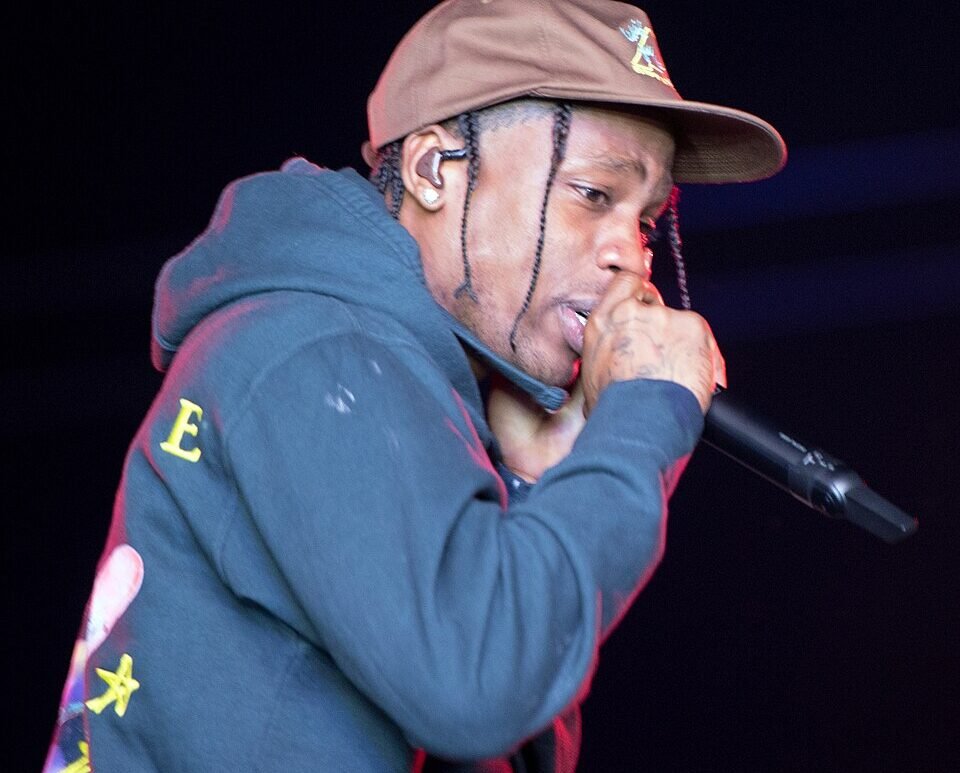
Travis Scott’s $80 Million: Rager Riches, Counted Carefully
The Short Version
Travis Scott turned Houston hip-hop psychedelia into one of the biggest live draws on the planet, and he built a brand empire alongside the music. Celebrity Net Worth puts his fortune at $80 million, in a snapshot of 4 November 2026. No Forbes net-worth total exists for him; Forbes counted $39.5 million in annual earnings in 2020, and earnings are not wealth. His Circus Maximus tour closed with a reported gross of about $265 million, a figure reporting attached to the tour in July 2026 — ticket revenue before costs, not personal income, and this profile keeps that label on it throughout. He is 35, a father of two, and the founder of the Cactus Jack label and brand operation. His story also carries the heaviest paragraph in modern live music: on 5 November 2021, ten people died at his Astroworld festival in Houston. A grand jury declined to bring criminal charges in June 2023, civil claims settled progressively with further settlements reported in October 2024, and the parties kept every settlement’s terms undisclosed. Any honest profile of his fortune records that history plainly and quantifies none of it, because no reliable figures exist.
How They Got There
2015–2016: Rodeo and Birds
Scott arrived in the industry as a producer first, working behind other artists before his own voice — Auto-Tuned, atmospheric, half-sung and half-chanted — found its audience. His debut album Rodeo landed in 2015 and announced a fully formed world: dark, woozy, and engineered for arenas. Birds in the Trap Sing McKnight followed in 2016 and topped the album chart, confirming that the cult following had become a commercial one. He toured relentlessly, built a stage show that treated chaos as choreography, and turned his concerts into pilgrimage events for a young audience that promoters across the world learned to respect.
2018: Astroworld and Sicko Mode
Astroworld, his third album, arrived in 2018 and made him a superstar. “Sicko Mode,” his shape-shifting collaboration with Drake, topped the singles chart and became one of the decade’s defining rap records. The album’s Houston theme-park concept extended into a festival of the same name, merchandise that sold like streetwear, and a tour that filled arenas with a roller-coaster stage design. Scott’s genius in this period ran commercial as much as musical: he understood scarcity, drops, and collaboration culture earlier than most of his peers, and brands from sneakers to video games queued to work with him. His 2020 Fortnite performance, Astronomical, drew an audience in the tens of millions inside a video game and redrew the map for virtual concerts.
2021–2026: Utopia, Circus Maximus, and JackBoys 2
The Astroworld festival disaster of November 2021 halted his momentum and shadowed everything after. Scott withdrew from stages for a period, faced the legal process described above, and returned gradually. Utopia arrived in 2023 and topped charts worldwide, and the Circus Maximus tour grew into one of the highest-grossing rap tours ever staged, closing at about $265 million in reported gross. JackBoys 2 followed in July 2025, showcasing his Cactus Jack roster. The comeback rests on the live business: whatever streaming pays, Scott’s fortune now runs through stadiums, and the stadiums keep selling out.
The Producer’s Ear and the Cactus Jack Roster
Scott’s production instincts built a second business beneath the performing one. Cactus Jack operates as a label and creative company, signing younger artists whose success pays the founder on every stream and ticket. His own records showcase the model: he curates collaborators the way a producer casts a session, placing voices against his soundscapes for maximum contrast. The merchandise operation applies the same curation to objects — limited runs, graphic identities that fans treat as collectibles, and drops that sell out in minutes. Critics sometimes separate the art from the commerce in his career; the audience never has. For his generation of fans, the record, the garment, and the concert form a single artwork, and Scott designs all three.
The Houston Blueprint
Houston gave Scott more than a hometown; it gave him an aesthetic system. The city’s rap tradition slowed records down, deepened the bass, and treated the producer as an auteur, and Scott absorbed all three lessons before he ever signed a deal. His grandfather’s jazz records and his father’s drumming added live instrumentation to the household’s sound, and the young producer learned to think in arrangements rather than loops alone. When he finally broke through, the industry heard a fully formed world because Houston had spent twenty years building it inside him. The Astroworld name itself — borrowed from the city’s demolished theme park — turned civic nostalgia into intellectual property, and the festival, the album, and the merchandise all drew value from a landmark that existed only in Houstonians’ memory. Few artists convert hometown mythology into assets this efficiently.
Where It Began
Jacques Bermon Webster II arrived on 30 April 1991 in Houston, Texas, and spent his earliest years, until about age six, living with his grandmother in Missouri City, a Houston suburb whose streets later echoed through his lyrics. His father, Jacques Webster, played drums, and music filled the family home as a working craft rather than a distant dream. His mother, Wanda Webster, held the family steady while her son absorbed Houston’s rap heritage — the chopped-and-screwed sound, the car culture, the Astroworld amusement park whose closure he mourned and later resurrected as his defining concept. He attended university briefly, left to chase production work, and endured the broke years in New York and Los Angeles that rap biographies require, sleeping on floors and sending beats to anyone who would listen. The Houston roots never left the music; they became the brand.
The Fortune in Full
Celebrity Net Worth values Travis Scott at $80 million. The estimate sits on documented earning power: Forbes counted $39.5 million in earnings in 2020 alone, and the Circus Maximus tour grossed about $265 million across its run, with the artist’s share of a gross that size running to serious money even after production costs that insiders describe as enormous. Add three chart-topping albums’ recording and publishing income, the Cactus Jack operation’s label and merchandise revenue, and brand collaborations that reporting values in the millions per deal, and the $80 million reads as a tracker’s disciplined estimate rather than a fan’s guess. This profile prints no rival net-worth total, because none exists from a permitted source: Forbes publishes earnings only, and the Sunday Times Rich List prints no figure for him.
His brand income warrants its own sentence, because it separates Scott from peers who rely on music alone. Sneaker collaborations, gaming events, and limited merchandise lines each generated reported fees and royalties in the millions during his peak years, and they monetize his audience without requiring an album cycle to sustain them. That diversification cushions the fortune against the music industry’s volatility — though it also ties his commercial value tightly to his public standing, which the events of 2021 showed can shift overnight.
The Astroworld settlements belong in this section only as a boundary marker. Civil claims arising from the festival settled in stages, with further settlements reported in October 2024, and every party kept the terms confidential. No reliable source quantifies what the settlements cost Scott, his insurers, or the promoters, so no honest fortune count can adjust for them — and this one does not try. Readers should treat any outlet that prints a precise settlement cost with suspicion.
Cars
Reporting on his garage describes a collection with genuine headline pieces: a Bugatti Chiron that reporting prices around $3 million from 2019, a Chiron Super Sport that reporting priced at $5.5 million in 2022, a Mercedes-Maybach G650 Landaulet reported at $1.6 million from 2019, a Ferrari LaFerrari Aperta, a Lamborghini Aventador SVJ and a Lamborghini Urus, and four Volo classics he bought in October 2026 through duPont Registry, including a 1989 Lamborghini Countach. This profile lists the cars that reporting names and invents no total for the collection.
The Circus Maximus gross deserves one more careful sentence, because it anchors the fortune’s forward story. A tour that grosses about $265 million signals promoters that Scott belongs to the small class of rap acts who can carry stadiums across continents, and that class commands guarantees and profit shares that arena acts never see. His production costs run famously high — the staging recreates his album worlds at architectural scale — so the net margin trails the gross by a wide margin, and this profile claims no net figure. Even so, a single tour cycle at that scale can add tens of millions to an artist’s position, which is why trackers will likely revisit his $80 million as the cycle’s accounts settle.
His festival and live ventures beyond his own tours extend the same model — curated events that monetize his taste as much as his performances — and promoters continue to back them at scale, which tells its own story about where the market prices his draw.
Life Away from the Job
Scott holds no current partner in the public record, and the table in this profile states exactly that. His significant past relationship ran with Kylie Jenner from April 2017 to late 2022, intermittently, with a period apart in the autumn of 2019 and a separation that reporting confirmed in January 2023; the two co-parent their children, and her public relationship with Timothée Chalamet since 2023 confirms the closed status of that chapter. Scott and Jenner share two children: Stormi Webster, born 1 February 2018, and Aire Webster, born 2 February 2022, who arrived under a different announced name before his parents confirmed the change in March 2023. His parents, Jacques and Wanda Webster, remain his Houston foundation, and his collaborations form the rest of his inner professional circle — none closer than Drake, whose “Sicko Mode” verse helped define both men’s commercial peaks and whose own fortune’s architecture readers can examine in Drake’s net worth profile. Scott shares tour imagery, Cactus Jack releases, and occasional family moments with his followers on Instagram at @travisscott.
And Finally
Scott’s career now runs on two tracks that rarely meet: the commercial machine, which posts numbers few rappers in history can match, and the shadow of November 2021, which no gross will ever lift. He has rebuilt the first track methodically — Utopia, a record-scale tour, a label roster — while the second track stays part of every honest account of him, including this one.
The $80 million from Celebrity Net Worth prices the machine as it stands: a stadium headliner at 35 with a brand operation, a valuable catalog, and earning years ahead of him if the audience stays. The audience, so far, has stayed in enormous numbers. What he builds with the next decade — and how the industry remembers the whole story — remains genuinely unwritten.
The Scoop File
| The Scoop File | Details |
|---|---|
| Born | 30 April 1991, Houston, Texas |
| Age | 35 |
| Height | 5 ft 10 in (1.78 m) |
| Net Worth | $80 million (Celebrity Net Worth) |
| Weight | No reliable published figure exists |
| Partner | No current partner publicly confirmed |
| Children | Two: Stormi Webster (b. 1 February 2018) and Aire Webster (b. 2 February 2022) |
| Parents | Jacques Webster and Wanda Webster |
| @travisscott |