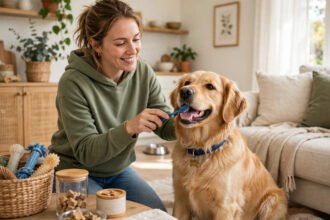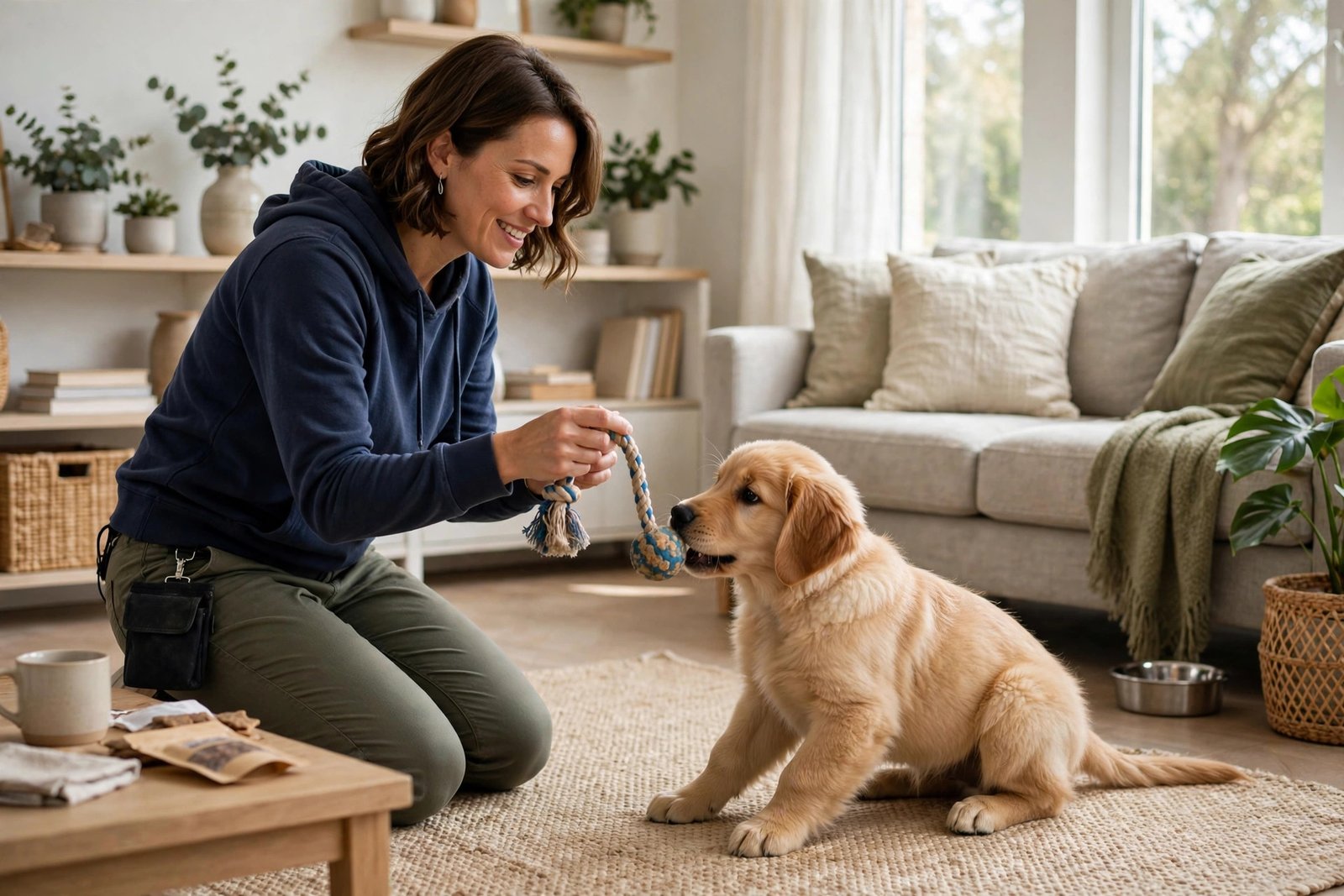
Those needle-sharp puppy teeth on your hands, your sleeves, your ankles — every new puppy owner goes through it, and every one wonders if their puppy is aggressive. It is not. Biting is how puppies explore the world, play, and relieve teething pain. But “normal” does not mean “acceptable forever,” and the training you do in the first months determines whether you raise a gentle-mouthed adult or a dog nobody wants to pet.
Why Puppies Bite: It’s Developmental, Not Defiant
Puppies are born toothless and helpless; by three weeks the baby teeth arrive, and from 8 to 16 weeks they explore everything with their mouths — hands, feet, furniture, other dogs. This is how they learn about texture, pressure, and social boundaries. Between 4 and 6 months, the adult teeth come in, and teething pain drives frantic chewing. A puppy that bites your hand is doing exactly what its biology programs: mouthing is to puppies what grabbing is to toddlers.
The critical learning window is 8 to 16 weeks, when puppies learn bite inhibition — how much pressure is too much — primarily from feedback. In the litter, a puppy that bites too hard gets yelped at and the game stops; the puppy learns that hard bites end fun. Removed from the litter at 8 weeks, your puppy now needs you to teach the same lesson. Puppies that miss this education (isolated, punished for mouthing rather than taught) grow into adults that never learned to moderate their jaws — which is why early training matters so much. The AKC’s puppy training resources explain these developmental stages in detail.
The Yelp-and-Withdraw Method (Bite Inhibition First)
Phase one is not “no biting” — it is “softer biting.” When the puppy’s teeth touch your skin with uncomfortable pressure, yelp sharply (a high-pitched “ow!”) and immediately withdraw your hand, going still and boring for 10–20 seconds. You are mimicking the littermate: hard bite, fun stops. Most puppies startle, then mouth more gently. Reward the gentle mouthing with continued play; repeat the yelp for hard bites. Over 1–2 weeks, the puppy learns the pressure threshold.
Phase two: once the puppy mouths gently, start yelping at any tooth-on-skin contact at all, then withdraw. You are raising the standard gradually — from “soft mouthing okay” to “teeth on skin ends the game.” This two-phase approach works because it teaches in steps the puppy can understand, rather than demanding an impossible instant transformation. Consistency across every family member is non-negotiable: if one person allows rough mouthing “because it’s cute,” the puppy learns biting works on some people, and the training stalls.
Redirect, Don’t Just Punish
Every “no” needs a “yes.” When the puppy gets mouthy, redirect to an appropriate chew: press a toy into its mouth, initiate a game of tug (with rules — see below), or offer a frozen Kong. Keep toys stashed in every room so a redirect is always within arm’s reach; the three seconds you spend fetching a toy are three seconds the puppy practices biting you. Rotate toys to keep them novel — a toy that has been on the floor for a week is furniture, not enrichment.
For teething puppies (4–6 months), frozen relief helps enormously: wet and freeze a washcloth (supervised only), freeze Kongs stuffed with kibble and peanut butter, or offer frozen carrots. Teething pain is real, and a puppy in pain bites more — addressing the pain reduces the biting directly. Never punish teething chewing with anger; the puppy cannot choose not to teeth any more than a baby can.
Rules for Play That Prevent Biting
Structure play so it teaches rather than rewards biting. Tug-of-war is excellent — contrary to old myths, it does not create aggression — but with rules: the game starts and stops on your cue, teeth on skin ends the game immediately, and “drop it” is practiced throughout. Wrestling and hand-play (letting the puppy chew your hands “for fun”) directly teach that hands are toys; stop it entirely during the training period.
Manage the witching hours: most puppies have daily crazy periods (often evenings) when overtiredness makes them bite hardest. An overtired puppy is like an overtired toddler — unreasonable. Enforce naps: puppies need 18–20 hours of sleep daily, and many biting spirals are simply exhaustion. Puppy-proofing the house matters just as much as training the puppy — the same principles in childproofing a home without ruining it apply to curious puppies: secure the hazards, and the training goes twice as smoothly. A crate or pen for scheduled naps is not punishment; it is meeting a biological need. And remember that puppies have accidents — choosing pet-friendly flooring saves your floors during the housetraining months. Children need coaching too: running, squealing kids trigger chase-and-bite instincts, so supervise and teach kids to “be a tree” (stand still, arms crossed) when the puppy gets mouthy.
What NOT to Do (Common Mistakes)
Never hit, alpha-roll, muzzle-grab, or scruff-shake a biting puppy. These aversive methods suppress behavior through fear without teaching anything, damage your bond, and peer-reviewed research links them to increased aggression — the ASPCA’s training position statement summarizes the evidence against punishment-based methods. Do not use spray bottles or shaker cans as your primary tool; startling a puppy repeatedly creates a nervous dog, not a gentle one.
Do not expect overnight results — bite inhibition takes weeks of consistent feedback, and teething lasts months. Do not compare your puppy to the neighbor’s “perfect” puppy; you are seeing their highlight reel. And do not skip socialization because of biting: puppies still need safe exposure to people, dogs, and environments during the critical window. Well-run puppy classes are ideal — the puppy learns bite inhibition from other puppies (the best teachers) while you learn handling skills. A tired, socialized puppy with clear rules becomes a gentle adult; it is that straightforward and that demanding.
When Biting Is Not Normal
Most puppy biting is developmental, but see a professional if: the biting is paired with stiff body language, growling over resources, or an intense stare (guarding, not playing); the puppy bites hard enough to break skin regularly past 5–6 months; the puppy cannot be redirected or calmed at all; or biting escalates rather than improves with consistent training. A certified trainer (CPDT-KA) or veterinary behaviorist can distinguish developmental mouthing from emerging aggression — and early intervention for real aggression changes outcomes dramatically. When in doubt, get an expert opinion; it is always cheaper than the alternative.
Conclusion
Puppies bite because they are puppies — exploring, teething, and learning bite inhibition. Teach softer mouthing first with yelp-and-withdraw, then zero teeth on skin; redirect every bite to toys; manage teething pain and enforce naps; never use punishment; and socialize through it all. The needle teeth are temporary. The bite inhibition you teach now lasts the dog’s entire life — and determines whether that life includes relaxed couch cuddles or constant management.
Frequently Asked Questions
At what age do puppies stop biting?
Most puppies bite significantly less by 5–6 months as teething ends and training takes hold, with mouthing largely resolved by 7–8 months. Consistent training shortens this; inconsistent responses prolong it indefinitely.
Is it okay to let my puppy chew on my hands gently?
During early bite-inhibition training, gentle mouthing is a useful teaching stage — but the end goal is no teeth on skin at all. Phase it out deliberately rather than allowing it indefinitely.
Does yelping really work to stop puppy biting?
For most puppies under 4–5 months, yes — it mimics littermate feedback they instinctively understand. Some puppies get more excited by yelping; for those, silent withdrawal (going still and boring) works better. Match the method to the puppy.
Should I punish my puppy for biting?
No. Physical punishment and intimidation increase fear and aggression risk without teaching bite inhibition. Research consistently shows positive, feedback-based methods produce gentler adult dogs.
When should I worry that biting is aggression?
If biting comes with guarding behavior (stiffening, growling over food/toys), breaks skin regularly past 6 months, cannot be interrupted, or escalates despite consistent training — consult a certified trainer or veterinary behaviorist promptly.