Walk into any dealership with a family and a budget, and the salesperson will steer you toward a three-row SUV before you finish your coffee. But the SUV-vs-sedan debate for families is less settled than the industry wants you to believe. Sedans are cheaper, safer in some crash types, and easier for kids to climb into; SUVs offer space, visibility, and all-weather confidence. The right answer depends on your family, your roads, and your honest math.
The Real Differences That Matter Daily
Start with what you will feel every single day: getting kids in and out. SUVs sit higher, which saves your back when lifting toddlers into car seats — a genuine quality-of-life factor parents underestimate until their spine objects. But that height cuts both ways: older kids and shorter adults climb into sedans more easily, and the lower step-in height of a sedan is kinder to grandparents and anyone with mobility issues.
Cargo is the SUV’s headline advantage, but measure it honestly. A midsize SUV offers roughly 35–40 cubic feet behind the second row versus about 15–16 cubic feet in a sedan trunk — more than double. For families with strollers, sports gear, or a large dog, that space is transformative. But a sedan trunk swallows a surprising amount: a folded stroller, a week’s groceries, and two carry-ons fit fine. The question is not whether SUVs hold more — they do — but whether your family’s actual cargo exceeds a sedan trunk weekly or twice a year on vacation.
Safety: The Nuanced Truth
SUVs feel safer, and in multi-vehicle crashes their mass and height do protect occupants — physics favors the heavier vehicle. But SUVs have a higher center of gravity, making them more prone to rollovers, and their height makes them more dangerous to pedestrians, cyclists, and occupants of smaller cars. Modern electronic stability control has tamed rollover risk dramatically, yet the IIHS safety ratings still show meaningful differences: the safest choice in any segment is the specific model with top crash scores and full driver-assistance tech, not the segment itself.
For families, the safety features matter more than the body style. Automatic emergency braking, blind-spot monitoring, and rear cross-traffic alert prevent the crashes statistics say families actually have — parking-lot and intersection collisions, not highway rollovers. A sedan with a full safety suite beats a stripped base SUV on real-world family safety. Check the IIHS Top Safety Pick lists before falling in love with any particular model.
The Money: Purchase Price, Fuel, Insurance, Tires
SUVs cost more at every step. A comparable SUV typically runs $3,000 to $7,000 more than its sedan sibling at purchase, burns 15 to 25 percent more fuel, wears through more expensive tires faster, and costs more to insure. Over five years, the total cost gap between a midsize sedan and a midsize SUV for a family driving 12,000 miles a year often lands between $8,000 and $15,000 — real money that could fund a vacation, a home project, or a college fund.
Insurance deserves special attention for families: insurers price SUVs higher partly because they cause more damage to other vehicles. Get quotes before you buy, not after — the difference between insuring a Camry and a Highlander can be several hundred dollars a year. The fueleconomy.gov fuel-cost calculators also help you model the five-year fuel gap between specific models side by side. Families budgeting carefully should also factor in that understanding what insurance you actually need applies to auto policies too: raising deductibles and dropping collision on older vehicles are legitimate levers.
Driving Experience and Practicality
Sedans drive better — this is not really debatable. Lower center of gravity means sharper handling, shorter braking distances, and a more composed feel in emergency maneuvers. They are easier to park in tight urban garages, fit through narrow streets, and sip fuel on commutes. If most of your miles are suburban errands and highway commuting, a sedan is simply the more pleasant tool.
SUVs earn their keep on bad roads and bad weather. Higher ground clearance handles unplowed streets, rutted campgrounds, and flooded intersections that would strand a sedan. Available all-wheel drive — offered on both body styles now, but more common and more capable on SUVs — adds genuine winter confidence. Families who camp, ski, boat, or live at the end of a dirt road will use an SUV’s capabilities regularly; families who do not are paying for capability that mostly sits in the driveway.
The Family Road Trip Test
Here is the practical test: imagine your family’s typical biggest trip. Two kids, luggage, snacks, entertainment, maybe a pet — can everyone ride comfortably for six hours? In a midsize sedan, the answer is usually yes, with the trunk packed strategically. Add a third child, and the math changes: three car seats across a sedan’s back seat is possible but miserable, and this is where SUVs — especially three-row models — become genuinely necessary rather than merely nice.
For the trips themselves, the journey matters as much as the vehicle. Families who drive long distances together know that comfort and entertainment decide whether a trip is remembered fondly; a good road-trip playlist everyone enjoys does more for family harmony than an extra six inches of legroom. And if your family travels with kids often, the logistics of traveling with kids without losing your sanity apply regardless of what you drive.
When Each Choice Clearly Wins
Choose the SUV if: you have three or more kids in car seats, you regularly drive unplowed or unpaved roads, you tow anything, you carry large gear weekly (strollers, wheelchairs, sports equipment, big dogs), or a tall vehicle genuinely eases a physical limitation. Choose the sedan if: your family is one or two kids, your driving is mostly paved suburban and highway miles, budget matters, you park in tight spaces, or you simply enjoy driving.
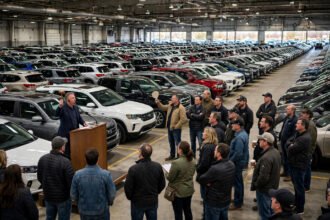
The middle ground is worth a look too: wagons and hatchbacks split the difference, offering SUV-like cargo with sedan-like driving dynamics and fuel economy. Models like the Subaru Outback exist precisely because many families want the space without the SUV penalties. Do not let dealership inventory — which skews heavily SUV because margins are higher — narrow your search artificially.
Conclusion
For most two-kid suburban families, a sedan does everything needed for thousands of dollars less, drives better, and sips less fuel — the SUV is a want, not a need. For three-kid families, rural drivers, and gear-heavy lifestyles, the SUV’s space and capability earn their premium honestly. Ignore the marketing, measure your actual cargo and your actual roads, price the five-year ownership gap, and buy the vehicle that fits your life instead of the one the commercial told you a family needs.
Frequently Asked Questions
Are SUVs actually safer than sedans for families?
In multi-vehicle crashes, heavier SUVs protect their occupants better. But they roll over more easily and are more dangerous to pedestrians and smaller cars. The specific model’s crash ratings and safety features matter more than the body style.
How much more does an SUV cost than a sedan over five years?
Typically $8,000 to $15,000 more for comparable midsize models, counting purchase price, fuel, insurance, and tires. The gap widens with luxury models and high annual mileage.
Can three car seats fit in a sedan?
Sometimes, but it is tight and depends on the seats and the car. Narrow car seats help. Most families with three kids in seats find a wider SUV or minivan dramatically more livable day to day.
Do I need all-wheel drive for winter family driving?
Good winter tires matter more than all-wheel drive for most families. AWD helps you accelerate in snow; winter tires help you stop and turn, which is where crashes happen. Ideally, have both if your winters are severe.
Is a minivan better than an SUV for families?
Often yes, practically speaking — more space, easier access, better fuel economy. Many families resist minivans on image grounds while paying thousands more for an SUV that does the job worse. If practicality wins over image, test-drive one.