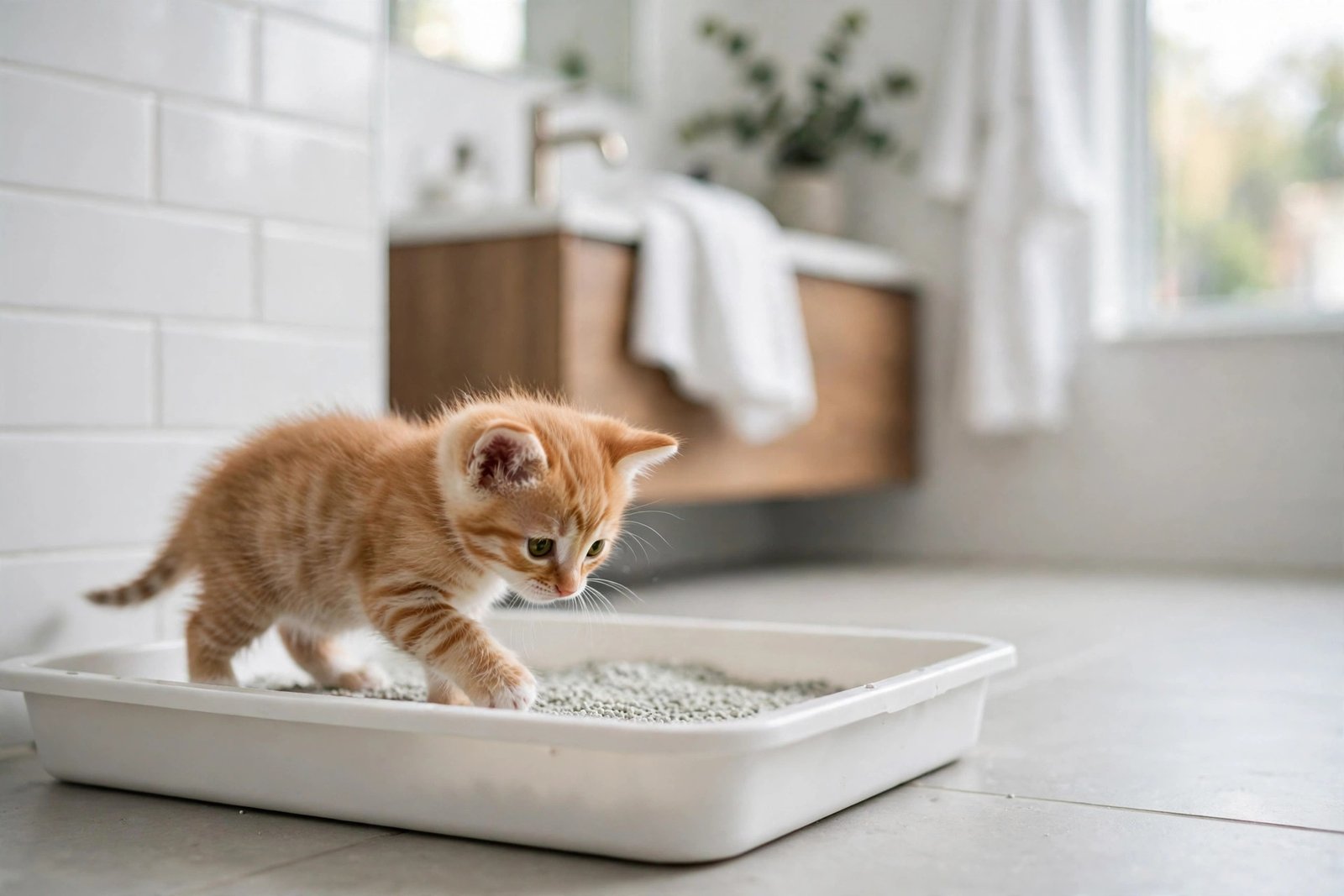
You just brought home a kitten. It is tiny, adorable, and has no idea what a litter box is for — or worse, has decided your laundry basket is the litter box. Relax: kittens are among the easiest animals on earth to litter train, because the instinct to bury waste is hardwired. Most kittens train themselves in days if you set up the environment right. Here is how to make it foolproof.
Why Kittens Are (Usually) Easy
Mother cats train their kittens from about three to four weeks old — kittens imitate mom’s digging and burying, and the instinct to eliminate in soft, diggable substrate is innate. A kitten raised with its mother until 8–12 weeks often arrives pre-trained; your job is just providing the right box in the right place. Orphaned or very young kittens need you to play mom: gentle stimulation and introduction to the box, but the instinct is still there waiting.
The rare “difficult” kitten is almost always reacting to an environment problem, not a learning problem: wrong litter texture, dirty box, scary location, or medical discomfort. If you fix the environment and the kitten still will not use the box after a week, the next step is the vet, not more training — urinary tract infections and parasites make the box painful, and no amount of training overcomes pain.
The Setup: Box, Litter, Location
Box: for a tiny kitten, low sides are essential — it must climb in effortlessly. A shallow baking tray or a kitten-specific box works; upgrade to full size as it grows. Rule of thumb going forward: one box per cat plus one extra, spread across the home. Location: quiet, accessible, and private — not next to the washing machine, not in a high-traffic hallway, and never next to the food and water (cats do not eat where they toilet, sensibly). Kittens have tiny bladders and get distracted; in a large home, start with the box in the kitten’s base-camp room and add boxes as its territory expands.
Litter: unscented, fine-grained clumping litter is the best default — most cats prefer soft textures underfoot, and scented litters marketed to humans actively repel many cats. Avoid heavily perfumed litters, large pellets, and crystal litters for initial training; you can experiment later once the habit is solid. Fill 2–3 inches deep — enough to dig and bury, which is the whole point. The ASPCA’s litter box guidance confirms that texture and cleanliness outweigh every other factor in box acceptance.
The Training Process: Days, Not Weeks
Day one: confine the kitten to one room (base camp) with the box, food, water, bed, and toys. Small space means the box is always findable — the number-one reason kittens have accidents is simply not finding the box in time. After meals, naps, and play sessions, gently place the kitten in the box; kittens typically need to go within 15–20 minutes of eating. Let it sniff, paw, and explore — do not force it to stay.
When the kitten uses the box, reward calmly — a treat, gentle praise. Do not swoop, clap, or celebrate loudly; startling a kitten mid-business creates box aversion. If you catch it starting to go elsewhere, calmly pick it up and place it in the box mid-squat (yes, really — kittens tolerate this fine). Never punish accidents: rubbing a kitten’s nose in waste teaches fear, not location, and anxious kittens hide their accidents better instead of using the box. Clean accidents with enzymatic cleaner — regular soap leaves scent markers that say “bathroom here” to the kitten’s nose.
Keeping the Box Appealing (the Real Secret)
Cats are fastidious, and box hygiene is the number-one factor in long-term success. Scoop at least once daily — twice is better. A cleaning schedule that fits a busy life makes this automatic rather than aspirational: tie scooping to an existing habit, like your morning coffee. Dump and wash the box with mild soap monthly (never harsh chemicals or strong disinfectants; the smell repels cats). Top up litter to maintain depth. A dirty box is the most common reason a trained cat stops using it, and the fix is always more cleaning, not more training.
As the kitten grows, upgrade box size — an adult cat needs a box 1.5 times its body length. Covered boxes are a human preference, not a cat one: many cats dislike the trapped odors and the ambush risk (in multi-cat homes, covered boxes become trap points). If you use one, remove the door flap and ensure it is large. Self-cleaning boxes are fine for most cats once trained, but introduce them after the habit is solid — the noise startles some kittens into avoidance.
Troubleshooting: When It Is Not Working
Going next to the box: usually a cleanliness, size, or litter-texture issue — or the box is too far away for a small kitten. Add a second box closer to where the accidents happen (you can move it gradually later). Going on soft surfaces (beds, laundry): the kitten may prefer soft textures — try a softer litter, and keep laundry inaccessible during training. Going in houseplants: cover soil with foil or stones temporarily; the diggable soil is irresistible.
Straining, crying, frequent attempts, or blood: vet immediately — these signal urinary blockage (life-threatening in male cats) or infection, not a training problem. Sudden box avoidance in a previously trained kitten is medical until proven otherwise. Multi-cat conflict over boxes: add boxes in different locations (not side by side — that counts as one box in cat logic) and ensure each cat has safe access. Choosing the right home setup for cats extends beyond the box — pet-friendly flooring choices make the whole house easier to keep clean during training and beyond.
Special Cases
Orphaned neonates (under 3–4 weeks): stimulate elimination by gently rubbing the genital area with a warm damp cloth after every feeding, mimicking the mother’s tongue — they cannot go on their own yet. Introduce the box at 3–4 weeks. Outdoor-to-indoor transitions: provide a litter with a soil-like texture initially (or mix potting soil into litter, transitioning to plain litter over two weeks). Senior cats with arthritis: low-entry boxes on every floor — stairs become barriers, and the box must be reachable.
Declawed rescues (please never declaw): litter can hurt sensitive paws — use soft paper-based or fine-grain litter. The AVMA’s cat care resources cover these special-needs cases for adopters.
Conclusion
Litter training a kitten is mostly environment design: a low-sided box with unscented fine litter, placed quietly and accessibly, scooped daily, introduced after meals and naps in a confined starter room. Reward successes, never punish accidents, clean mistakes with enzymatic cleaner, and see the vet for any straining or sudden avoidance. The instinct does the heavy lifting — you just have to not get in its way.
Frequently Asked Questions
How long does it take to litter train a kitten?
Most kittens get it within 2–7 days with proper setup; mother-raised kittens often arrive essentially trained. If there is zero progress after two weeks with correct setup, consult your vet.
What litter is best for kittens?
Unscented, fine-grained clumping litter. Avoid scented litters (repels many cats), and skip clumping concerns for very young kittens under 8 weeks — use non-clumping then, since tiny kittens may ingest litter.
Why is my kitten sleeping in the litter box?
In a new home, the box smells like the kitten and feels like a safe enclosed den. It is normal for the first days. Provide a cozier alternative (a small bed or box with a blanket) and it usually stops on its own.
Should the litter box be covered or open?
Open is better for most cats — better ventilation, no ambush risk, easier access. Covered boxes are for human aesthetics; if you use one, remove the flap and size up.
My kitten uses the box but misses — what do I do?
Get a bigger box with higher sides (but a low entry cut). Most “missing” is a box that is too small for the kitten’s body. Aim for 1.5x body length, and place a washable mat underneath during the transition.