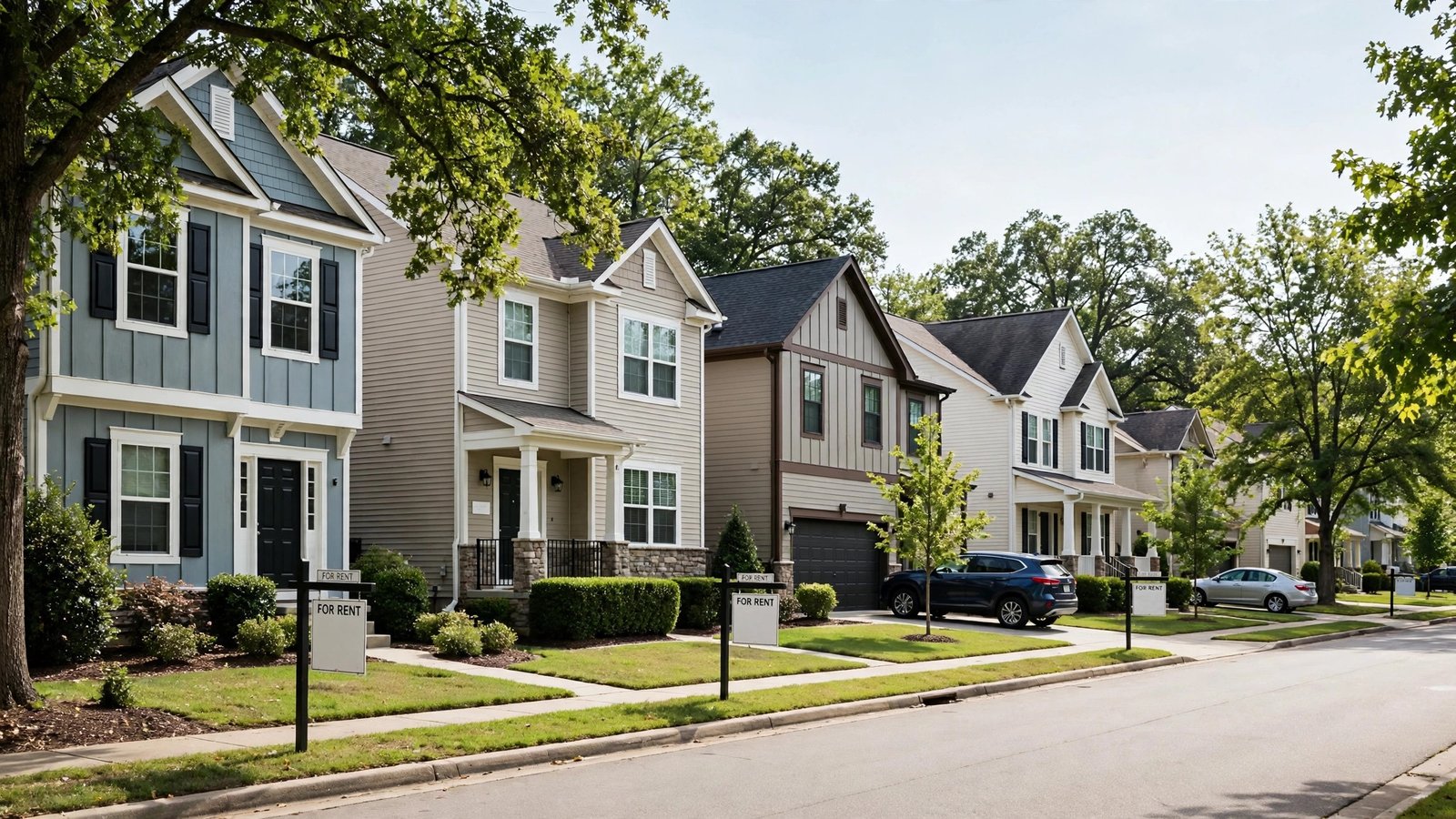
Every market has investors declaring it is the best time ever or the worst time imaginable, and both camps sound convincing. The honest answer for rental properties in 2026 is the unsatisfying one: it depends on your market, your financing, and your numbers. Rather than timing the market perfectly, successful investors evaluate whether specific deals work under current conditions. Here is how to think about it clearly.
The Case For Investing Now
Several fundamentals favor rental investing today. Housing shortages persist in many metros, supporting long-term rent growth and occupancy. Rents have generally risen faster than wages over the past decade, and demographic demand from household formation remains solid. Investors who buy now lock in today’s prices and begin building equity immediately; waiting for perfect conditions has historically cost more than imperfect timing. Rental real estate also offers inflation protection that few assets match: rents and property values tend to rise with inflation while fixed-rate mortgage payments stay constant. For investors with strong cash positions, current conditions create negotiating leverage, since higher rates have sidelined competing buyers. And the tax benefits, depreciation, deductions, and potential 1031 like-kind exchanges, remain intact regardless of market timing. Long-term demand trends in Census Bureau housing data support steady household formation. The investors who built real wealth rarely bought at the perfect moment; they bought good deals consistently over time.
The Case For Caution
The headwinds are real and deserve respect. Higher mortgage rates have compressed cash flow on leveraged purchases; deals that worked beautifully at 4% rates may barely break even at 7%. Home prices remain elevated relative to incomes in many markets, meaning investors pay more for each dollar of rent. Insurance costs have surged in disaster-prone states, and property taxes keep climbing, both eroding margins. Regulatory risks are growing: rent control expansions, eviction restrictions, and short-term rental crackdowns can change a deal’s math overnight. New investors also underestimate management intensity; landlording is a part-time job with 2 a.m. emergencies, not passive income. Anyone considering rentals as a side hustle with no capital should understand that rental investing requires both capital and reserves. Caution is not the same as avoidance, but it demands stricter deal standards than easy-money eras did.
The Numbers That Actually Decide
Forget market predictions; evaluate deals with cold math. The 1% rule (monthly rent at least 1% of purchase price) is increasingly hard to find but remains a useful screening benchmark. Better: calculate cash-on-cash return, annual cash flow divided by cash invested, and demand numbers that beat alternative investments after accounting for risk and effort. Model conservatively: assume 8 to 10% vacancy, 5 to 10% of rent for maintenance, similar for capital expenditures, and realistic property management costs even if you self-manage initially. Stress-test at higher rates and lower rents; deals that only work under perfect assumptions are not deals. Target markets where price-to-rent ratios are reasonable, job growth is solid, and landlord regulations are manageable. The investors thriving now are not market timers; they are underwriters who reject ninety deals for every one they take. Keep your investment finances pristine by understanding the risks of mixing personal and business finances from day one.
Strategies Working in Current Conditions
Specific approaches fit today’s market better than others. House hacking, buying small multi-unit properties with low-down-payment loans while living in one unit, remains the highest-leverage entry for beginners. Value-add properties needing cosmetic renovation let investors force appreciation rather than waiting for markets to rise. Mid-term rentals to traveling professionals occupy a sweet spot between long-term stability and short-term yields in many markets. Markets in the Southeast and Midwest still offer reasonable price-to-rent ratios compared to coastal metros. Seller financing and assumable mortgages, where buyers take over sellers’ low-rate loans, can unlock yesterday’s rates on today’s purchases. Whatever the strategy, the common thread is manufacturing returns through skill and effort rather than relying on market appreciation to bail out mediocre deals.
What Experienced Investors Are Doing Differently Now
Talk to successful landlords today and patterns emerge. They are more selective, passing on deals that would have worked three years ago. They keep larger cash reserves, six months of expenses per property minimum, recognizing that surprises are more expensive now. Many are paying down debt rather than maximizing leverage, valuing sleep over optimization. They scrutinize insurance and tax trajectories before buying, not after. They invest heavily in tenant quality, since a great tenant in a tough market outperforms a marginal tenant in a great one. And they think in decades: the investors who bought “at the top” in past cycles and held through them did fine, because time heals most timing mistakes in cash-flowing real estate. Patience, selectivity, and reserves are the current era’s winning traits.
Building Your Buy Box
Successful investors define a “buy box”, precise criteria for what they will purchase, before looking at deals. Specify property type, price range, target neighborhoods, minimum cash flow, acceptable condition, and financing approach. A tight buy box lets you evaluate opportunities in minutes and say no quickly, which is most of the job. Build yours from local data: study rents, prices, taxes, and regulations in two or three target areas until you know them cold. Then network with agents, wholesalers, and other investors who can bring you off-market deals fitting your criteria. The investors who struggle are usually those buying whatever crosses their path; discipline in defining the box precedes discipline in executing it. Review and refine the box annually as markets and your capital evolve.
Financing Structures for Today’s Investor
How you finance matters as much as what you buy. Conventional investment property loans typically require 15 to 25% down with higher rates than owner-occupied loans. DSCR loans qualify based on the property’s rental income rather than your personal income, useful for scaling portfolios. Portfolio lenders and credit unions sometimes offer flexible terms for local investors. Seller financing can bridge gaps when traditional lending is tight, and assuming a seller’s low-rate mortgage, where allowed, captures yesterday’s rates directly. Whatever the structure, maintain reserves separate from down payment funds; the investors who fail are usually those who deployed every dollar to acquire and had nothing left for surprises. Model your financing costs conservatively and compare total costs, not just rates, across options.
Conclusion
Now is a good time to invest in rental properties if you find deals whose numbers work under conservative assumptions, in markets with solid fundamentals, with adequate reserves and a long horizon. It is a bad time to buy hoping appreciation rescues thin cash flow, to overleverage, or to invest without understanding local regulations. The market rewards underwriting discipline more than timing brilliance. Run the numbers honestly, keep your standards high, and let the math, not the headlines, make your decision.
Frequently Asked Questions
Are rental properties still profitable with high interest rates?
Yes, but deal selection matters more. Higher rates compress cash flow, so investors need better purchase prices, larger down payments, or value-add strategies. Deals must be underwritten conservatively.
What is a good cash-on-cash return for rentals?
Many investors target 8 to 12% or higher, though targets vary by market and strategy. Compare against your alternative investments after accounting for the work and risk involved.
Should beginners invest in rentals now?
Beginners can succeed by starting small, house hacking or buying one modest property, keeping large reserves, and learning intensively. Avoid overleveraging on your first deal.
How much reserve cash do rental investors need?
A common rule is six months of expenses per property, covering mortgage, taxes, insurance, and maintenance. Larger reserves are prudent in the current higher-cost environment.