With fuel prices unpredictable, squeezing more miles from every gallon is pure savings. The remarkable part is how much efficiency most drivers leave on the table: the gap between careless and careful driving of the same car routinely reaches 20 to 30%. No modifications, no new car, just habits and maintenance. Here are the easy wins, roughly ordered by impact.
Driving Habits: The Biggest Lever You Control
How you drive matters more than what you drive. Aggressive driving, rapid acceleration, hard braking, speeding, can lower highway mileage by 15 to 30% according to Department of Energy testing. The fixes are simple: accelerate gently, anticipate stops to coast rather than brake late, and observe speed limits, since aerodynamic drag makes fuel economy plummet above 50 mph; every 5 mph over 50 is like paying extra per gallon. Use cruise control on highways to maintain steady speed. Minimize idling; modern engines need no warm-up, and idling gets zero miles per gallon. Combine errands into single trips since cold engines are inefficient for the first several miles. Remove the lead from your right foot and the savings appear immediately, no tools required. These habits also make you safer, which is its own reward. When planning travel, comparing the cheapest ways to travel between cities helps you decide when efficient driving beats flying.
Maintenance That Pays for Itself
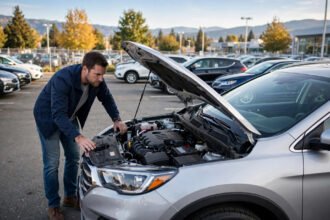
Neglected maintenance silently steals fuel. Underinflated tires are the classic culprit; every 1 psi below recommendation costs roughly 0.2% in efficiency, and most cars run underinflated. Check monthly. Dirty air filters restrict airflow and hurt performance, particularly in older cars. Worn spark plugs cause misfires that waste fuel. Old engine oil increases friction; use the manufacturer’s recommended grade, since thicker oil than specified reduces economy. A malfunctioning oxygen sensor can slash mileage 40%; if your check engine light is on, fix it promptly for economy as well as emissions. Keep wheels aligned; misalignment drags tires sideways, wasting energy. None of this is exotic; it is the owner’s manual maintenance schedule, followed. The FuelEconomy.gov maintenance guides quantify each item’s impact. Well-maintained cars also hold value better, compounding the return on basic care.
Lighten Up and Streamline
Physics punishes weight and drag. Remove unnecessary cargo; every extra 100 pounds costs roughly 1% in fuel economy, so clean out the trunk. Roof racks and cargo boxes are aerodynamic disasters, increasing drag dramatically even when empty; remove them when not in use. Open windows at highway speed create drag that costs more than air conditioning; use AC on highways, windows around town. Keep the car clean of snow and ice in winter, which adds weight and destroys aerodynamics. These sound trivial individually, but they compound: a loaded roof box plus extra cargo plus underinflated tires can easily cost 15% combined. The streamlined, lightened car is also quieter and more pleasant to drive. Before long efficient drives, pair these steps with smart road trip packing that keeps weight low and organization high.
Use Technology and Plan Smarter
Modern cars and phones offer efficiency tools most drivers ignore. Use your car’s real-time fuel economy display as feedback; watching the number respond to your right foot trains efficient habits faster than any advice. Eco driving modes genuinely help by softening throttle response and optimizing transmission behavior; use them. Plan routes to avoid congestion; stop-and-go traffic destroys mileage, so a slightly longer free-flowing route often uses less fuel. Maintain steady speeds with cruise control and, where available, adaptive cruise. Keep up with recalls and software updates that sometimes include efficiency improvements. For trip planning, the Department of Energy’s driving efficiency tips offer research-backed techniques. And consider whether some trips need the car at all; the most efficient mile is the one not driven.
When Efficiency Signals Something Wrong
Sudden mileage drops diagnose problems. If efficiency falls 10% or more without explanation, investigate: check tire pressure first, then consider a stuck brake caliper (the car pulls or a wheel runs hot), failing oxygen sensor, dirty mass airflow sensor, or transmission issues. Seasonal drops are normal; winter gasoline blends and cold-weather operation cost 10 to 20% in freezing temperatures. But persistent, unexplained declines warrant a mechanic’s diagnosis, since the underlying fault often worsens. Track your mileage per tank with an app or notebook; the data makes problems visible months before they become expensive. Treat fuel economy as a health metric for your car, because that is exactly what it is.
Hypermiling: Advanced Techniques for the Dedicated
For drivers who treat efficiency as a sport, hypermiling techniques squeeze extraordinary mileage from ordinary cars. Pulse and glide, accelerating gently to speed then coasting with minimal throttle, exploits engine efficiency curves. Anticipatory driving taken to its limit means timing traffic lights from blocks away to never fully stop. Drafting behind large vehicles at safe distances reduces aerodynamic drag, though tailgating is dangerous and illegal; maintain safe following distances always. Strategic route selection favors flat, steady-speed roads over hilly stop-and-go alternatives. Some hypermilers use engine-off coasting, but this disables power steering and brakes in many cars and is unsafe; do not do it. The ethical hypermiler stays within traffic flow and safety margins while optimizing everything else. Even adopting half these techniques can push a 30-mpg car past 40 mpg. It becomes a satisfying game: the dashboard readout as high score.
Choosing an Efficient Next Car
Today’s habits inform tomorrow’s purchase. When replacing your vehicle, efficiency differences between models dwarf what driving techniques can achieve; moving from a 20-mpg SUV to a 50-mpg hybrid saves more than any hypermiling ever will. Compare total fuel costs over your expected ownership: a $3,000 price premium for 15 extra mpg pays back in roughly three years at average mileage. Consider your real needs honestly; many drivers buy capability they use twice yearly while paying for it daily. Evaluate hybrids and EVs against your driving patterns using total cost of ownership, not just sticker price. Check reliability data for efficiency-focused models, since the most efficient car is the one that runs trouble-free for a decade. Your current efficiency habits transfer directly; the careful driver in an efficient car achieves remarkable economy that makes every mile cheaper.
Conclusion
Improving fuel efficiency easily comes down to driving gently, maintaining diligently, lightening the load, and using available technology wisely. The combined effect routinely reaches 20 to 30% for drivers starting from careless habits, worth hundreds yearly with zero investment. Start today: check your tire pressure, ease off the accelerator, and watch the numbers improve. Efficiency is a habit, and habits compound.
Frequently Asked Questions
Does driving slower really save gas?
Yes, significantly. Fuel economy drops rapidly above 50 mph due to aerodynamic drag. Driving 55 instead of 75 can improve highway mileage by 20% or more.
Do fuel additives improve mileage?
No credible evidence supports aftermarket fuel additives for modern cars. Save your money; proper maintenance and driving habits deliver real, proven gains.
How much does tire pressure affect fuel economy?
About 0.2% per 1 psi below recommendation. Most cars run several psi low, so proper inflation alone often gains 2-3%.
Is premium gas worth it for better mileage?
Only if your car requires it. In cars designed for regular, premium provides no efficiency benefit and just costs more per gallon.