
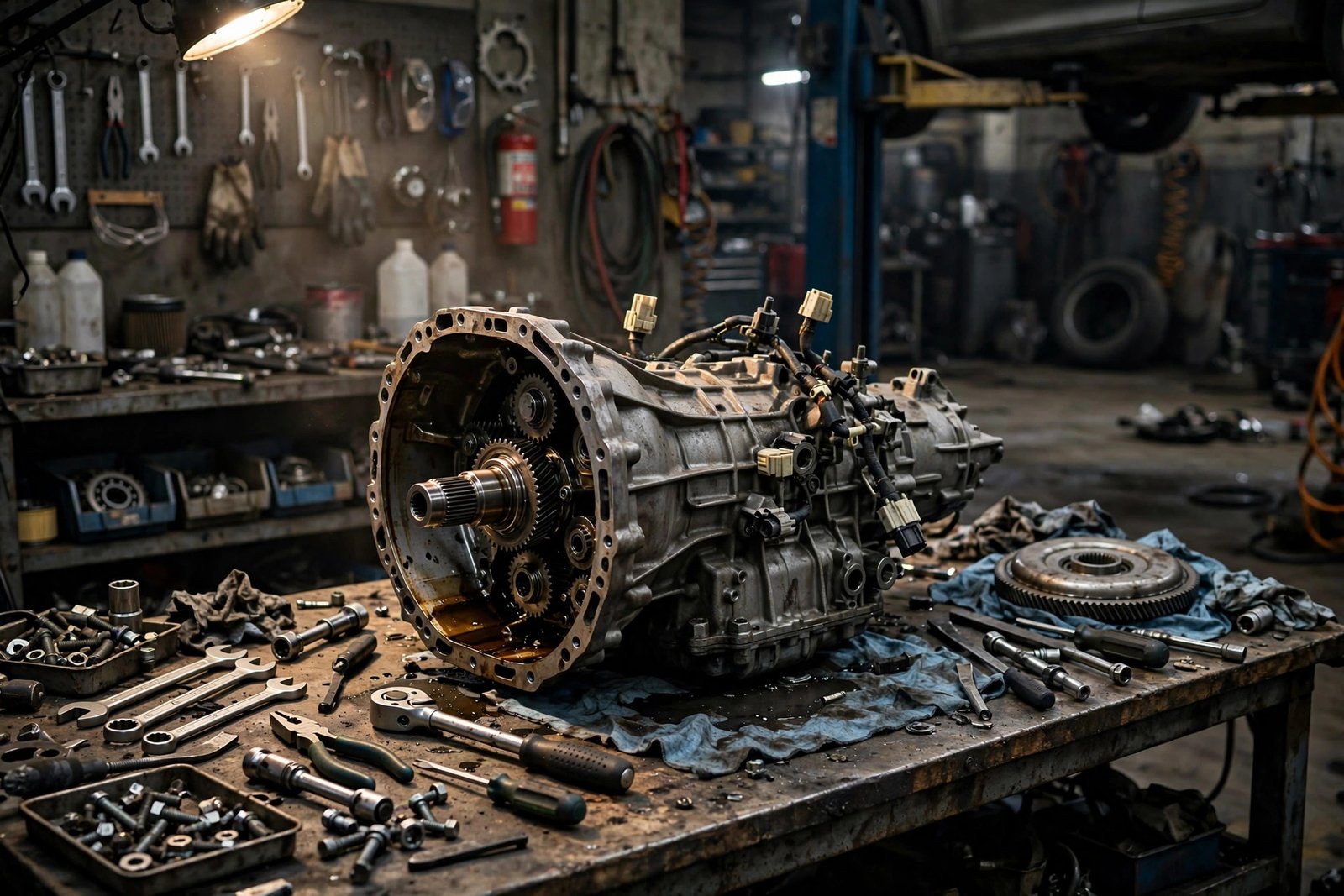
Few phrases empty a car owner’s wallet faster than “you need a new transmission.” It is one of the most expensive repairs a vehicle can face, and the bill varies wildly — from a manageable fix to more than the car is worth. Here is what a transmission replacement actually costs in 2026, what drives the price, and how to decide whether to repair, rebuild, or walk away.
The Short Answer: $1,800 to $8,000+
For most mainstream cars, a complete transmission replacement runs $3,000 to $5,000 including parts and labor. The full realistic range: a rebuilt transmission for an older economy car can cost as little as $1,800 to $2,500, while a new transmission for a luxury vehicle, truck, or performance car easily exceeds $6,000 to $8,000. CVT (continuously variable transmission) replacements, common in Nissans, Hondas, and Subarus, typically land between $3,500 and $5,500 because they are rarely rebuilt — they are replaced as units.
Labor is a huge part of the bill. Transmission replacement takes 8 to 15 hours of shop time, and at $120 to $180 per hour in most U.S. markets, labor alone runs $1,000 to $2,700. The transmission itself — remanufactured, rebuilt, or new — makes up the rest. Dealer prices run 20 to 40 percent above independent transmission shops, which is why a second quote from a specialist is always worth the phone call.
Rebuilt vs. Remanufactured vs. New vs. Used
You have four options, and the price differences are enormous. A rebuilt transmission means your existing unit is disassembled, worn parts replaced, and reassembled — $1,800 to $3,500, but quality depends entirely on the rebuilder’s skill. A remanufactured (“reman”) transmission is rebuilt to factory specifications in a dedicated facility with all wear parts replaced and tested on a dynamometer — $2,500 to $5,000, and generally the best value, usually carrying a 3-year/100,000-mile warranty.
A brand-new transmission from the manufacturer ($4,000 to $8,000+) is the most expensive option and rarely the smart buy for an older car. A used transmission from a salvage yard ($800 to $2,000 plus labor) is the budget gamble — you might get 100,000 more miles or 10,000, and warranties are short. For most drivers, a reman unit from a reputable supplier hits the sweet spot of cost, reliability, and warranty. KBB’s repair cost estimator lets you price your specific vehicle and zip code before you talk to any shop.
What Makes Some Transmissions So Expensive?
Complexity is the main driver. A simple four-speed automatic from the 2000s is cheap to rebuild because the design is mature and parts are plentiful. Modern 8-, 9-, and 10-speed automatics are precision instruments with tight tolerances — fewer shops can rebuild them, and parts cost more. Dual-clutch transmissions (DCTs), found in performance cars and some mainstream models, have eye-watering clutch-pack and mechatronics costs. CVTs are expensive because their belt-and-pulley design is generally not rebuilt at all, forcing full replacement.
Vehicle value matters too: nobody builds a cheap reman market for rare transmissions, so low-volume cars pay a scarcity premium. All-wheel-drive vehicles cost more because the transfer case and extra drivetrain components complicate removal. And EVs, while they have simple single-speed gearboxes that rarely fail, can face steep costs on the rare occasions their drive units need replacement — though most are covered by long powertrain warranties.
Warning Signs Your Transmission Is Failing
Catch problems early and you might need a $300 solenoid or fluid service instead of a $4,000 replacement. Watch for: delayed or harsh shifting, slipping gears (RPMs rise without acceleration), grinding or whining noises, leaking red or brown fluid under the car, a burning smell, the transmission warning light, and shaking or shuddering at speed. Transmission fluid should be pinkish-red and clean; dark, burnt-smelling fluid means trouble.
Do not ignore small symptoms. A transmission that slips occasionally today can fail completely next month, and driving on a failing transmission damages hard parts that turn a rebuildable unit into a replace-only one. Get a diagnostic scan at the first sign of trouble — many transmission shops diagnose free, hoping to earn the repair job. The AAA’s guide to transmission warning signs helps you distinguish minor issues from emergencies.
Repair or Replace the Car? The Decision Math
This is the real question for older cars. Compare the repair cost against the car’s value and its expected remaining life. A common rule: if the repair exceeds 50 percent of the car’s working value and the car has other looming needs (tires, brakes, suspension), it is time to sell or scrap. A $4,000 transmission in a car worth $5,000 with 180,000 miles is usually a bad bet; the same repair in a car worth $12,000 with 90,000 miles is usually worth doing.
Factor in the replacement car’s cost too. Spending $4,000 to keep a paid-off car running two more years beats $25,000 on a new car in almost every scenario — but only if the rest of the car is sound. Get a full inspection before committing: a transmission repair on a car with a rusted frame or dying engine is good money after bad. Thinking about the full ownership picture, including smart ways to cut everyday car expenses, keeps one big repair from becoming a financial spiral. And if you are shopping for a replacement vehicle instead, knowing how to build a realistic car budget first prevents the next purchase from straining your finances.
How to Avoid Transmission Failure
Most transmission failures are earned through neglect. Change the transmission fluid at the manufacturer’s interval — typically every 30,000 to 60,000 miles for conventional automatics — despite the “lifetime fluid” marketing some brands use; no fluid lasts a lifetime. Never tow beyond your vehicle’s rated capacity, which overheats transmissions fast. Come to a complete stop before shifting between drive and reverse. Fix leaks immediately, because low fluid is the fastest killer. And in stop-and-go traffic, avoid riding the brake with the car in gear for extended periods; shift to neutral on long waits if your owner’s manual allows.
Conclusion
A transmission replacement costs $1,800 to $8,000+ depending on the vehicle, the transmission type, and whether you choose rebuilt, remanufactured, new, or used. Remanufactured units offer the best balance for most drivers. Heed the early warning signs, maintain the fluid on schedule, and when failure strikes an older car, do the cold math on repair-versus-replace before authorizing the work. The transmission is expensive, but an informed decision does not have to be.
Frequently Asked Questions
How long does a transmission replacement take?
Typically 1 to 3 days in the shop: a day for removal and installation plus time for the replacement unit to arrive. Complex vehicles or backordered transmissions can stretch to a week or more.
Is it worth replacing a transmission on a car with 150,000 miles?
It can be, if the engine is healthy, the body is solid, and the car’s value justifies it. Get a full vehicle inspection first — the transmission should not be the first of several major repairs.
Can I drive with a slipping transmission?
Briefly and gently, to reach a shop — not as a daily strategy. Slipping generates destructive heat and turns repairable wear into catastrophic failure. The longer you drive it, the more expensive the fix.
Do transmission fluid flushes help or hurt?
On a well-maintained transmission, scheduled fluid services help. On a neglected high-mileage transmission that has never been serviced, a flush can dislodge debris and cause new problems — many shops recommend a gentler drain-and-fill instead. Discuss your car’s history with the technician.
How long do rebuilt transmissions last?
A quality remanufactured transmission typically lasts 100,000 to 150,000 miles with proper maintenance — comparable to original. Cheap rebuilds with short warranties are the ones that fail early, which is why the warranty length is a useful quality signal.