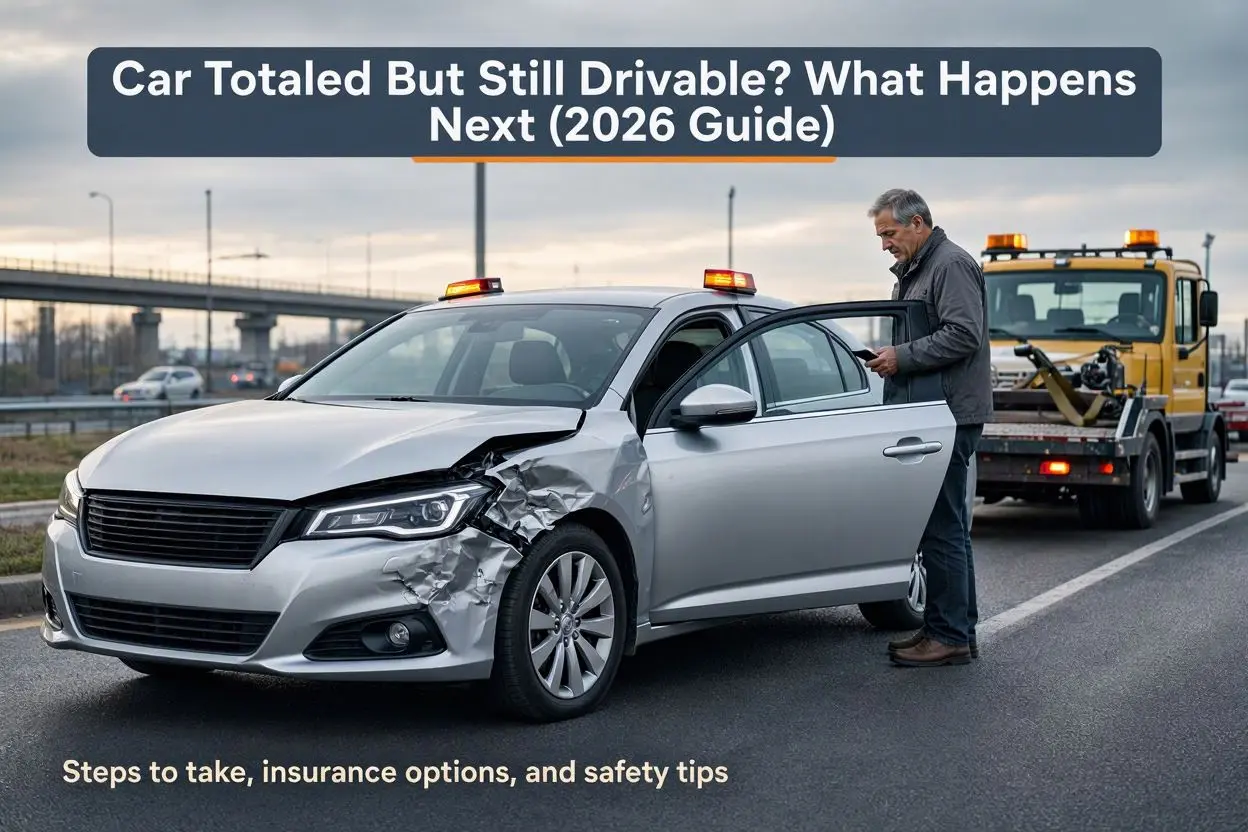
You walk around your car after the accident. The bumper is crumpled, a headlight is gone, but the engine starts and the wheels turn. Then the adjuster calls and says the car is a “total loss.”
It feels wrong. How can a car that still drives be totaled?
You are not the first person to be confused by this. The word “totaled” is an insurance term, not a mechanic’s term, and once you understand that, the rest of the process makes much more sense. This guide explains what is happening, what your options are, and how to avoid costly mistakes.
What Does “Totaled” Actually Mean?
A car is totaled when the insurance company decides that repairing it costs too much compared with what the car is worth. It has nothing to do with whether the engine runs.
The Simple Math Behind a Total Loss
Insurers compare three numbers:
- Actual Cash Value (ACV): what your car was worth right before the accident
- Repair estimate: what the body shop says it will cost to fix
- Salvage value: what the damaged car could sell for at auction or to a scrapper
Say your car’s ACV is $10,000 and the repair estimate is $8,000. In many states, that is enough to total it, because repairs eat up most of the car’s value and the insurer would rather pay you out and sell the wreck.
Total Loss Thresholds Differ by State
Some states use a fixed percentage (commonly somewhere between 60% and 100% of ACV). Others use a formula that adds the salvage value to the repair cost. This is why the same damage might be totaled in one state and repaired in another. Ask your adjuster which rule applies to you.
Why Would a Drivable Car Be Declared a Total Loss?
This catches most people off guard, but it is quite common. A few typical reasons:
Older or Lower-Value Cars
A ten-year-old sedan worth $6,000 can be totaled by a $4,500 repair bill. The car looks fine from the driver’s seat, but the numbers do not work.
Hidden Structural or Frame Damage
Frame and unibody damage can be expensive to straighten, and it is often invisible at first glance. The car may drive straight enough, yet the metal underneath has been bent.
Airbag Deployment
Replacing airbags, sensors, and the surrounding trim can cost thousands. One deployed airbag can push a modest repair estimate past the line.
Hail, Flood, and Weather Damage
Hail can leave hundreds of dents across the roof and hood without touching the engine. Flood water can leave a car running for a while, but corrodes electronics over time. Both are frequent “drivable but totaled” cases.
Expensive Parts and Labor
Modern cars have cameras, radar sensors, and LED headlights. A small fender bender can involve a lot of calibration work, and the bill climbs fast.
What Happens Right After the Declaration?
Once the insurer calls it a total loss, things move in a fairly predictable order.
Step 1: The Insurer Valuates Your Car
They calculate the ACV using comparable cars in your area, mileage, trim level, and condition. This number decides your payout, so do not accept it blindly.
Step 2: You Receive a Settlement Offer
The offer is usually ACV, minus your deductible, plus applicable sales tax and fees in some states. If you have a loan, the lender is paid first, and you get whatever is left.
Step 3: You Choose What To Do With the Car
This is where being “still drivable” matters, because you actually have a choice.
Your Three Main Options
Option 1: Take the Payout and Let the Insurer Keep the Car
This is the simplest route. You sign over the title, the insurer takes the car to auction, and you use the money to buy a replacement. There is no paperwork headache afterward, and you are done.
Best for: people who want a clean break, have a loan balance, or do not trust the car’s safety.
Option 2: Keep the Car (Owner Retention)
You can often keep the vehicle, but the insurer will subtract its salvage value from your payout.
Example:
- ACV: $15,000
- Salvage value: $4,000
- Deductible: $500
- Your payout if you keep the car: about $10,500
In effect, you are “buying” your own wreck from the insurer at the salvage price.
Best for: older cars with cosmetic damage, people who can do repairs cheaply, or owners who simply love the car.
What Changes When You Keep It
- The insurer reports the loss to the state, and the title is usually branded salvage.
- In many states, you cannot legally drive a salvage-titled car on public roads until it is repaired and inspected.
- Rules differ widely, so confirm with your local DMV before you assume you can keep driving.
Option 3: Sell the Car Yourself
Some owners decide to sell the damaged car privately or to a salvage buyer and keep the insurance payout too. This is only possible in certain situations, and you must tell the buyer the full truth about the car’s history. If the title is already branded, the sale price will be lower.
Can You Keep Driving a Totaled Car?
Sometimes, yes. Sometimes, only for a short time. And sometimes, no.
Before You Settle the Claim
While the claim is still open, many people continue driving if the car is mechanically sound. That said, check your policy and ask your adjuster so you are not caught off guard.
After the Total Loss Is Processed
Once the state is notified and the title becomes salvage, the registration may be suspended in some places. Driving an unregistered or uninsured vehicle can mean fines, impoundment, or a denied claim if you crash again.
Is It Actually Safe?
This is the question that matters most. A car that drives does not mean a car that protects you.
Possible hidden problems include:
- Bent frame or weakened crumple zones
- Damaged suspension or steering parts
- Disabled airbags or sensors
- Cracked welds or rust spreading under the paint
If you plan to keep it, get an independent mechanic or body shop to check the structure before you trust it with your family.
Salvage Title vs. Rebuilt Title: What’s the Difference?
Salvage Title
This marks the car as a total loss. In most places, it cannot be registered for normal road use in this state.
Rebuilt (Reconstructed) Title
After repairs and a state inspection, the car may be issued a rebuilt title and allowed back on the road. It is legal to drive, but the brand stays on the record permanently.
How a Branded Title Affects You
- Resale value: usually drops significantly compared with a clean-title car
- Insurance: some companies refuse full coverage or charge more
- Financing: lenders can be reluctant to finance branded vehicles
- Buyer trust: many shoppers simply walk away
What If You Still Owe Money on the Car?
A total loss does not erase your loan. The insurer pays the lender first, and if the payout is less than what you owe, you are responsible for the gap.
This is where gap insurance helps, since it covers the difference between the settlement and your loan balance. If you do not have it, call your lender early, and ask how the payoff and any remaining balance will be handled.
Is the Insurance Offer Too Low? How to Negotiate
Total loss offers are not always fair, and you are allowed to push back.
Gather Your Own Evidence
- Find similar cars for sale near you, same year, trim, and mileage
- Collect service records and receipts for new tires, a new battery, or recent repairs
- Take photos showing the car’s pre-accident condition
Send a Clear Written Counteroffer
Explain the difference, attach your comparable listings, and ask for a revised valuation. Stay polite and factual. Most adjusters respond better to evidence than to emotion.
Consider an Independent Appraisal
If the gap is large, a professional appraisal can strengthen your case. Many policies also include an appraisal clause for exactly this situation.
Should You Keep or Let Go? A Quick Decision Guide
Ask yourself these questions:
- Is the damage mostly cosmetic? If yes, keeping it may make sense.
- Did a mechanic confirm it is structurally sound? If not, let it go.
- Will you be able to insure it? Check quotes before deciding.
- Do you plan to resell it soon? A salvage brand makes that harder.
- Do you owe more than the payout? Then keeping it adds financial stress.
If most answers are “no,” take the payout and move on.
Common Mistakes to Avoid
- Accepting the first offer without checking comparable cars
- Driving without confirming registration and insurance status
- Skipping a safety inspection on a car with unknown frame damage
- Hiding the total loss from a future buyer, which can lead to legal trouble
- Ignoring loan paperwork until the lender starts calling
Final Thoughts
A car being totaled but still drivable sounds contradictory, but it simply means the repair math failed, not that the engine did. You can take the money, keep the car, or sort out a sale, and each path has its own trade-offs in cash, safety, and legal responsibility.
Take your time, read the settlement carefully, check your state’s rules, and have the car inspected before you decide. Even though the situation feels stressful, you have more control than you think.
This article is general information and not legal or insurance advice. Rules vary by state and by policy, so confirm details with your insurer and local DMV.
Frequently Asked Questions (FAQs)
1. Can a car really be totaled if it still drives?
Yes. “Totaled” is a financial decision. If repair costs are too high compared with the car’s value, the insurer can declare it a total loss even when it starts and drives normally.
2. Can I keep my totaled car?
In most cases, yes. The insurer will usually subtract the salvage value from your payout, and the title will probably be branded salvage.
3. Is it legal to drive a totaled car?
It depends on your state and the title status. Some states restrict driving once the car is branded salvage, until it is repaired and inspected. Check with your local DMV before driving.
4. Is a drivable totaled car safe?
Not necessarily. Hidden frame, suspension, or airbag damage can reduce protection in another crash. Get a professional inspection first.
5. Do I still have to pay my loan on a totaled car?
Yes. The insurer pays your lender first, and any remaining balance is still your responsibility unless you have gap insurance.
6. Can I sell a totaled car that still runs?
Often yes, but you must disclose its total loss history. Expect a much lower price than a clean-title car.
7. How is the value of a totaled car calculated?
Insurers estimate the actual cash value using similar cars nearby, mileage, condition, and options, then adjust for deductible, taxes, and fees.
8. Can I negotiate a total loss settlement?
Yes. Provide comparable listings, maintenance records, and photos. If needed, request an independent appraisal.
9. Will a salvage title make insurance more expensive?
It can. Some insurers will only offer liability coverage on salvage or rebuilt vehicles, and others charge higher premiums.
10. What is the difference between a salvage and a rebuilt title?
A salvage title means the car was declared a total loss and generally cannot be registered. A rebuilt title means it was repaired, inspected, and approved for road use again.