Every used-car listing leads with two numbers: price and mileage. Buyers obsess over finding the lowest miles they can afford, assuming fewer miles always means a better car. It is not that simple. The “best” mileage to buy a used car at depends on depreciation curves, maintenance milestones, and how the car was driven — and the sweet spot is often not the lowest-mileage car on the lot.
Why Low Miles Are Not Always Better
A car with suspiciously low miles can be a worse buy than one with average miles. Cars that sit undriven develop their own problems: seals dry out and leak, tires flat-spot, brake rotors rust, batteries die, and fluids degrade. A 10-year-old car with 30,000 miles has averaged 3,000 miles a year — it sat a lot, and sitting is hard on cars. Meanwhile a 5-year-old car with 75,000 miles was driven regularly, which keeps seals lubricated and components exercised.
Age matters as much as miles. Rubber, plastic, and fluids degrade with time regardless of use: timing belts, coolant hoses, and tires all have age limits. A low-mileage old car often needs the same age-related maintenance as a high-mileage one — timing belt, tires, fluids — wiping out the low-mile premium you paid. The ideal used car has miles appropriate to its age: roughly 12,000 to 15,000 miles per year of age is the healthy middle.
The Depreciation Sweet Spots
Cars lose value fastest in the first three years — typically 40 to 50 percent of original price — then the curve flattens. This creates two classic sweet spots. The first: 2- to 3-year-old cars with 30,000 to 45,000 miles. You dodge the steepest depreciation, the car is usually still under factory warranty (or close), and modern cars at this mileage are barely broken in. You pay more than for older cars but get near-new reliability at a steep discount.
The second sweet spot: 5- to 7-year-old cars with 60,000 to 100,000 miles. Depreciation has flattened, prices are 60 to 70 percent below new, and a well-maintained modern car has another 100,000 miles of life ahead. This is the value zone for buyers who can handle maintenance costs and want maximum car per dollar. Below this — 8+ years and 120,000+ miles — prices keep falling but repair risk rises steeply; buy here only with a thorough inspection and a repair budget. KBB’s used-car value data shows exactly how depreciation curves differ by model.
The Maintenance Milestones That Matter More Than Miles
Smart buyers shop by service history, not just the odometer. Key milestones: timing belt replacement (typically 60,000–100,000 miles; a broken belt destroys many engines, and the service costs $500–$1,000), transmission fluid service (30,000–60,000 miles), spark plugs (60,000–100,000 miles), and coolant service (5 years/100,000 miles). A car at 95,000 miles with fresh timing belt, new tires, and full records is a better buy than a car at 70,000 miles with no records and everything due.
Ask for receipts, not just claims. “Just serviced” means nothing without paperwork. A thick folder of maintenance records from the same shop is the strongest signal in used-car buying — it tells you the previous owner cared, which predicts the car’s condition better than any mileage number. Cars with complete histories also resell better, protecting your investment when you eventually sell. This paperwork-first approach pairs with knowing how to budget for a used car’s real costs so the purchase price is not the only number you plan around.
Highway Miles vs. City Miles: The Hidden Variable
Not all miles are equal. Highway miles are gentle: steady RPMs, minimal braking, full operating temperature, few cold starts. City miles are brutal: constant stop-and-go, idling, short trips where the engine never fully warms up. A car with 120,000 highway miles can be in better mechanical shape than one with 80,000 city miles — the highway car’s brakes, transmission, and suspension have lived an easier life.
You cannot read the odometer for this, but you can read the car: check the brake pedal wear (heavy city use wears it), look at service records for location patterns, and ask the seller about their commute. Former fleet and lease cars are often highway-mile heroes — maintained on schedule and driven gently on interstates. Rental cars are the opposite: many drivers, hard use, minimal care. The Consumer Reports used-car reliability ratings help you identify which models age gracefully regardless of mileage.
Red Flags at Any Mileage
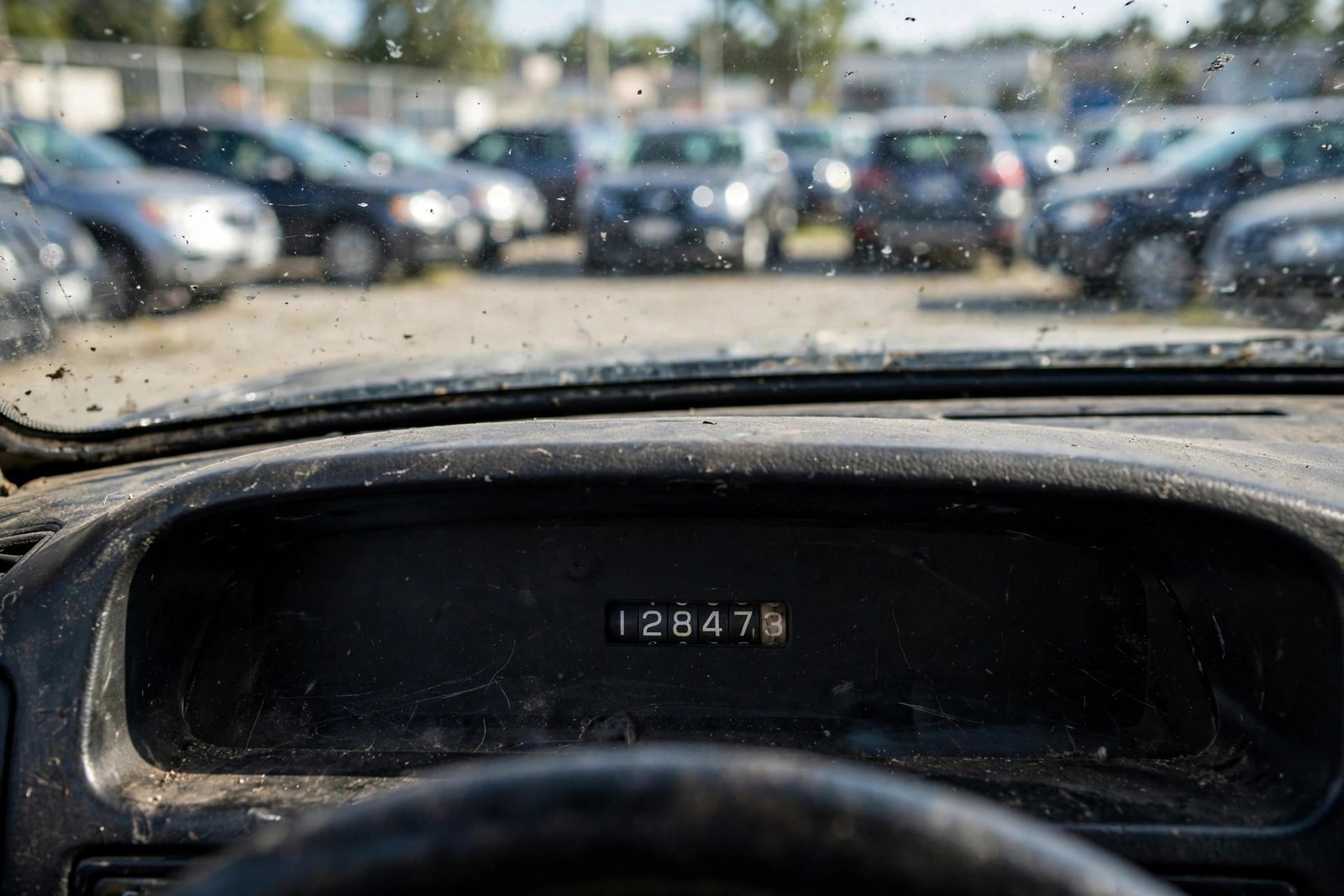
Walk away from: odometer discrepancies (check the history report — rolled-back odometers are still a scam), mileage wildly inconsistent with wear (a 40,000-mile car with a worn-through driver’s seat is lying), salvage or flood history, and sellers who refuse independent inspections. Be wary of the “little old lady” car with 20,000 miles that sat in a garage for a decade — budget immediately for tires, battery, all fluids, belts, and hoses, which can total $2,000+ before you drive it anywhere.
Also watch for the just-over-the-milestone car: a car at 102,000 miles whose timing belt was due at 100,000 and was never done is a $1,000 bill waiting for you. Price that in. Conversely, a car just under a major service milestone with the service already completed is a genuine find — the seller paid for maintenance you will benefit from.
The Answer: 30,000–70,000 Miles, With Records
For most buyers, the best mileage to buy a used car at is 30,000 to 70,000 miles on a 3- to 5-year-old car with complete service records. You get modern safety tech, remaining warranty coverage, the steepest depreciation behind you, and the major maintenance milestones still ahead — but verify they are ahead, not overdue. Stretch to 100,000 miles for maximum value if the records are impeccable and a mechanic blesses it. Below 20,000 miles on an older car, budget for age-related recommissioning. Above 120,000 miles, buy on condition and price, not hope.
The mileage number is a starting point for questions, not an answer. The real questions: was it maintained, how was it driven, what is due next, and does the price reflect all three? Answer those, and the odometer becomes what it should be — one data point among many. Pair the purchase with ongoing strategies to keep car costs down, and a smart used-car buy keeps paying you back for years.
Conclusion
The best mileage for a used car is not the lowest — it is 30,000 to 70,000 miles on a 3- to 5-year-old car with full service records, where depreciation has done its worst and reliability is still near its best. Value hunters can stretch to 100,000 miles with impeccable history; bargain hunters going higher should buy on inspection, not optimism. Shop the maintenance records first and the odometer second, and you will buy someone else’s well-kept car instead of someone else’s problems.
Frequently Asked Questions
Is 100,000 miles too much for a used car?
Not for a well-maintained modern car from a reliable brand — many easily reach 200,000 miles. At 100,000 miles, verify the timing belt, transmission service, and suspension have been addressed, and price the car accordingly.
Are low-mileage older cars a good deal?
Sometimes, but budget for age-related maintenance: tires, battery, belts, hoses, and all fluids degrade with time. A 10-year-old car with 30,000 miles often needs $1,500–$2,500 in recommissioning before it is roadworthy.
Do highway miles really matter less than city miles?
Yes, significantly. Highway driving means steady speeds, fewer cold starts, and less brake and transmission wear. A highway-driven car with 120,000 miles can outlast a city-driven car with 80,000 miles.
What mileage should I avoid when buying used?
There is no magic bad number, but be extra cautious above 150,000 miles (major component risk rises), below 5,000 miles per year of age (sitting damage), and right after major service milestones if the service was skipped.
How important are service records versus mileage?
More important. A high-mileage car with complete dealer service records is a safer buy than a low-mileage car with no history. Records prove maintenance happened; low miles only prove the car was not driven much.