There’s nothing sadder than a $20 bag of great coffee tasting flat and lifeless two weeks later. Coffee starts going stale the second it’s roasted, and opening the bag speeds everything up. But here’s the good news: keeping coffee fresh after opening is mostly about avoiding a few common mistakes, not buying expensive gadgets.
Why Coffee Goes Stale So Fast
Roasted coffee has four enemies: air, moisture, heat, and light. Oxygen is the big one — it oxidizes the aromatic compounds that make coffee taste like coffee. Within a week or two of opening, those volatile aromatics have largely escaped, and you’re left with something brown and bitter that only vaguely remembers being delicious.
Whole beans hold up much better than pre-ground, because grinding multiplies the surface area exposed to air. If you’re serious about freshness, grinding right before brewing is the single biggest upgrade you can make — bigger than any storage trick.
How to Keep Coffee Fresh After Opening: The Rules
1. Use an airtight, opaque container
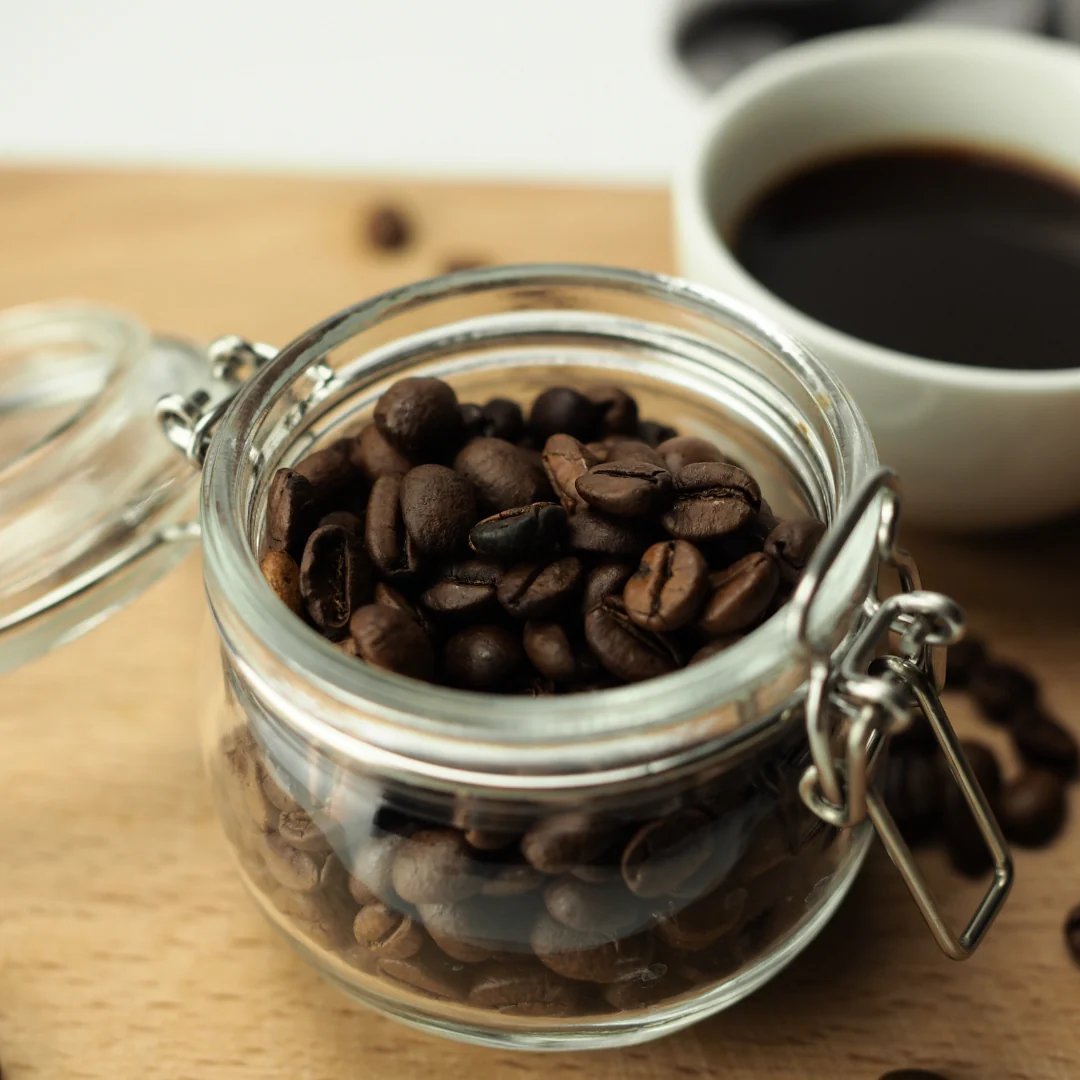
Squeeze the air out of the bag, seal it tight, and that’s… okay. Better: transfer the beans to an airtight container with a one-way valve (the valve lets CO2 escape without letting oxygen in). Opaque matters — light degrades coffee, so skip the clear glass jar on the sunny counter. Stainless steel or ceramic canisters work great.
2. Keep it cool and dark — but NOT the fridge
A pantry or cabinet away from the stove is ideal. The fridge is one of the worst places for coffee: it’s humid, and coffee absorbs moisture and odors like a sponge. Your beans will come out tasting faintly of last night’s leftovers. Nobody wants garlic-adjacent espresso.
3. Buy smaller bags more often
This is the advice nobody wants to hear, but it’s the most effective. A 12-ounce bag you finish in two weeks will always taste better than a 2-pound bag you’re still working through in month two. Freshness is a supply-chain problem as much as a storage problem.
4. Only grind what you need
Ground coffee goes stale in days, not weeks. If you buy pre-ground, you’re already on the clock. A decent burr grinder costs less than two months of fancy coffee shop visits and transforms your morning cup.
The Freezer Debate: Myth or Legit?
You’ve probably heard conflicting advice about freezing coffee. Here’s the real story: the freezer works only if you do it right. Divide beans into single-week portions in truly airtight bags, squeeze out all the air, and freeze once. Never take the bag in and out — the condensation from repeated thawing ruins the beans faster than room-temperature storage would.
For most people drinking a bag within 2 to 3 weeks, the freezer is unnecessary hassle. It’s really a tool for people who buy in bulk or stock up on a favorite seasonal roast. Done properly, frozen coffee stays good for up to 3 months. The National Coffee Association’s storage guidance backs this up: airtight, cool, dark, and dry.
How to Tell If Your Coffee Is Stale
- The bloom test: pour hot water over fresh grounds and they puff up and bubble (that’s CO2 escaping). Stale grounds just sit there, flat and sad.
- The smell: fresh coffee smells rich and complex. Stale coffee smells like… brown. Flat, papery, dull.
- The taste: stale coffee is bitter without sweetness, thin-bodied, and leaves a dry, ashy aftertaste.
Stale beans aren’t unsafe — they won’t make you sick. They just won’t make you happy either. Repurpose them: stale coffee is fantastic for iced coffee at home, where milk, ice, and sweetness mask the lost aromatics, or grind them for a chocolate cake or coffee rub.
What About Those Fancy Vacuum Canisters?
They help, marginally. A vacuum-sealed canister removes some air, which slows oxidation. But the valve-bag or a good airtight container gets you 90% of the benefit. I’ve tested both side by side, and honestly the difference after two weeks was subtle. Spend the money on better beans or a grinder instead — those make a far bigger difference in the cup.
Speaking of gear, if you’re wondering which purchases are actually worth it, check out the kitchen gadgets actually worth buying — a good grinder made my cut.
The Takeaway
To keep coffee fresh after opening the bag: seal it airtight, store it cool and dark (not the fridge), grind only what you brew, and buy amounts you’ll finish in two weeks. Do those four things and your coffee will taste dramatically better — no freezer acrobatics or expensive canisters required.
Best Containers for Coffee Storage
You don’t need anything fancy, but the right container helps. Here’s what actually works, ranked by how much I like them:
- Valve bags the coffee came in: honestly fine. Squeeze out air, roll the top tight, clip it shut. Free and effective for the 2-week window.
- Airtight stainless canisters: my daily driver. Opaque, airtight, easy to open one-handed before coffee. The coffee stays fresh and the kitchen looks tidy.
- Ceramic canisters with silicone seals: same idea, prettier on the counter. Just make sure the seal is genuinely airtight — some decorative ones aren’t.
- Vacuum canisters: a small but real improvement for longer storage. Worth it if you buy bigger bags.
Skip anything clear unless it lives inside a dark cabinet. And whatever you choose, keep it away from the stove — heat cycling is rough on beans.
Coffee Freshness FAQ
How long does coffee stay fresh after opening? Whole beans: about 2 to 3 weeks at peak, drinkable for a month. Pre-ground: more like 1 to 2 weeks before it’s noticeably flat. These are taste guidelines, not safety dates — old coffee won’t hurt you.
Should I store coffee in the fridge? No. The fridge is humid and full of odors, and coffee absorbs both. Room temperature in a dark cabinet beats the fridge every time.
Does freezing coffee ruin it? Only if you do it wrong — repeated freeze-thaw cycles with condensation are the killer. Freeze once in airtight, single-use portions and it’s genuinely effective for up to 3 months.
Are coffee pods fresher than bagged coffee? Pods are nitrogen-flushed and sealed, so they’re stable for months — but the coffee inside was ground long ago. A freshly opened bag of whole beans, ground at home, tastes better than any pod in my experience.