Let’s be honest about front yards: most of us want the “nice house” look without spending every Saturday maintaining it. Life’s too short for fussy flower beds and lawns that demand constant attention. Low-maintenance landscaping isn’t about having an ugly yard — it’s about designing smart once so the yard mostly takes care of itself. Here are the best low-maintenance landscaping ideas for a front yard that looks intentional and polished with minimal ongoing work.
Start With the Right Philosophy: Less Lawn, More Structure
The highest-maintenance part of almost every front yard is the lawn itself — mowing, watering, fertilizing, weeding, reseeding. The single most impactful low-maintenance move is shrinking the lawn. Replace portions with planting beds, gravel areas, or groundcover. You don’t have to eliminate grass entirely (though some do); even cutting the lawn area in half cuts the work in half.
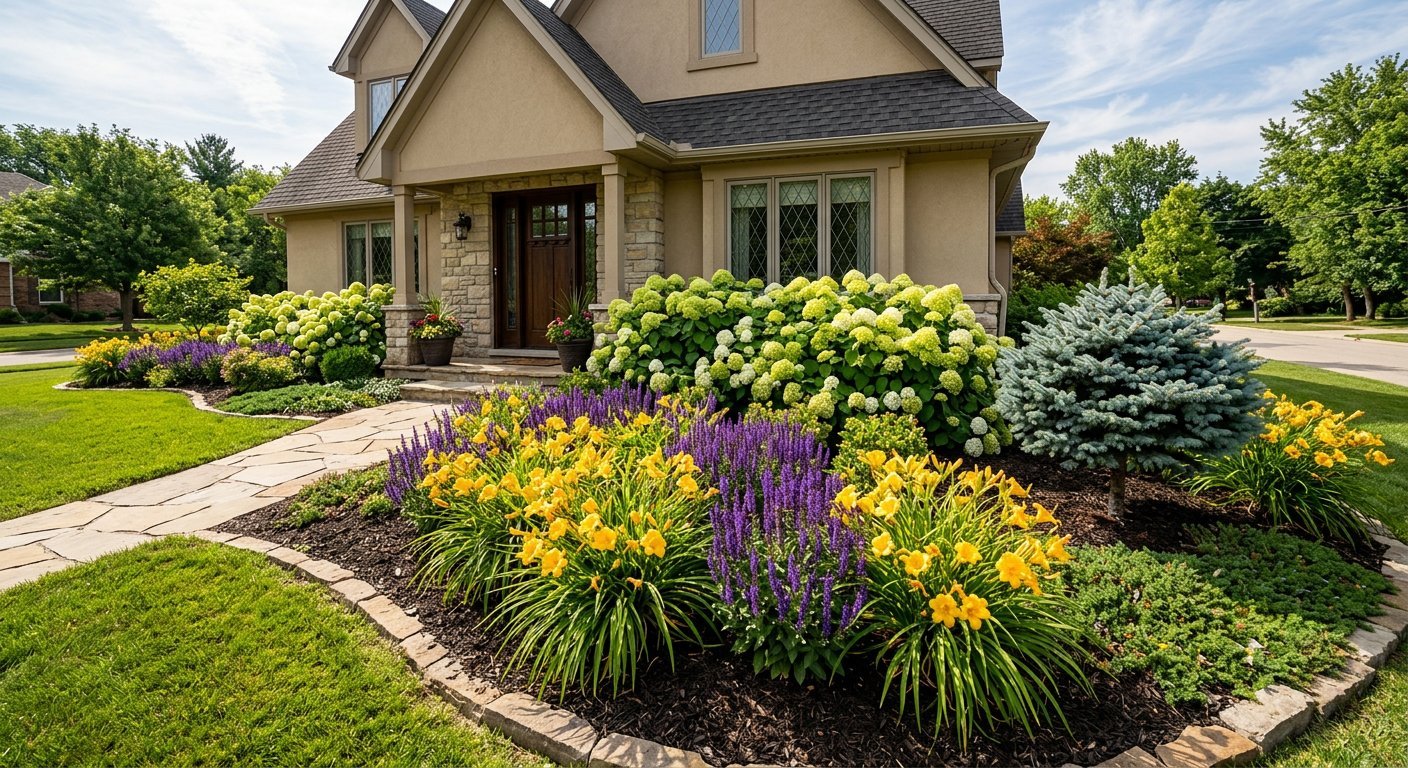
Design principle: structure first, plants second. Hardscape elements — a defined bed edge, a stone path, a couple of boulders, a simple fence section — make a yard look designed even with minimal plantings. A yard with good bones and simple plants beats a yard with great plants and no structure every time.
The Best Low-Maintenance Plants (By Job)
The golden rule: choose plants native to your region or proven adapted to it. Natives evolved for your exact rainfall, soil, and pests — they thrive on neglect in a way exotic ornamentals never will. Your local cooperative extension (find yours via USDA Cooperative Extension) gives free region-specific plant lists.
- Foundation shrubs: Dwarf varieties of boxwood, holly, juniper, or native equivalents. Buy the mature size you want — “dwarf” on the tag means less pruning forever.
- Perennials that return yearly: Coneflower, black-eyed Susan, daylilies, hostas (shade), lavender (sun, well-drained). Plant once, enjoy for years, divide occasionally.
- Ornamental grasses: Muhly grass, fountain grass, switchgrass. One annual haircut in late winter, gorgeous the other 11 months.
- Groundcovers instead of mulch deserts: Creeping juniper, mondo grass, native sedges. They suppress weeds and never need remulching.
- Trees: One well-chosen small ornamental tree (dogwood, redbud, crape myrtle depending on zone) anchors the whole yard. Avoid messy species near walkways and driveways.
What to avoid: roses (unless you’re a rose person — they demand it), annual flower beds (replanting every season is the opposite of low-maintenance), invasive species (they create work forever), and anything rated for a different hardiness zone than yours.
Mulch Right (It’s Not Optional)
A 3–4 inch layer of mulch in all beds is the hardest-working element in low-maintenance landscaping: suppresses weeds, retains moisture, regulates soil temperature, and looks tidy. Shredded bark or wood chips are standard; stone mulch lasts essentially forever but heats up soil and is miserable to plant through later. Refresh wood mulch every 2–3 years — or better, transition beds to groundcover over time and skip remulching entirely.
Weed barrier fabric: controversial. It works under stone mulch but eventually clogs and fails under wood mulch as organic matter accumulates on top. Most landscape pros now skip it under organic mulch.
Hardscape Ideas That Cut Maintenance
- Defined bed edges — steel, stone, or brick edging keeps grass out of beds and beds out of grass. The #1 tidiness upgrade.
- Gravel or decomposed granite areas — for side yards, parking strips, and under trees where grass struggles anyway
- A simple path — stepping stones or pavers from driveway to door; looks intentional, reduces worn grass
- Drip irrigation on a timer — the “set and forget” watering solution. A basic kit costs $50–$150 and uses far less water than sprinklers. Your plants get consistent moisture; you get your weekends back.
- Rain garden in a low spot — turns a drainage problem into a native-plant feature
The 80/20 Maintenance Schedule
Even low-maintenance isn’t no-maintenance. The minimal annual routine:
- Spring: Cut back ornamental grasses and dead perennial foliage, refresh mulch where thin, check irrigation
- Monthly (growing season): 15-minute weed patrol — pull small weeds before they establish; it’s 10x easier than quarterly battles
- Fall: Leaf cleanup (or mulch-mow leaves into the lawn — free fertilizer), cut back what’s done
- As needed: Prune shrubs once yearly to maintain shape — with dwarf varieties, this is minor
That’s genuinely it. Maybe 10–15 hours a year total for a typical front yard.
Tie It to Curb Appeal
Low-maintenance and beautiful aren’t opposites — some of the best-looking yards are the simplest. A defined edge, fresh mulch, three well-chosen shrubs, ornamental grasses, and a small tree read as “designed” to every passerby and buyer. If selling is on your horizon, our guides to cheap curb appeal upgrades and pre-sale home upgrades build on exactly these ideas.
Dealing With Problem Spots
Every yard has that one area where nothing grows — the strip between sidewalk and street, the deep shade under a big tree, the soggy low corner. Low-maintenance landscaping means working with these spots, not fighting them. Hellstrip (sidewalk-to-street): hot, dry, trampled — plant tough native grasses, sedum, or creeping thyme; or gravel it entirely with a few boulders. Stop trying to grow lawn there; it will never thrive.
Deep shade: hostas, ferns, astilbe, and native woodland groundcovers. Mulch heavily. Accept that shade gardens are about texture and foliage, not flowers — and they’re beautiful on those terms. Soggy spots: rain garden with native wetland plants (iris, Joe Pye weed, switchgrass) — turns a drainage failure into a feature that also helps with stormwater.
Slopes: terracing is expensive; instead plant deep-rooted groundcovers and shrubs that hold soil (creeping juniper, native grasses). Never leave slopes bare — erosion is fast and ugly. A $50 flat of groundcover plugs solves a slope problem permanently.
The Bottom Line
The best low-maintenance landscaping for a front yard: shrink the lawn, build structure with edging and paths, plant region-appropriate natives and dwarf shrubs, mulch deeply, and put irrigation on a timer. Design it right once, then spend your Saturdays doing literally anything else. The yard will look better than the neighbor’s high-maintenance flower beds — and you’ll never be a slave to it.