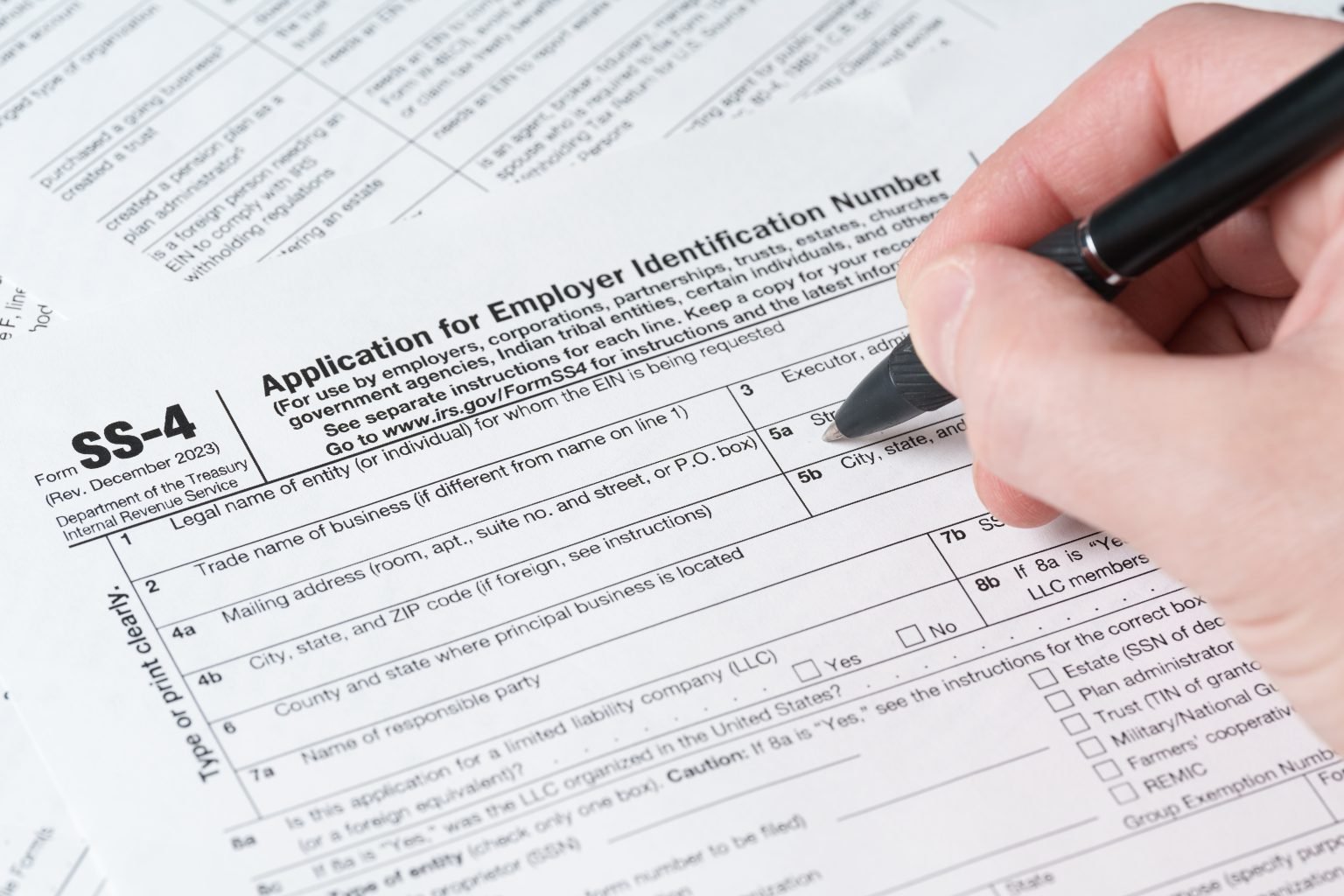
An EIN (Employer Identification Number) is a free nine-digit tax ID the IRS issues to businesses — essentially a Social Security number for your company. Does your small business need one? Legally required if you have employees, operate as a corporation/partnership, or file certain tax returns — but smart to get even when optional, because it keeps your SSN private and opens up business banking.
It takes 10 minutes, it’s free, and there’s no reason not to. Here’s the complete guide.
What an EIN Actually Does
- Tax identification: the IRS tracks your business’s tax obligations (payroll taxes, business returns) under the EIN instead of your SSN.
- Privacy shield: every W-9 you hand a client, every vendor form, every business account — with an EIN, your SSN stays private. Given how often business forms get emailed around, this alone justifies it.
- Banking key: business bank accounts for LLCs/corporations require an EIN. (Sole props can sometimes use SSN — don’t.)
- Hiring prerequisite: can’t run payroll or file employment taxes without one.
- Credibility signal: “EIN: 12-3456789” on a W-9 looks like a business; a handwritten SSN looks like a hobby. Clients notice.
- What it doesn’t do: it’s not a business license, doesn’t create liability protection, and doesn’t register you with the state. It’s purely a federal tax ID.
Do YOU Need One? (the 5 Triggers)
Legally required if any apply:
- 1. You have (or will hire) employees — including household employees in some cases. Non-negotiable.
- 2. You operate as a corporation, partnership, or multi-member LLC — entities need their own tax ID, period.
- 3. You file employment, excise, or alcohol/tobacco/firearms tax returns — specialty, but absolute.
- 4. You have a Solo 401(k)/Keogh retirement plan — the plan needs its own EIN (separate from your business EIN).
- 5. You withhold taxes on income paid to non-resident aliens — niche, but real.
Single-member LLC, no employees? Not legally required (you can use your SSN as a “disregarded entity”) — but get one anyway: free, 10 minutes, privacy + banking + professionalism. There’s literally no downside.
Sole proprietor, no employees? Optional — but the SSN-privacy argument applies doubly, since you’re handing your personal SSN to every client on W-9s. Get it.
How to Get One (10 Minutes, Free, Right Now)
- Go to irs.gov → search “apply for EIN” → use the online application (not a third-party site). Available Mon-Fri, 7am-10pm Eastern.
- Answer ~15 questions: entity type, reason for applying, responsible party (must be a real person with SSN/ITIN), business address.
- Get the EIN immediately — issued on-screen at completion, with a confirmation letter (CP 575) to save.
- Cost: $0. Anyone charging for EIN filing ($50-$150 “services”) is selling a free government form. The IRS warns about these explicitly.
- One EIN per responsible party per day — the main limit. And one EIN per entity — don’t get multiples “just in case.”
- Lost your EIN? Check old tax returns, bank documents, or call the IRS Business & Specialty Tax line (800-829-4933). Don’t apply for a second one.
- International founders: no SSN? Apply by fax/mail with Form SS-4, or call the IRS international line. Slower (4-6 weeks by mail), but works.
EIN Mistakes to Avoid
- Paying for it. Said three times now because people keep doing it. IRS.gov. Free. Ten minutes.
- Getting one before forming the entity: the EIN application asks for entity type — form the LLC first, then get the EIN in the LLC’s name. (Fixable later, but messy.)
- Using the wrong responsible party: must be a real individual, not another company. Using a nominee or fake party is fraud.
- Getting multiple EINs: one entity, one EIN. Duplicates create tax-record chaos that’s painful to unwind.
- Thinking the EIN = registration: it doesn’t register your business with the state, create liability protection, or satisfy licensing. It’s one piece — licenses, formation, and insurance are separate steps.
- Not saving the confirmation letter: the CP 575 is occasionally required by banks and agencies. Save the PDF where you’ll find it (with your formation documents).
What to Do With It (First Week)
- Open the business bank account — EIN + formation documents + ID. Separation from day one.
- Put it on your W-9 — download the blank W-9 from irs.gov, fill with EIN, keep a signed PDF ready to send clients. (Never email your SSN again.)
- Register for state tax accounts — payroll withholding, unemployment insurance, sales tax — all reference the EIN.
- Apply for business credit — the EIN anchors your business credit file (DUNS, tradelines).
- Give it to your CPA/bookkeeper — they’ll need it for filings, and having it ready signals you’re organized (which gets you better service).
The EIN is the closest thing to a free lunch in business administration: 10 minutes, zero cost, permanent benefits in privacy, banking, and professionalism. If you’ve read this far without one, open irs.gov in the next tab and get it done — future you will wonder why you waited. The IRS EIN application page is the only link you need.
Keep Reading
If this was useful, you might also like LLC formation and business credit file.
The Bottom Line
An EIN is your business’s free federal tax ID. Required with employees, corporations/partnerships, or multi-member LLCs — smart for everyone else (SSN privacy, banking, professionalism). Get it at irs.gov in 10 minutes, free — never pay a middleman. Then: open the business bank account, put it on your W-9, register state tax accounts, and anchor your business credit file. No downside, permanent upside.
Frequently Asked Questions
Is an EIN the same as a tax ID?
An EIN is a type of tax ID — the federal one for businesses. ‘Tax ID’ can also mean state tax IDs (separate, from your state) or SSN/ITIN for individuals. When businesses say ‘tax ID,’ they usually mean EIN.
Can I use my EIN instead of my SSN?
For business purposes: yes — W-9s, business banking, vendor forms, business credit. For personal purposes (personal taxes, personal banking, employment): no, those still need your SSN. Keep the two worlds separate.
Do I need a new EIN if I change my business structure?
Usually yes — converting sole prop to LLC, or LLC to corporation, generally requires a new EIN (it’s a new tax entity). Changing just the business name typically doesn’t. The IRS has a clear chart; when in doubt, ask your CPA before applying.