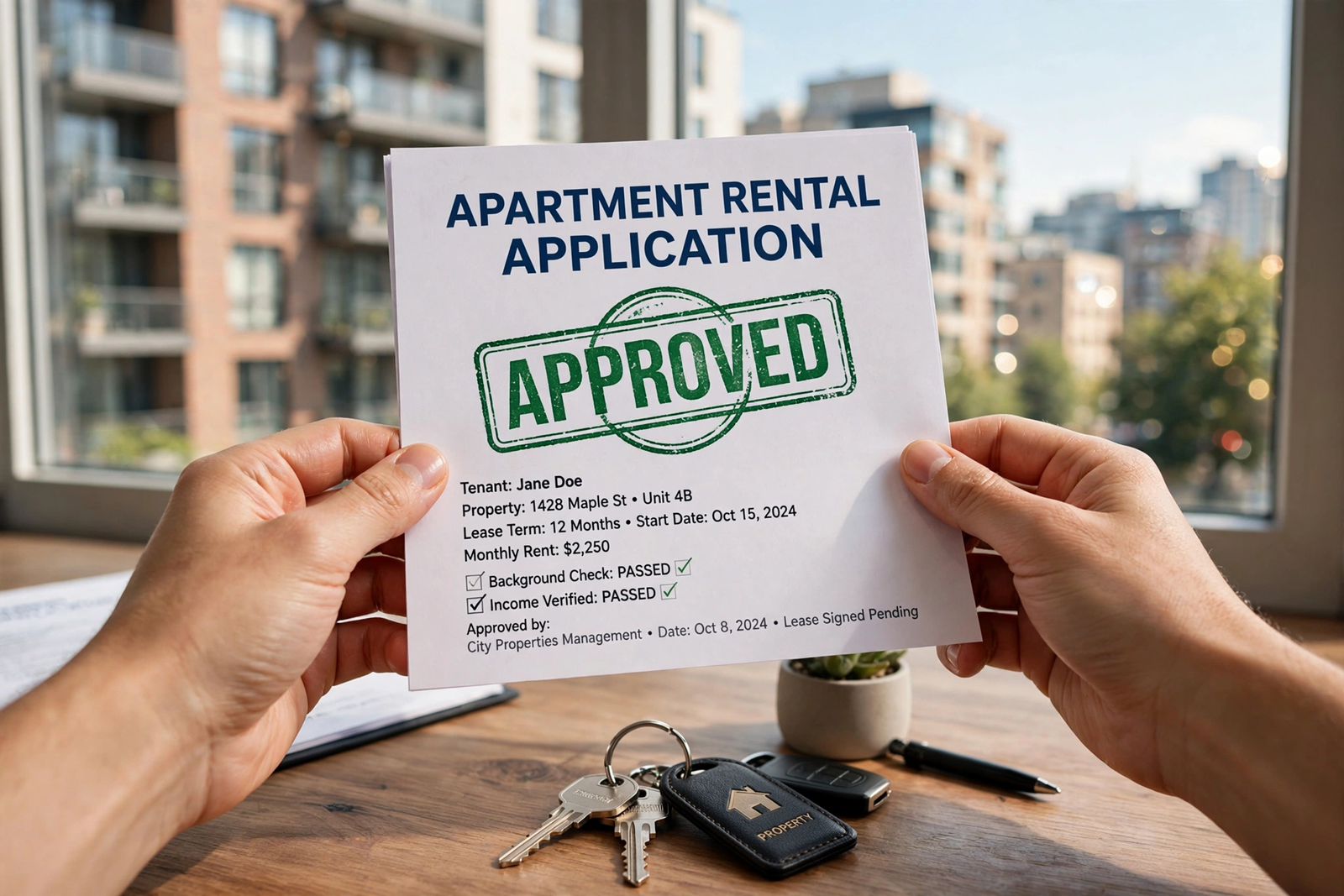
Quick answer: Apartment approval typically takes 24 to 72 hours (1-3 business days). Large property management companies with automated screening often approve within hours, while smaller landlords doing manual checks may take up to a week. Having all your documents ready, good credit, and income of 3x the rent speeds things up considerably.
You found the perfect apartment, toured it, and submitted your application. Now comes the anxious wait. Understanding what happens during the approval process, and what can slow it down, helps you plan your move and avoid losing the unit to a faster applicant.
What Happens During Apartment Approval
Once you submit your application and fee (typically $30-$75), the landlord or property manager verifies:
- Credit check: They pull your credit report and score. Most landlords look for 620+ for standard apartments; luxury buildings often want 670-700+. They check for bankruptcies, collections, and late payments.
- Income verification: Pay stubs, offer letters, or bank statements proving you earn roughly 3x the monthly rent. Self-employed applicants may need tax returns.
- Rental history: Calls or reports to previous landlords confirming on-time payments, lease compliance, and no evictions.
- Background check: Criminal history and eviction records. Note that HUD guidance limits how criminal records can be used in housing decisions.
- Employment verification: Some managers call your employer to confirm you actually work there.
Approval Timelines by Landlord Type
| Landlord Type | Typical Approval Time |
|---|---|
| Large corporate complex (automated screening) | 2-24 hours |
| Mid-size property manager | 1-3 business days |
| Individual landlord | 3-7 days |
| Luxury / strict buildings (board approval) | 1-4 weeks |
Co-ops and some NYC-style condos with board interviews are the slowest by far; budget a full month. For a standard rental, if you have not heard back after 3 business days, a polite follow-up is appropriate.
5 Things That Delay Approval
- Incomplete application: Missing pay stubs, unsigned forms, or unresponsive references stall everything. Submit a complete package the first time.
- Unresponsive previous landlords: If your old landlord does not return verification calls, managers may wait days or ask you for alternative proof.
- Credit freezes: If you froze your credit (smart for security), temporarily lift the freeze for the screening company or approval cannot proceed.
- Self-employment or gig income: Non-traditional income takes longer to verify. Bring 2 years of tax returns and 3-6 months of bank statements.
- Multiple applicants: During peak season, managers process applications in batches. Yours may queue behind others.
How to Get Approved Faster
- Prepare a renter’s packet in advance: Photo ID, 2-3 recent pay stubs, bank statements, previous landlord contact info, and references in one PDF.
- Know your credit score before applying. If it is below 620, consider offering a larger deposit or a qualified cosigner upfront rather than waiting for a rejection.
- Apply early in the day so verification calls happen during business hours.
- Respond immediately to any follow-up requests from the leasing office.
- Be honest. Discrepancies between your application and verification results cause delays or denials.
If you are still in the search phase, knowing how long do apartment tours take“>how long apartment tours take helps you schedule efficiently.
What If You Are Denied?
Landlords must give you an adverse action notice explaining the denial and which reporting agency supplied the information, per the Fair Credit Reporting Act. You are entitled to a free copy of the report. Common denial reasons and fixes:
- Low credit: Offer a larger security deposit (where legal), prepay several months’ rent, or add a cosigner.
- Insufficient income: Show additional income sources, savings, or get a roommate to combine incomes.
- Eviction history: Provide context in a cover letter, show years of clean history since, and offer extra deposit.
- Criminal record: You can request individualized assessment; blanket bans may violate fair housing guidance.
Application fees are generally non-refundable, so pre-screen yourself before paying: ask the landlord their minimum criteria before applying.
After Approval: Next Steps
Once approved, you typically have 24-72 hours to sign the lease and pay the security deposit plus first month’s rent, or the unit goes to the next applicant. Read the lease carefully before signing, especially the clauses on how much is to break a lease“>breaking the lease early, notice periods, and fee schedules. Never sign under pressure without reading.
FAQs
Can I apply to multiple apartments at once?
Yes, and in competitive markets you should. Just remember each application costs $30-$75 in non-refundable fees, and multiple hard inquiries in a short window can slightly ding your credit (though scoring models typically count clustered housing inquiries as one).
Do apartments check credit for all applicants?
Nearly all professional managers do. Some individual landlords skip it, but expect a credit check as the default. Roommates and cosigners are usually screened too.
What credit score do I need for an apartment?
620 is the common minimum for standard apartments, 670+ for nicer buildings. Below 600, expect to need a cosigner, larger deposit, or prepaid rent. There is no universal legal minimum; each landlord sets their own criteria.
Can a landlord deny me for no reason?
In most states, private landlords can choose among qualified applicants for any non-discriminatory reason. They cannot deny you based on protected characteristics under fair housing law. If you suspect discrimination, contact HUD or your local fair housing organization.
How long is an approval good for?
Typically 30 days. If you do not sign a lease within that window, you may need to reapply (and repay the fee) since your credit and background data goes stale.
Should I put down a holding deposit before approval?
Be cautious. Legitimate holding deposits are applied to your move-in costs if approved and refunded if denied, but scams exist. Never wire money or pay cash before seeing the unit in person and verifying the landlord’s identity.