There is a special kind of stress that hits around mile 200 of a road trip: a strange vibration you did not notice in the driveway, a tire pressure light glowing on a deserted highway, a phone at 4 percent with the next charger 60 miles away. Nearly every roadside breakdown is preventable with a single focused afternoon of preparation. Here is how to get your car genuinely road-trip ready — mechanically, legally, and practically.
Two Weeks Out: The Mechanical Inspection
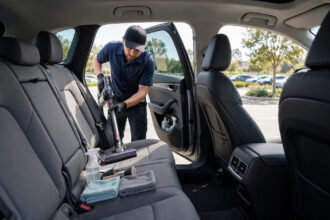
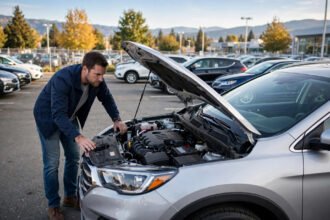
Start with a full inspection at least two weeks before departure, not the night before — you need time to fix what you find. Check all fluid levels: engine oil, coolant, brake fluid, power steering fluid, and washer fluid. If an oil change is due within 1,000 miles of your trip’s total distance, do it now. Inspect belts and hoses for cracks, fraying, or soft spots; a $30 belt is a $300 tow when it snaps in the desert.
Test the battery, especially if it is over three years old — heat and vibration kill weak batteries on long drives. Check the brakes: listen for grinding, feel for pulsing, and look at pad thickness if you can. Verify that all lights work, including the often-forgotten license plate light and third brake light. If your state inspection or registration expires during the trip, renew before you leave; getting pulled over in another state for expired tags is an avoidable headache. The AAA road-trip vehicle checklist covers this pre-trip inspection in printable form.
Tires: Your Most Important Safety System
Tires deserve their own section because they are the only part of your car that touches the road. Check pressure in all four tires plus the spare when cold, inflating to the door-jamb placard — long highway miles on underinflated tires build heat and risk blowouts. Measure tread depth; anything below 4/32 inch should be replaced before a long trip, and below 2/32 is legally bald in most states.
Inspect the spare tire, which most drivers forget exists until they need it. Is it inflated? Is the jack present and functional? Do you actually know where they are and how to use them? A shocking number of drivers have never changed a tire — practice once in your driveway rather than learning on a highway shoulder at midnight. If your car has no spare (increasingly common), confirm you have an inflator kit and that the sealant is not expired, and save roadside assistance numbers in your phone before you lose signal.
One Week Out: Documents, Coverage, and Route
Gather your documents: driver’s license, registration, proof of insurance, and roadside assistance membership details. Photograph all of them and store the photos in your phone and in cloud storage — if your wallet is stolen 800 miles from home, digital copies get you moving again. Confirm your insurance covers you in every state on your route (it does, for standard U.S. policies) and consider whether your liability limits are adequate for a long trip through unfamiliar territory.
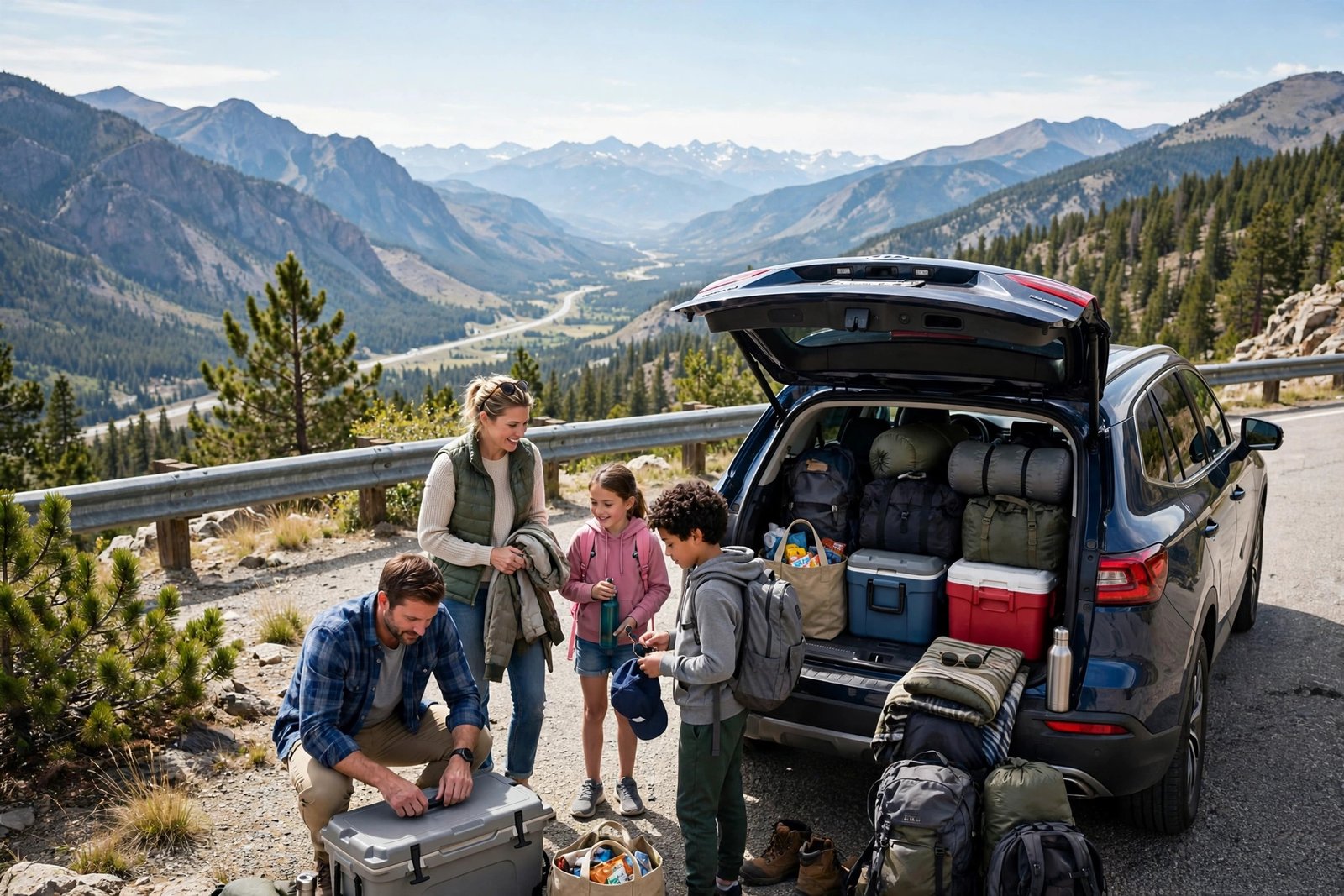
Plan the route with charging or fuel stops mapped, not assumed. For gas cars this is trivial; for EVs it is the whole trip — identify working fast chargers with backup options, since a single broken charger can strand you. Download offline maps for rural stretches. Share your itinerary and check-in schedule with someone at home. And pack smart: a well-organized car is a safer, calmer car, so review what to pack for a two-week road trip across the US before you start throwing bags in the trunk.
The Emergency Kit: What Actually Goes Wrong
Build your kit around the failures that actually happen: flat tires, dead batteries, overheating, and getting stuck. Pack jumper cables or a portable jump starter, a tire inflator and plug kit, a gallon of coolant, a quart of oil, a basic tool set, duct tape, zip ties, and work gloves. Add a flashlight with spare batteries, reflective triangles or flares, a first-aid kit, bottled water, non-perishable snacks, blankets, and a phone charger that works from the car’s 12-volt outlet.
Snacks deserve more thought than people give them — hunger makes drivers irritable and impulsive, and gas-station food gets old by day two. Stock up on things that survive a hot car: nuts, jerky, granola bars, dried fruit. The best road-trip snacks that actually stay fresh make the difference between a pleasant drive and a hangry meltdown at mile 400. Add a small trash bag, paper towels, and hand wipes — the unglamorous supplies you will use constantly.
Comfort and Entertainment: The Human Factors
Driver fatigue causes an enormous share of highway crashes — the NHTSA drowsy-driving data attributes tens of thousands of crashes a year to tired drivers. Plan stops every two hours or 100 miles, whichever comes first. Switch drivers if you can. Never push through heavy eyelids; a 20-minute nap at a rest stop beats white-knuckling another hour.
Entertainment is safety equipment on long drives: a bored driver is a distracted driver. Download playlists, podcasts, and audiobooks before you leave — rural dead zones will eat your streaming. A great road-trip playlist everyone in the car enjoys prevents the back-seat DJ wars that distract the driver. Bring charging cables for every device, a car mount for navigation, and sunglasses for everyone — glare fatigue is real on long western highways.
Kids, Pets, and Special Passengers
Traveling with kids multiplies the planning. Pack a dedicated “kid kit” within arm’s reach: snacks, water, wipes, a change of clothes, favorite comfort items, and layered entertainment (coloring, audiobooks, tablets with downloaded content). Plan stops at playgrounds, not just gas stations — twenty minutes of running around buys two hours of calm. Keep car seats correctly installed and check the fit if the child has grown since the last long trip.
Pets need their own prep: a health certificate if crossing state lines or flying partway, vaccination records, a leash, waste bags, food and water bowls, and enough of their regular food for the whole trip — sudden diet changes plus travel stress equal car-sick disasters. Never leave pets in a parked car; interior temperatures can hit lethal levels in minutes even on mild days. Crack windows do not meaningfully help.
The Night Before and Morning Of
Do a final walk-around: check tire pressure once more, confirm all lights, top off washer fluid, and load the car so the driver has clear sightlines — overpacked cars with blocked rear windows are a crash risk. Fill the tank (or charge to your planned level) the night before so departure is just “get in and go.” Set the navigation, queue the first playlist, and put the emergency roadside numbers on the fridge… in your phone’s favorites, rather.
On departure morning, do one last check of the weather along the entire route, not just at home. Mountain passes, desert stretches, and coastal highways can have wildly different conditions on the same day. Adjust departure time to avoid driving into a storm you could have waited out.
Conclusion
Preparing your car for a long road trip is a two-week project compressed into one focused effort: inspect the mechanics early, obsess over tires, organize documents and route, pack a real emergency kit, and plan for human needs — food, rest, entertainment. Do this, and the strange vibration at mile 200 becomes a story instead of a crisis. The open road rewards the prepared and punishes the hopeful.
Frequently Asked Questions
How far in advance should I get my car serviced before a road trip?
At least two weeks. That leaves time to order parts and complete any repairs the inspection uncovers. A service appointment the day before departure leaves no margin for surprises.
What should I do if my car breaks down far from home?
Get fully off the road, turn on hazards, and set out reflective triangles. Call roadside assistance rather than attempting roadside repairs beyond a tire change. Stay with the vehicle unless it is unsafe — it is easier for help to find a car than a person.
Is it better to drive at night or during the day on long trips?
Day driving is safer: better visibility, open services, and your body is wired to be alert. Night driving means less traffic but far higher fatigue and animal-collision risk. If you must drive at night, keep it short and take breaks.
How often should I stop on a long drive?
Every two hours or 100 miles. Get out, walk around, hydrate. Stops feel like lost time but prevent the fatigue errors that cause crashes — and they make the trip genuinely enjoyable instead of an endurance test.
Should I bring a spare tire on a road trip?
Yes, if your car has one — and verify it is inflated and the jack works. If your car came with only an inflator kit, check the sealant’s expiration date and save roadside assistance numbers offline before you hit rural areas.