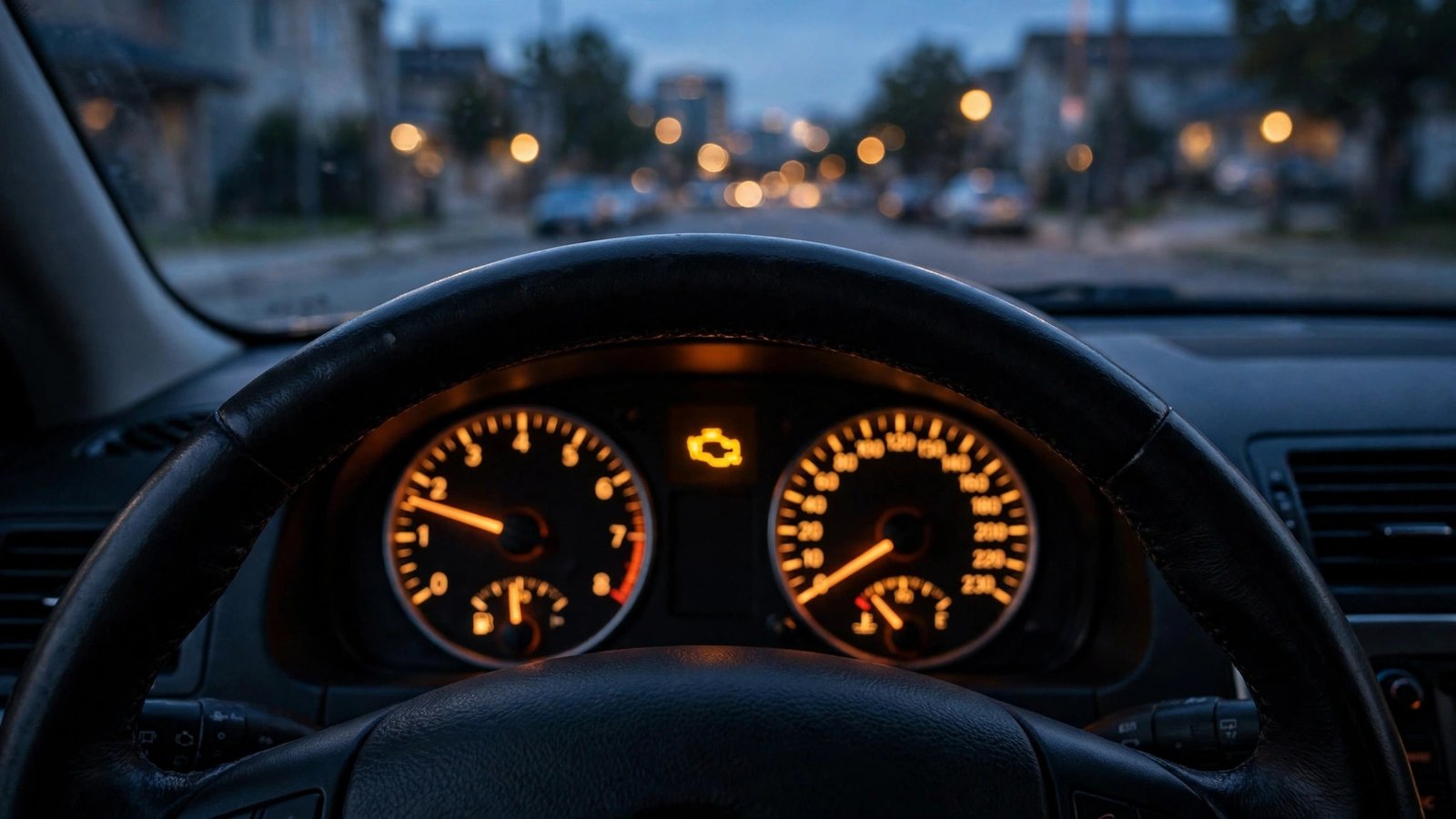
Few dashboard symbols inspire as much anxiety as the check engine light: an ambiguous amber glow that could mean a loose gas cap or a dying catalytic converter. Understanding what it actually signals, how urgently to respond, and how to diagnose it turns panic into a plan. Here is what every driver should know.
What the Light Is Actually Telling You
The check engine light means your car’s onboard diagnostics (OBD-II) detected something outside expected parameters in the engine, emissions, or related systems. It is intentionally vague because hundreds of different faults trigger the same light; the specifics live in diagnostic trouble codes your car stores. A steady light indicates a fault needing attention soon; a flashing light indicates an active misfire that can damage the catalytic converter, requiring you to reduce speed and seek service immediately. Color conventions are consistent globally: amber means caution, red means stop. The light is part of worldwide emissions regulations, which is why its behavior is standardized across markets. Do not ignore it for months; small faults cascade into expensive ones, and driving with certain active faults is illegal in emissions-testing jurisdictions. The NHTSA vehicle safety resources explain dashboard warning standards.
The Most Common Causes, Ranked
Statistically, a handful of culprits cause most check engine lights. The number one trigger is a loose, damaged, or missing gas cap, which breaks the fuel system’s vapor seal; tightening or replacing it often resolves the light within days. Second is a failing oxygen sensor, which regulates fuel mixture; it degrades slowly, hurting mileage long before triggering the light. Third is a worn catalytic converter, expensive but usually preceded by other symptoms. Fourth: mass airflow sensor issues, spark plug or ignition coil failures causing misfires, and evaporative emissions leaks. Thermostat and coolant sensor faults round out the common list. Notice the pattern: most common causes are wear items, not catastrophes. An OBD-II scanner, $20 for a basic Bluetooth model, reads the codes and tells you which system is complaining; auto parts stores in the U.S. often read codes free. Knowing the code transforms the conversation with your mechanic from “something’s wrong” to specific diagnosis.
When It Is Urgent vs. When You Can Wait
Triage correctly. Stop driving and get help if the light flashes, you notice severe performance loss, strange smells, overheating, or smoke; these indicate damage-in-progress. Schedule service soon, within days, for a steady light with normal performance; many faults in this category are emissions-related rather than immediately destructive. Monitor and plan for intermittent lights that come and go, but do not ignore them indefinitely since they indicate real faults. Never continue long trips with a flashing light or major symptoms; the repair bill for a destroyed catalytic converter dwarfs any tow charge. If you are far from home when the light appears, by packing smart for road trips you already prepared for contingencies; now find a reputable shop rather than pushing onward hopefully. And if renting abroad when warnings appear, know your rental car responsibilities before deciding whether to drive or call the agency.
Diagnostic Steps Before the Shop
Do basic triage yourself before paying diagnostic fees. Check the gas cap: tighten it, drive a few cycles, and see if the light clears. Note all symptoms precisely: when the light appeared, driving conditions, sounds, smells, performance changes; this information dramatically speeds professional diagnosis. Read the codes with an OBD-II scanner and research the specific code, not just its generic description, since the same code has different common causes by vehicle. Check obvious items the code suggests: air filter condition, visible hose damage, fluid levels. But know your limits; clearing codes without fixing causes just resets the countdown, and some repairs require professional equipment. The AAA’s car care guidance helps you decide which issues are DIY-appropriate. Arriving at the shop with codes, symptoms, and research makes you an informed customer rather than a captive one.
Typical Repair Costs and Avoiding Rip-Offs
Costs vary enormously by cause, which is why diagnosis matters. Gas cap: under $25. Oxygen sensor: $200 to $400. Mass airflow sensor: $300 to $500. Ignition coils and spark plugs: $200 to $600. Catalytic converter: $1,000 to $2,500-plus, the repair everyone fears. Evaporative system leaks: $200 to $600 depending on location. Get the specific code and a written estimate before authorizing work; reputable shops explain the diagnosis, not just the price. Be wary of shops that recommend replacing multiple expensive parts without pinpointing the fault; ask how they isolated the cause. For older cars, weigh repair costs against vehicle value honestly; a $2,000 converter on a $3,000 car deserves deliberation. Maintain service records, since patterns across visits reveal chronic issues. And address small causes promptly; the oxygen sensor ignored today becomes the catalytic converter destroyed tomorrow.
OBD-II Codes Everyone Should Know
A few diagnostic codes account for a large share of check engine lights, and recognizing them empowers you. P0300-series codes indicate engine misfires, with the last digits identifying the cylinder; P0301 is cylinder one, P0300 is random misfire. P0420 signals catalytic converter efficiency below threshold, often the expensive one. P0171 and P0174 indicate lean fuel mixture, commonly vacuum leaks or mass airflow issues. P0440-series codes point to evaporative emissions leaks, frequently the gas cap. P0128 suggests thermostat problems affecting warm-up. These codes identify systems, not specific parts; P0420 might mean a failing converter, but it can also result from exhaust leaks or sensor issues mimicking converter failure. That distinction is why professional diagnosis matters even when you know the code. Keep a reference of your car’s common codes; patterns across vehicles of the same model are well documented in owner communities.
Emissions Testing and the Check Engine Light
In states with emissions inspections, a lit check engine light means automatic failure, giving the light real legal and financial teeth. More subtly, recently cleared codes also cause failures; inspection systems check readiness monitors, which require specific drive cycles to reset after code clearing. Drivers who clear codes hoping to slip through inspections discover the monitors are not ready and fail anyway. Some try driving the exact cycles to set monitors without fixing faults, but the underlying problem relights the lamp. The honest path is also the practical one: diagnose and repair properly, complete a normal week of driving to set monitors, then test. Beyond compliance, emissions faults waste fuel and pollute; the light is your car asking to run cleanly. Treat inspection deadlines as maintenance deadlines and the whole system works in your favor.
Conclusion
The check engine light means your car’s diagnostics found a fault, most commonly minor issues like gas caps or sensors, occasionally serious ones demanding immediate attention. Learn the steady-versus-flashing distinction, read your own codes with a cheap scanner, triage urgency honestly, and arrive at shops informed. The light is not a mystery or a catastrophe; it is your car asking for attention in the only language it has. Listen early, and the conversation stays cheap.
Frequently Asked Questions
Can I drive with the check engine light on?
With a steady light and normal performance, driving short distances to get service is usually fine. With a flashing light, overheating, or major symptoms, stop driving and get help immediately.
Will the check engine light reset itself?
Sometimes, if the fault was transient like a loose gas cap. But the underlying code remains stored, and persistent faults will relight it. Get the code read rather than hoping.
How much does check engine light diagnosis cost?
Shops typically charge $100 to $200 for diagnosis, often credited toward the repair. Auto parts stores frequently read codes free, and basic scanners cost around $20.
What is the most common check engine light cause?
A loose or faulty gas cap, followed by oxygen sensor failures. Both are inexpensive fixes, which is why basic diagnosis before panicking pays off.