You’ve always wanted to try painting, pottery, drawing — but art classes seem expensive, intimidating, or both. They’re not, necessarily. Finding affordable art classes for beginners nearby is easier than you think, and “beginner” classes are specifically designed for people who can’t draw a straight line. Here’s where to look and what to expect.
Where to Find Affordable Art Classes
- Community centers and parks departments: the #1 source. Most cities run low-cost art classes ($30-80 for multi-week sessions) — painting, pottery, drawing, watercolor. Quality varies but the price is unbeatable, and the vibe is welcoming.
- Community colleges: continuing education / non-credit courses. Slightly more ($100-200), but excellent instruction and real studios (especially for pottery/ceramics, which needs kilns).
- Libraries: many host free art workshops — one-off sessions, all supplies included. Check the events calendar; they’re often unadvertised gems.
- Art supply stores: Blick, Michaels, and local shops host demos and beginner workshops, often free or cheap. They’re selling supplies, so the instruction is genuinely helpful.
- Paint-and-sip studios: the commercial option ($35-50/session) — guided, social, wine included. More entertainment than education, but a perfect zero-pressure first step.
- Meetup.com: search “art” + your city — sketch groups, plein air painting, craft circles. Often free, always welcoming.
- YouTube + community: free instruction (Proko for drawing, for example) paired with a local sketch group for the social part. The $0 art education.
What Beginner Classes Are Actually Like
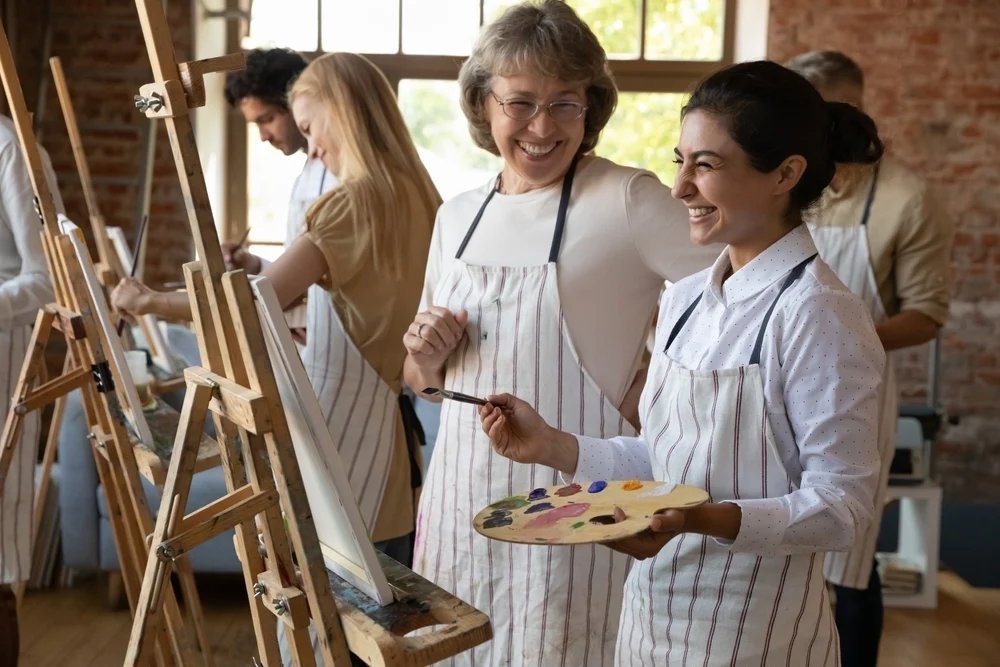
Forget the intimidation: beginner means beginner. Everyone’s bad at first — that’s the premise. A good beginner class:
- Provides or lists affordable supplies (no $200 kit required upfront)
- Teaches fundamentals (color mixing, basic shapes, brush handling) not masterpieces
- Has a supportive, non-competitive atmosphere
- Expects zero prior experience — “I’ve never done this” is the norm, not the exception
The first class is the hardest socially; by week three you have art friends. Most beginners report the same surprise: it’s fun, not stressful, once you start.
Choosing Your Medium
- Acrylic painting: the best beginner medium — cheap, forgiving (paints over mistakes), fast-drying, no fumes. Start here if unsure.
- Watercolor: beautiful, portable, but less forgiving — harder to fix mistakes. Lovely second medium.
- Drawing/pencil: cheapest entry (pencil + paper), fundamental skills that help everything else. Underrated starting point.
- Pottery/ceramics: the most fun per dollar for many — tactile, social, and you make usable things. Needs studio access (kiln), so community college or dedicated studios.
- Digital art: iPad + Procreate + Apple Pencil is a real investment ($500+), but undo buttons make it the most forgiving medium. Great if you’re tech-comfortable.
Keeping Costs Down
- Start with student-grade supplies: the expensive paints matter for advanced work, not beginners. A $20 acrylic set is fine to start.
- Buy used: easels, pottery tools, and frames flood thrift stores and Facebook Marketplace.
- Share studio costs: some studios offer open-studio memberships ($50-100/month) — cheaper than classes once you know basics.
- Library art books: free technique instruction. The library’s art section is a free art school.
- One medium at a time: don’t buy supplies for five crafts. Pick one, go deep, expand later.
Art is also a fantastic way to unwind — creative time is restorative in a way passive entertainment isn’t.
Art Class FAQ
I’m terrible at art. Can I still take a class? That’s literally what beginner classes are for. “Terrible” is the starting line, not a disqualifier. Everyone in the room feels the same way.
How much should I expect to spend? $30-80 for community center multi-week sessions; $35-50 per paint-and-sip; $100-200 for community college courses. Supplies: $20-50 to start. It’s one of the cheaper hobbies.
What if I’m the oldest/youngest in the class? Beginner art classes skew wonderfully mixed-age — 20s through 70s in the same room. It’s part of the charm; nobody cares.
Online vs. in-person? In-person for the social aspect and instructor feedback (worth a lot). Online (Skillshare, Domestika — often $10-15/course on sale) for technique at your own pace. Both work; in-person is more fun.
The Takeaway
Affordable art classes for beginners are everywhere: community centers ($30-80), libraries (free), paint-and-sip studios ($35-50), and Meetup groups (free). Start with acrylics or drawing, buy cheap supplies, and remember — everyone in the beginner class is a beginner. The only bad art class is the one you never take. Sign up this week; your creative self will thank you.
Art as Social Life
One of the underrated benefits of art classes: the community. Beginner classes are full of interesting people trying something new — it’s a natural friendship incubator, better than most adult social settings because you’re doing something together. Many students continue meeting after the class ends: sketch groups, studio shares, gallery visits. If you’re looking to expand your social circle as an adult (notoriously hard), a recurring art class is one of the best vehicles. Shared vulnerability (everyone’s bad at first) bonds people fast. Sign up for the class; stay for the people.
From Beginner to Beyond
What happens after the beginner class? Natural progressions: intermediate classes at the same venue, open studio time to practice independently, workshops with visiting artists (weekend intensives that level you up fast), art challenges (Inktober, daily sketching — community accountability), and eventually showing work (student exhibitions, coffee shop walls, local art fairs). Most hobbyists plateau happily at “competent and having fun” — which is a wonderful place to be. A few catch the bug and go deep. Either path is valid. The goal was never mastery; it was starting. Everything after is bonus.
Free Ways to Start Today
Don’t wait for the perfect class — start now for $0: grab any pencil and paper and draw your coffee mug (really look at it — observation is 90% of drawing), follow a YouTube beginner tutorial tonight, check your library’s events calendar for this month’s free workshop, or join a local sketch Meetup (many are free and welcome total beginners). The barrier to starting is psychological, not financial. Every artist you admire started with a bad drawing. Yours is waiting — pick up the pencil.
The canvas is blank, the class is enrolling, and the only thing standing between you and your inner artist is the decision to begin.
Community Art Has Deep Roots
Community arts — art made accessible to everyone, not just professionals — has deep roots in settlement houses, WPA programs, and neighborhood centers. The affordable class you’re considering continues that democratic tradition: art belongs to everyone. That’s not a slogan; it’s the whole point.
Many community art events are free — free Friday night ideas include art walks and gallery nights worth trying.