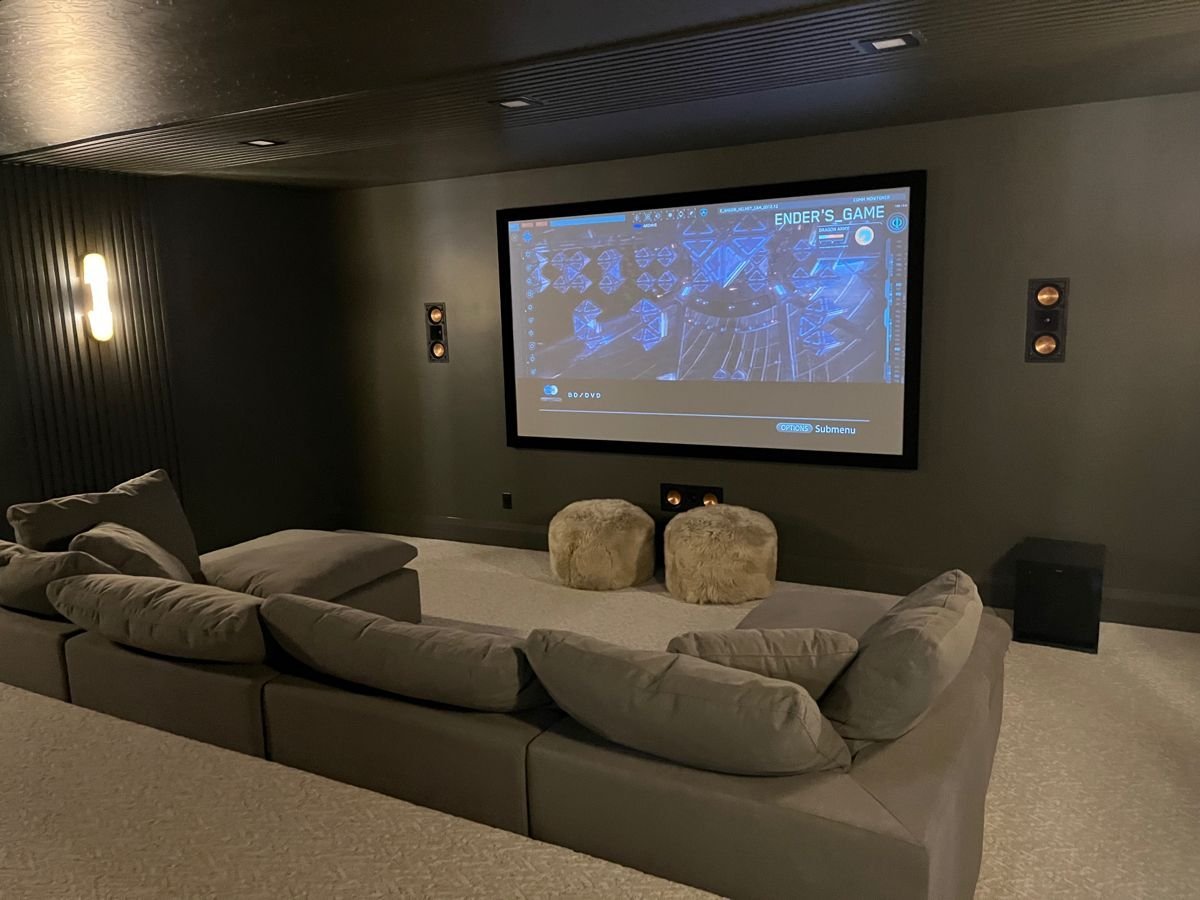
You don’t need a dedicated theater room or a five-figure budget to get a cinematic experience at home. Turning your living room into a mini home theater is about a few smart upgrades — display, sound, seating, and atmosphere — that together create something genuinely impressive. Here’s how to do it at any budget.
The Display: TV vs. Projector
The eternal question. Honest answer: for most living rooms, a big TV wins. Here’s why:
- TV pros: bright in any lighting, sharper image, no bulb replacements, works for everyday viewing. A 65-75″ TV is the sweet spot for most living rooms — big enough to feel cinematic, not so big it dominates.
- Projector pros: 100″+ image for the price of a mid-size TV, truly theatrical scale. Best in a room you can darken.
- Projector cons: needs darkness, bulb/laser maintenance, fan noise, and wall/ceiling mounting hassle.
My take: if this is your main living room (used for everything), get the biggest good TV you can afford. If you have a basement or spare room to dedicate, a projector is magical. For outdoor setups, see backyard movie nights.
Size guidance: seating distance should be roughly 1.5-2x the screen diagonal. 8 feet away? 65″ is perfect. 10 feet? Go 75″. Bigger than you think is usually right — almost nobody regrets going bigger.
Sound: The Upgrade That Matters Most
Here’s the secret home theater people won’t shut up about: sound matters more than picture. TV speakers are thin, tiny, and terrible. The upgrade path:
- Level 1 — Soundbar ($100-300): the biggest bang-for-buck upgrade in home entertainment. Even a basic soundbar with a subwoofer transforms movies. Do this first, before anything else.
- Level 2 — Soundbar + rear speakers ($300-600): adds surround immersion. Many soundbars now offer wireless rears — no running cables across the room.
- Level 3 — AV receiver + 5.1 speakers ($800-1500): the real deal. Separate speakers, proper surround, room-filling sound. More setup, dramatically better results.
- Level 4 — Dolby Atmos ($1500+): ceiling or up-firing speakers for height effects. Incredible for action and sci-fi; diminishing returns for dialogue-driven films.
Start at Level 1. The jump from TV speakers to a soundbar is the single most dramatic home theater improvement you can make — bigger than any TV upgrade.
Seating and Layout
- Viewing angle: center the main seating on the screen, at the right distance. Angle matters less with modern TVs, but centered is still best.
- Comfort: you don’t need theater recliners (though they’re glorious). A deep couch with good back support, plus floor cushions for overflow, works great. Throw blankets = mandatory.
- Sightlines: make sure heads don’t block the screen from back rows. Riser platforms are overkill for most; just arrange thoughtfully.
- Second row: if space allows, a loveseat or bean bags behind the couch doubles capacity for movie nights.
Atmosphere: Lighting and Details
- Light control: blackout curtains if you watch during the day. For evening viewing, dimmable lights or smart bulbs set to warm low.
- Bias lighting: LED strips behind the TV (the $20 kind) reduce eye strain and make the image pop. It’s the cheapest “pro” touch there is.
- Kill reflections: matte screen protectors exist, but positioning (no windows opposite the screen) solves most glare.
- Acoustic basics: rugs, curtains, and soft furniture absorb echo. Bare hardwood + bare walls = echoey sound. You don’t need acoustic panels; you need textiles.
- Hide the cables: cable raceways ($15) along the baseboard. Visible cable nests ruin the illusion instantly.
Budget Tiers: What to Buy
- $300 tier: soundbar + bias lighting + blackout curtains. Transforms what you already own.
- $1,000 tier: above + 65″ TV upgrade (on sale) + comfortable seating additions.
- $2,500 tier: 75″ quality TV + mid-range soundbar with rears + proper seating + lighting control.
- $5,000+ tier: OLED 77″+ or projector + AV receiver 5.1.2 Atmos + acoustic treatment. The full enthusiast setup.
The $300 tier delivers maybe 70% of the experience. Diminishing returns are real — spend where it counts (sound first), not where marketing tells you to.
Home Theater FAQ
What’s the single best upgrade? A soundbar (or any real speakers). It beats a TV upgrade, every time, for movie enjoyment.
Is 4K worth it? Yes at 55″+ viewed from normal distances. Below that, or for casual viewing, the difference is subtle. HDR (better colors/contrast) matters more than raw resolution.
Do I need a universal remote? In 2026, mostly no — HDMI-CEC lets your TV remote control most devices. If you have 4+ components, a good universal remote or smart home integration earns its keep.
How do I reduce echo in my living room? Soft furnishings: rugs, curtains, upholstered furniture, bookshelves. Hard surfaces reflect sound; soft ones absorb it. You don’t need foam panels for a living room.
The Takeaway
Turning your living room into a mini home theater is about priorities: sound first (a soundbar changes everything), then display size, then lighting and comfort details. $300 of smart upgrades gets you most of the way there; spend more only where you’ll notice it. Dim the lights, fire up a great film, and enjoy the best seat in the house — yours.
Common Home Theater Mistakes
- TV too high: the #1 setup sin. Screen center should be at eye level when seated — roughly 42″ from the floor. Above-the-fireplace mounting looks great in photos and feels terrible after 30 minutes.
- Ignoring the remote situation: three remotes minimum is normal; consolidate with HDMI-CEC or a universal remote before the coffee table becomes remote storage.
- Skipping calibration: TVs ship in vivid “torch mode” designed for store shelves. Switch to Movie/Cinema mode and turn off motion smoothing (the “soap opera effect”) — two settings changes, massive improvement, free.
- Neglecting the network: 4K streaming needs ~25 Mbps sustained. If your wifi buffers, wire the TV/streaming box with ethernet — the most reliable upgrade nobody does.
- Forgetting the vibe: the best home theaters feel intentional — dim lighting, comfortable seating, no clutter in sightlines. Ten minutes of tidying before movie night matters more than any gadget.
Surround Sound, Explained Simply
Surround sound works by placing you inside the audio field — dialogue anchored to the screen, effects moving around you. Even a basic 5.1 setup creates this convincingly. Understanding the principle helps you shop: you’re buying immersion, not just speakers. Start with the soundbar; your ears will guide the upgrades.