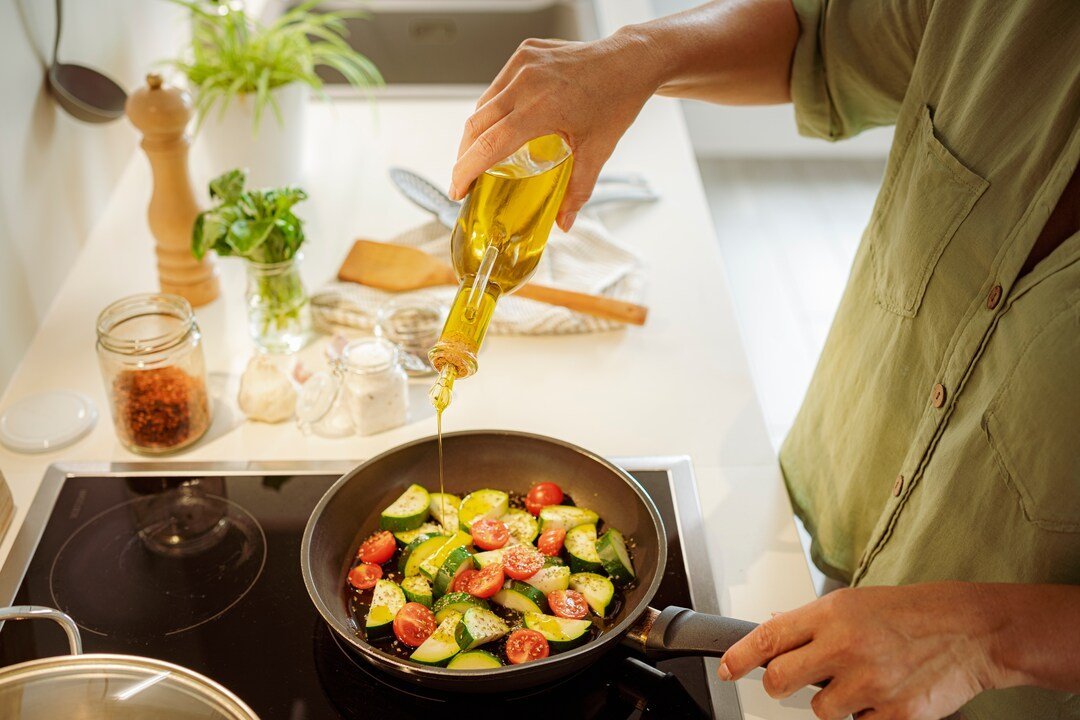
Walk down any grocery aisle and every bottle claims to be the healthy choice. Avocado oil brags about its smoke point. Coconut oil has a loyal fan club. Canola gets called processed junk by influencers and a heart-healthy staple by dietitians. So what’s the real answer for everyday cooking? So let’s take what is the healthiest cooking oil for everyday meals seriously and answer it properly.
After digging through the actual nutrition research — not the marketing — the answer is refreshingly boring: extra virgin olive oil wins for most everyday meals. It’s not perfect for everything, but no other oil has the same depth of evidence behind it. Let me break down why, when to use something else, and which oils deserve a spot in your cabinet.
Why Extra Virgin Olive Oil Takes the Top Spot
Extra virgin olive oil is rich in monounsaturated fats, the type most consistently linked to better heart health, and it’s loaded with polyphenols — plant compounds with real anti-inflammatory effects. The famous Mediterranean diet studies, where olive oil is a cornerstone, show some of the strongest evidence in all of nutrition science for reduced heart disease risk. how cooking oils are produced and graded
Here’s the part most people get wrong: you CAN cook with it. The myth that olive oil becomes toxic when heated has been debunked repeatedly — its smoke point sits around 375-410°F, fine for sautéing, roasting, and most stovetop cooking. Save the cheap stuff for high-heat searing and use the good bottle for everything else.
- Look for ‘extra virgin’ on the label: it’s the least processed grade with the most polyphenols. ‘Light’ olive oil is more refined and less nutritious.
- Dark bottles protect quality: light degrades oil. A dark glass bottle or tin is a sign the maker cares.
- Use it for sautéing, roasting, dressings: it handles everyday heat just fine and shines raw in salads.
- Expect to pay a bit more: real extra virgin olive oil costs more to produce. Suspiciously cheap ‘olive oil’ is often blended.
- Store away from the stove: heat and light are the enemies. A cool, dark cabinet keeps it fresh for months.
The Runner-Ups: Avocado, Canola, and When They Win
Avocado oil is the legitimate runner-up. It’s also high in monounsaturated fats with a very high smoke point (around 480-520°F), which makes it genuinely better for high-heat cooking like searing steaks or stir-frying at screaming temperatures. The downside? Price. Good avocado oil costs two to three times what olive oil does, so I reserve it for high-heat jobs only.
Canola oil is the unfairly maligned workhorse. It’s low in saturated fat, has a neutral flavor, and a solid smoke point — and it’s cheap. The ‘processed’ criticism is overblown; all refined oils go through processing, and canola’s nutrition profile is genuinely good. For baking or when you don’t want any oil flavor, it’s a perfectly reasonable pick. American Heart Association healthy eating guidance
- Avocado oil: best for high-heat searing, grilling, and stir-fries. Neutral taste, premium price.
- Canola oil: best budget all-rounder for baking and neutral-flavor cooking. Don’t fear it.
- Peanut oil: great for deep frying with a high smoke point, but skip it if anyone has nut allergies.
- Sesame oil (toasted): a finishing oil, not a cooking oil — a teaspoon adds enormous flavor to Asian dishes.
- Skip the hype oils for daily use: coconut and palm are high in saturated fat; fine occasionally, not as your everyday oil.
Oils to Limit and Smart Swaps That Save Money
Let’s be honest about coconut oil. It got famous a few years ago as a ‘superfood,’ but it’s about 90% saturated fat — higher than butter. The American Heart Association has been clear: replacing saturated fats with unsaturated ones lowers heart disease risk. A spoonful in a curry now and then won’t hurt you, but it shouldn’t be your daily driver.
The practical move most people miss: you don’t need six oils. A two-bottle setup covers 95% of home cooking — extra virgin olive oil for everyday cooking and dressings, plus one neutral high-heat oil (avocado or canola) for searing and baking. That’s it. Everything else is a nice-to-have.
- Use coconut oil sparingly: enjoy the flavor in Thai curries, but don’t make it your everyday oil.
- Avoid ‘vegetable oil’ mystery blends: they’re usually soybean-based and fine, but you deserve to know what’s in the bottle.
- Don’t reuse frying oil many times: reheated oil degrades. Strain and reuse once or twice max for deep frying.
- Match oil to heat: smoking oil isn’t just smoky — it breaks down and tastes bitter. Respect smoke points.
- Buy smaller bottles: oil goes rancid. A giant jug that lasts a year is a false economy.
Common Mistakes to Avoid
Before you put any of this into practice, save yourself the learning curve: here are the classic errors that derail progress. I’ve made several of these myself, so consider this the shortcut I wish I’d had.
- Believing ‘light’ means healthy: ‘light’ olive oil is just more refined — it has fewer polyphenols, not fewer calories. Buy extra virgin for nutrition.
- Cooking everything on maximum heat: screaming-hot oil smokes, tastes bitter, and degrades. Match the oil’s smoke point to your cooking method.
- Reusing frying oil endlessly: each reheat degrades oil further. Strain and reuse once or twice max, then discard.
- Storing oil next to the stove: heat and light destroy quality fast. That convenient spot by the burner is the worst place in the kitchen.
- Using coconut oil for everything: it’s 90% saturated fat. Great occasionally for flavor; poor as your daily default.
Frequently Asked Questions
Can I fry with extra virgin olive oil?
Yes for most frying — its smoke point (375-410°F) handles sautéing, pan-frying, and roasting. Only for very high-heat searing or deep frying should you switch to avocado or another high-smoke-point oil. The ‘never heat olive oil’ claim is a myth debunked by multiple studies.
Is avocado oil worth the high price?
For high-heat cooking, yes — its ~500°F smoke point is unmatched and it’s rich in monounsaturated fats. For everyday sautéing and dressings, olive oil does the same job cheaper. I keep both: avocado for searing, olive oil for everything else.
What does ‘cold pressed’ mean on olive oil?
It means the oil was extracted mechanically without heat or chemicals, preserving flavor and polyphenols. For extra virgin olive oil, cold pressing is part of the standard — it’s a good sign, though all true EVOO is cold-extracted by definition.
How long does cooking oil last once opened?
About 6 months for optimal quality (olive oil), up to a year for refined oils. Rancid oil smells off — waxy, crayon-like, or stale. Buy smaller bottles you’ll actually finish rather than giant jugs that go stale.
Pro tip: Tell one person what you’re working on. Social accountability — even casual — measurably increases follow-through. You don’t need an accountability partner; you need a witness.
What is the healthiest cooking oil for everyday meals: The Bottom Line
For everyday meals, extra virgin olive oil is the healthiest default — the evidence is stronger than for any other oil. Keep a neutral high-heat oil like avocado or canola for searing and baking, use coconut oil as an occasional flavor rather than a staple, and don’t overthink the rest. Two good bottles and a little respect for smoke points will cover everything your kitchen throws at you.