
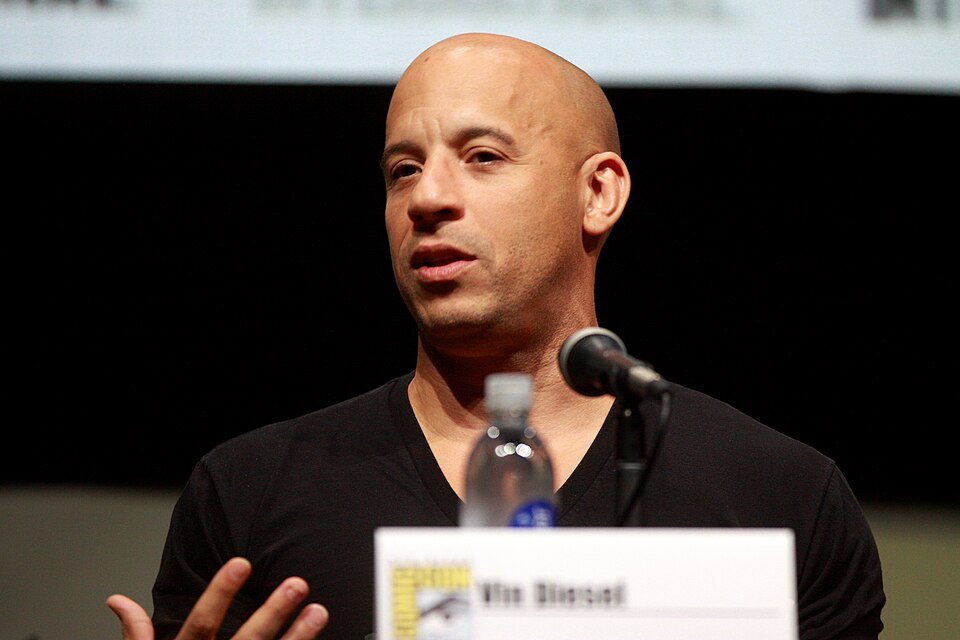
Vin Diesel’s $225 Million: Fast Cars, Faster Paydays
The Short Version
Vin Diesel built a $225 million fortune — Celebrity Net Worth’s figure — on a lesson he learned as a broke independent filmmaker: own the production, and the production pays you forever. He wrote, directed, and starred in his own calling-card films in the 1990s, caught Steven Spielberg’s eye, and then anchored the Fast & Furious franchise as both its star and a producer through his One Race company. The Fast films alone have grossed more than $11 billion across the series, a production figure this profile labels as box office rather than personal wealth, while reporting credits him with about $20 million per later Fast production in salary. Forbes counted $47 million in earnings for him in 2015, an annual figure that shows the scale of his peak years. He is 59, voices Groot in the Guardians of the Galaxy films with a economy of words that became an industry legend, and has Fast Forever on the horizon with an expected 2027 arrival. Few actors of his generation converted one franchise into an ownership position as thoroughly as Diesel did.
How They Got There
1995–2000: Multi-Facial, Spielberg, and Pitch Black
Diesel — born Mark Sinclair — made Multi-Facial in 1995, a short film about a struggling actor that he wrote, directed, produced, and starred in for a few thousand dollars. The short reached Steven Spielberg, who wrote a role for him in Saving Private Ryan in 1998 and handed him a Hollywood career. The Iron Giant in 1999 revealed his voice as an instrument in its own right. Boiler Room and Pitch Black both arrived in 2000; Pitch Black’s Riddick, a convict with night-vision eyes and a gravel voice, gave him his first franchise character and a cult following that never left.
2001–2009: Fast, xXx, and the Producer’s Chair
The Fast and the Furious in 2001 changed his trajectory permanently. Dominic Toretto — the street racer who treats his crew as family — became his signature, and the film’s success spawned a franchise that grew beyond anyone’s projection. xXx in 2002 added a second action vehicle, and The Chronicles of Riddick in 2004 tested his drawing power as a solo lead. The decisive move came with Fast & Furious in 2009: Diesel returned to the series not merely as its star but as a producer through One Race, trading salary leverage for ownership and control. Every later payday in the franchise carries that decision’s fingerprints.
2011–2026: The $11 Billion Franchise and Groot
Fast Five in 2011 retooled the series into a global heist spectacle and the grosses exploded; Fast & Furious 6 in 2013 and Furious 7 in 2015 pushed the franchise past milestones that place it among the highest-grossing series in cinema history, with the total now above $11 billion. Diesel joined the Marvel universe in 2014 as the voice of Groot in Guardians of the Galaxy, a role built on three words and endless variation. The Fate of the Furious in 2017, F9 in 2021, and Fast X in 2023 kept the engine running, alongside Guardians of the Galaxy Vol. 3 in 2023. Fast Forever approaches with an expected 2027 release, and Riddick: Furya sits in preparation — a 59-year-old star still running two franchises he helped create.
The Voice and the Second Franchise
Groot deserves a paragraph of his own in any account of Diesel’s earnings, because the role rewrote the economics of voice work. Three words — “I am Groot” — delivered with variations that carry grief, humor, and menace, turned Diesel into a Marvel fixture across multiple productions, each engagement paying star rates for studio days rather than location months. Meanwhile Riddick, the character he created in Pitch Black and championed through The Chronicles of Riddick, remains his wholly owned passion asset: he protected the property through lean years, revived it on his own terms, and now prepares Riddick: Furya with the leverage of a man whose main franchise grosses billions. Two franchises, two ownership postures, one lesson repeated — Diesel bets on characters he controls.
The Bouncer Who Wrote Scripts
Diesel’s New York years before fame followed a script he later mined for roles: nightclub doors, telemarketing desks, and acting classes he could barely afford, all while he wrote parts for himself because nobody else would. The bouncer’s job taught him presence — how to fill a doorway and end a conversation with posture — and the telemarketing taught him voice control, the instrument that later carried Groot and the Iron Giant. When Los Angeles ignored him, he flew home and made Multi-Facial with borrowed money and total creative control, inventing the production model his whole fortune now rests on. Spielberg’s call validated the gamble, but Diesel never forgot its terms: the industry had offered him nothing until he built something it wanted. Every ownership demand he has made since descends from that memory.
Where It Began
Mark Sinclair arrived on 18 July 1967 in Alameda County, California, and grew up in New York City in an artists’ housing project where creativity counted as a family trade. His mother, Delora Vincent, née Sinclair, supported the household through years that mixed struggle with culture. His stepfather, Irving H. Vincent, taught acting and managed a theatre, and he put his stepson on a stage at the Theater for the New City at age seven — Diesel tells the story himself: the boy broke into the theatre with friends, the director caught them, and she offered them roles instead of punishment. He never met his biological father, and he records that fact exactly as plainly as he states it, without decoration. He studied at Hunter College, left to chase acting in Los Angeles, worked as a telemarketer and a bouncer, and returned to New York to make Multi-Facial when the industry ignored him — the gamble that started everything.
The Fortune in Full
Celebrity Net Worth values Vin Diesel at $225 million. The architecture beneath the figure differs from a pure salary fortune. Forbes’s $47 million earnings count for 2015 shows a peak year’s scale; reporting credits him with roughly $20 million per later Fast production as salary; and his producer position through One Race adds profit participation on a franchise whose cumulative box office exceeds $11 billion. That $11 billion belongs to the productions and their studios as gross revenue — this profile never presents it as his money — but a producer-star with backend points on even a fraction of it accumulates at a rate no salary matches. Voice work as Groot adds high-margin income, and the Riddick property, which he has controlled and championed for two decades, adds a second owned asset.
His social following adds a marketing asset studios quietly price into his deals. Diesel built one of the largest personal followings in entertainment by posting directly to fans — training footage, family tributes, franchise announcements — and that channel lets a production reach tens of millions of people without buying advertising. In negotiation terms, he arrives with his own media network attached. Trackers rarely itemize that value, but it supports the salary and participation levels that reporting documents.
Houses
Property reporting on Diesel stays thinner than his fame suggests, and this profile prints only the documented record. He bought in Beverly Hills in October 2001 for a reported $2.25 million. He bought in Hollywood Hills in 2000 for a reported $562,500, listed that property in 2013 at a reported $1.3 million, and listed it again in 2016. He also told, in his own published account, a 2013 episode in which a security scare at his home during the Riddick period drew police attention to a false alarm — an anecdote he shares himself and one that underlines how fiercely he guards the household’s privacy.
Cars
Reporting names a garage that mirrors his screen persona: a 1969 Dodge Charger Daytona, a 1970 Dodge Charger R/T, a 1963 Chevrolet Corvette Sting Ray Grand Sport, a 1970 Chevrolet Chevelle, a 1974 Plymouth Barracuda, a 1993 Mazda RX-7, a 1994 Toyota Supra, a 2014 Lykan HyperSport, and a custom 1970 Charger called “Tantrum” that his crew presented to him in 2019. No source totals the collection’s value, and this profile invents none.
A note on method belongs here, because Diesel’s fortune invites exaggeration. Round-ups sometimes attach the Fast franchise’s $11 billion box office to his name as if a meaningful share of it sits in his accounts. It does not. Box office gross flows first to cinemas, distributors, and studios; a producer-star’s participation draws a negotiated slice of defined profits, and the slice, while lucrative, bears no simple relation to the headline gross. The $225 million from Celebrity Net Worth already reflects a tracker’s attempt to model that reality. This profile therefore treats the franchise total as context for his leverage — the reason his slice stays generous — and never as a component of his wealth.
Video game and licensing uses of the Fast and Riddick properties add smaller streams that reporting rarely itemizes, and this profile notes them without figures, in keeping with the record’s limits.
Life Away from the Job
Diesel has shared his life with Paloma Jiménez since 2007, a relationship of nineteen years that the couple keeps deliberately private. One correction belongs here, because accuracy matters more than politeness: a widely read tracker page describes this relationship in terms of a legal union, and that description is a source error — no such union appears anywhere in the reliable record, and the couple’s own history contradicts it. They have three children: Hania Riley, born in April 2008; Vincent Sinclair, born in 2010; and Pauline, born in March 2015, whose name honors Paul Walker, Diesel’s Fast co-star and close friend, who died in 2013. Diesel speaks of Walker in the present tense of family, and his Fast partnership with Dwayne Johnson — the franchise’s second pillar from Fast Five onward — built the series’ modern era; readers can weigh Johnson’s very different fortune in Dwayne Johnson’s net worth profile. His mother Delora and stepfather Irving remain the foundation he credits for everything, and he shares training, family tributes, and franchise news with his enormous following on Instagram at @vindiesel.
And Finally
Diesel’s fortune rests on the smartest trade of his career: leverage exchanged for ownership at exactly the moment his franchise became indispensable. Stars who take only salary watch their wealth plateau when the roles slow; Diesel arranged in 2009 to keep earning from Fast productions whether he headlines them or not, and the $225 million from Celebrity Net Worth reflects that structure.
At 59, with Fast Forever approaching and Riddick in preparation, he remains both the face and a landlord of his fictional universe. The boy who broke into a theatre at seven now owns a piece of every ticket his characters sell — an ending his stepfather, the acting teacher, would appreciate.
The Scoop File
| The Scoop File | Details |
|---|---|
| Born | 18 July 1967, Alameda County, California |
| Age | 59 |
| Height | 6 ft 0 in (1.83 m) |
| Net Worth | $225 million (Celebrity Net Worth) |
| Weight | No reliable published figure exists |
| Partner | Paloma Jiménez (since 2007) |
| Children | Three: Hania Riley, Vincent Sinclair, Pauline |
| Parents | Delora Vincent, née Sinclair, and stepfather Irving H. Vincent |
| @vindiesel |