
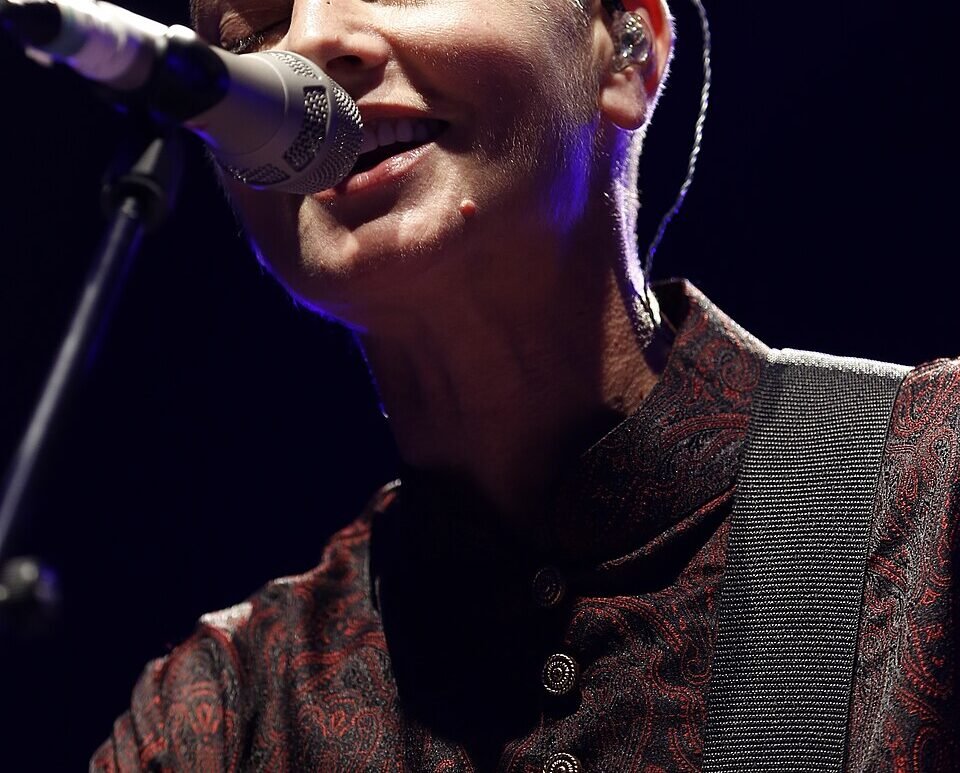
Sinéad O’Connor’s Estate: The $1.5 Million She Left Behind
The Short Version
Sinéad O’Connor sang like nobody else on earth, and the music industry never quite forgave her for insisting on the difference. The Irish singer conquered the world in 1990 with a single Prince song, spent the following decades alternating between acclaim and controversy on her own uncompromising terms, and died in London on 26 July 2023, aged 56. The London coroner recorded natural causes in January 2024, and this profile uses the coroner’s wording and nothing beyond it. Celebrity Net Worth puts her net worth at death at $1.5 million, a figure its page carried in an update of 28 January 2025. Irish probate, published in January 2025, broadly agrees: her estate showed £1.7 million gross and £1.4 million net, and she left it to her surviving children. For an artist who sold millions of records, the number startles — until a reader follows the money through a career that kept giving the industry’s rewards back, through legal fights, cancelled tours, and long stretches where she simply refused to play the game that enriches stars.
How They Got There
The Voice Arrives
O’Connor signed her first record deal as a teenager in Dublin and released her debut album to strong reviews in the late 1980s. Critics praised the voice immediately — a soprano that could whisper a line and then tear it open — and her shaven head made her image unmistakable in an era of carefully styled pop. The debut sold respectably and won her a Grammy nomination, but it only hinted at what came next. She wrote most of her own material, fought her label over presentation from the start, and treated every interview as a chance to say the unsayable thing. The industry marked her as difficult. History has largely re-marked her as early.
1990: Nothing Compares 2 U
Prince wrote “Nothing Compares 2 U,” and O’Connor turned it into one of the defining recordings of the twentieth century. Her version topped charts across the world in 1990, and its video — her face, a camera, and tears she later explained came from thoughts of her mother — became an era’s emblem. The parent album sold in the millions and made her wealthy by the standards of the time. One financial fact shaped everything after: Prince wrote the song, so the songwriting royalties flowed to Prince and his estate, never to her. She earned as the performer. The writer earned forever. Her later money troubles make more sense once a reader understands that split.
The Protest and the Price
In October 1992, performing live on American television, O’Connor tore a photograph of the Pope in protest at abuse within the Catholic Church. The backlash cost her dearly: radio stations dropped her records, crowds booed her at tribute concerts, and her American career never recovered its commercial height. Later decades vindicated much of her protest — Ireland’s own inquiries documented the abuse she had named — but vindication arrived too late to restore the earnings. She kept recording, released albums of reggae, Irish traditional music, and original songs, toured when her health allowed, and built a smaller, fiercely loyal audience. Her memoir and her late-career concerts drew warm reassessments, and she died mid-revival, with younger artists citing her as a founding influence.
The Later Records and the Loyal Rooms
Her later career traded scale for devotion. She recorded albums that explored reggae rhythms, Irish traditional material, and her own songwriting in turn, and she chose collaborators for affinity rather than chart position. Concerts in smaller rooms sold out on the strength of a voice that age had roughened without diminishing, and younger musicians began citing her openly — a rehabilitation that gathered pace through the 2010s and into the 2020s. She published a memoir that critics praised for its candor, and she spoke in interviews with a humor that surprised people who knew only the headlines. The commercial peak never returned, and she never chased it on the industry’s terms. What returned instead was respect, arriving in bulk and too late to rebuild the fortune the peak might have secured.
Dublin’s music scene of the mid-1980s ran on small venues, pirate energy, and word of mouth, and the teenage O’Connor moved through it with a confidence that older musicians noticed. She sang with local bands, wrote constantly, and treated every performance as an argument for her own material over the covers the circuit preferred. The demo recordings from those years reached London, and the deal that followed took her out of Dublin while leaving the city permanently inside the music — its lilt, its anger, and its faith all survived the journey intact.
Where It Began
Sinéad Marie Bernadette O’Connor arrived on 8 December 1966 in Dublin, the third of five in her family. Her father, John Oliver “Seán” O’Connor, worked as a structural engineer and later retrained as a barrister. Her mother, Johanna Marie O’Connor, née O’Grady, ran the household, and O’Connor described a childhood marked by conflict and unhappiness in terms that grew more detailed and more forgiving as she aged. Her mother died in 1985, a loss that echoed through her music for the rest of her life — she said the tears in her most famous video belonged to that grief. School pushed her toward trouble; music pulled her out. A teacher at a residential school encouraged her singing, a demo tape reached Dublin’s music circles, and by her late teens she was singing in bands and writing the songs that became her debut album.
Faith ran through her life as a current she never stopped swimming in. She grew up Catholic, broke publicly with the Church over its abuse scandals, and still pursued ordination in 1999 through Bishop Michael Cox of an independent church, taking the name Mother Bernadette Mary; Rome never recognized that ordination, and she asked for excommunication in August 2018. In October 2018 she converted to Islam and took the name Shuhada’ Sadaqat, while continuing to perform as Sinéad O’Connor. Her funeral in Bray in 2023 included a Muslim burial service that Shaykh Umar Al-Qadri led, and mourners lined the seafront in thousands. She held her beliefs the way she held everything: completely, publicly, and at whatever cost.
The Fortune in Full
Celebrity Net Worth values O’Connor’s estate at $1.5 million at death, and Irish probate supports the scale of that figure with unusual precision. The probate record, published in January 2025, showed £1.7 million gross and £1.4 million net, and her will directed her estate to her surviving children. Her will also carried an instruction that biographers quoted widely: she urged her children to milk her unreleased recordings for what they are worth, a flash of the gallows humor that friends say never left her. Her assets at death included her property in Bray, County Wicklow, and a flat in London where she spent her final period.
The gap between her fame and her fortune has structural causes, and this profile names them plainly. She earned performer’s money on her biggest hit while Prince’s side collected the writer’s share. Her 1992 protest collapsed her American earning power at its peak. Tours cancelled for health reasons across the 2010s cut her most reliable income stream, and she spoke openly in interviews about periods of genuine financial strain, including reliance on social welfare in Ireland at points. Against that, her catalog retains real value: the recordings keep selling, licensing requests continue, and the estate she left her children includes rights that a careful administration can grow. The $1.5 million is a snapshot at death, not a verdict on the catalog’s future.
Probate gives this profile a firmer footing than most celebrity estates allow. Because Irish probate publishes its figures, readers can test the tracker’s $1.5 million against an official record — £1.7 million gross, £1.4 million net — and watch the two sources converge. That convergence strengthens confidence in the headline figure considerably. It also underlines the estate’s composition: property in Bray, a London flat, and recording rights, rather than the investment portfolios that pad richer estates. Her children’s inheritance therefore depends heavily on how the catalog performs from here, and the catalog’s critical stock has risen every year since her death.
Her relationship with money stayed defiantly unstrategic to the end. She gave income away, funded causes and people around her, walked out on lucrative arrangements that demanded compromises, and treated the industry’s wealth machinery as a system designed to buy silence. Biographers tally the cost in the tens of millions across a career of her commercial size. The estate she left therefore measures something unusual in celebrity finance: not what a star accumulated, but what a star declined to accumulate. Her children inherit the recordings, the rights, and the rising reputation — assets whose value her own choices kept artificially low during her lifetime and whose trajectory since her death points only upward.
Life Away from the Job
O’Connor married four times. She married John Reynolds in 1989 and divorced him in 1991. She married Nick Sommerlad in 2001 and divorced him in 2003. She married Steve Cooney in July 2010, separated from him in March 2011, and divorced him in 2011. She married Barry Herridge in December 2011 in Las Vegas, separated from him within weeks, reunited with him in January 2012, and stated in February 2014 that the two had not divorced; at her death the record describes Herridge as her partner, separated, with no divorce reliably reported. She raised four children and named their fathers plainly in the public record: Jake Reynolds, born June 1987, with John Reynolds; Roisin Waters, born March 1996, with John Waters; Shane Lunny, born March 2004, with Dónal Lunny, who died in January 2022 aged seventeen, a loss that shadowed her final year; and Yeshua Bonadio, born December 2006, with Frank Bonadio. Her family life held joy and grief in the proportions her songs always admitted. The man who wrote the song that defined her earning life built an estate on an entirely different scale, and readers can compare the two legacies in Prince’s net worth profile.
And Finally
O’Connor’s legacy rests on the voice and on the courage, in that order for the charts and in reverse order for the culture. Ireland has reclaimed her fully since her death: murals, tributes, and official honors now say openly what the industry punished her for saying early. Her estate, modest as money counts, passes to her children along with a catalog whose reputation keeps climbing.
The financial story teaches a hard lesson about how music pays. The performer takes the fame and the risk; the writer takes the annuity. O’Connor understood that arithmetic better than most and said so, loudly, for thirty years. Her $1.5 million at death, against Prince’s fortune, may stand as her most eloquent protest of all.
The Scoop File
| The Scoop File | Details |
|---|---|
| Born | 8 December 1966, Dublin, Ireland (died 26 July 2023, London) |
| Age | 56 at death (died 26 July 2023) |
| Height | 5 ft 4 in (1.63 m) |
| Net Worth | $1.5 million at death (Celebrity Net Worth) |
| Weight | No reliable published figure exists |
| Partner | Barry Herridge (separated; no divorce reliably reported before her death) |
| Children | Four: Jake Reynolds, Roisin Waters, Shane Lunny (died January 2022), Yeshua Bonadio |
| Parents | John Oliver “Seán” O’Connor and Johanna Marie O’Connor, née O’Grady (d. 1985) |
| Nationality | Irish |
| Religion | Raised Catholic; converted to Islam in October 2018 (name Shuhada’ Sadaqat) |